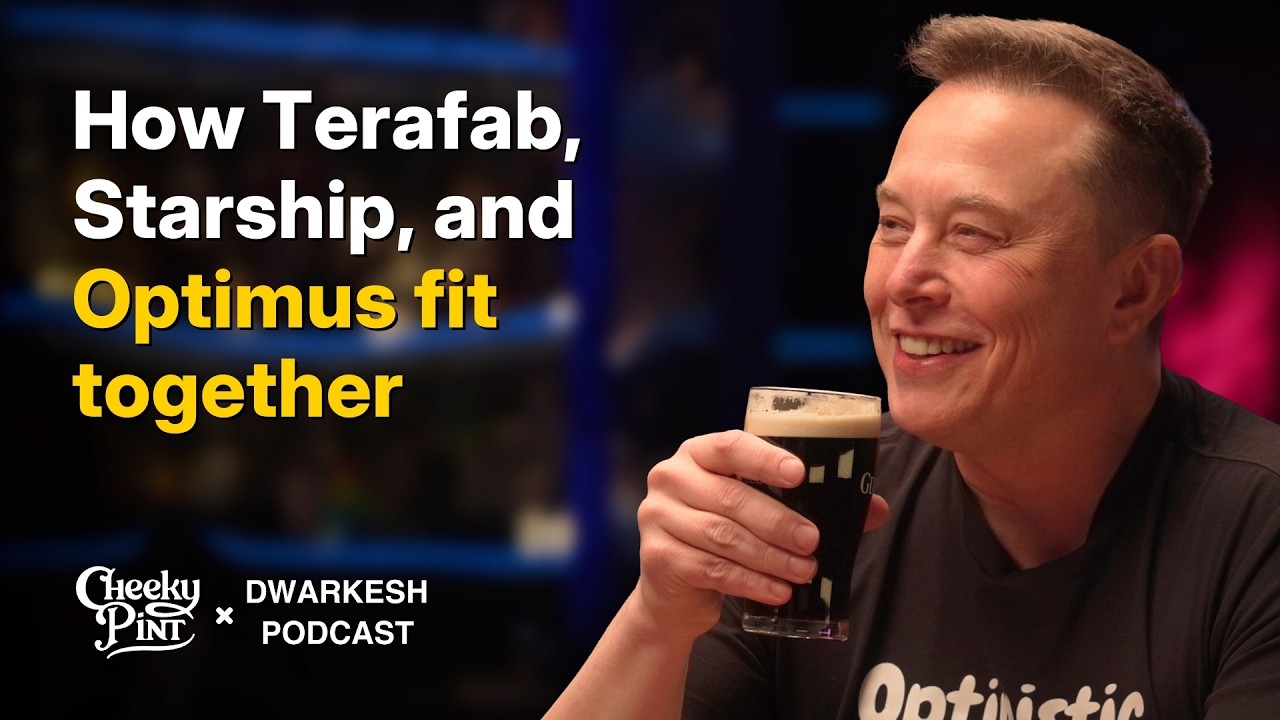
Elon Musk discusses the rapidly escalating demand for AI compute and predicts that, within 36 months, space will become the most cost-effective location for large-scale AI data centers. He explains that the primary bottleneck for AI is shifting from chip production to electricity supply, as global power generation—especially outside China—remains relatively flat while AI compute needs are growing exponentially. Musk argues that terrestrial expansion of data centers is constrained by regulatory hurdles, land use, and the slow pace of utility upgrades, whereas space offers abundant, uninterrupted solar energy and fewer regulatory obstacles. He claims that solar panels in space are five times more effective than on Earth, and that the absence of weather and night cycles eliminates the need for batteries, making space-based AI infrastructure both cheaper and more scalable.
Musk outlines the technical and logistical challenges of building and maintaining AI infrastructure both on Earth and in space. He notes that while servicing GPUs in orbit is a concern, modern chips are increasingly reliable after initial testing, and the benefits of space-based power outweigh the drawbacks. He describes the immense difficulty of scaling up terrestrial power generation, citing backlogs in turbine manufacturing and restrictive tariffs on solar imports. Musk reveals that both Tesla and SpaceX are working toward producing 100 gigawatts of solar cells annually, with the goal of supporting both ground and space-based AI operations. He also discusses the need for new chip fabrication capacity, suggesting that a “TeraFab” capable of producing millions of wafers per month will be necessary to meet future AI demand.
The conversation shifts to the broader implications of AI and robotics for society and the economy. Musk predicts that AI will soon surpass human intelligence and that humanoid robots, like Tesla’s Optimus, will revolutionize manufacturing and productivity. He envisions a future where digital and robotic corporations vastly outperform human-staffed companies, leading to dramatic economic growth and potentially solving issues like national debt. However, he acknowledges that this transition will be disruptive, with China’s manufacturing prowess posing a significant competitive challenge to the U.S. unless America can rapidly scale up its own robotics and AI infrastructure.
Musk also addresses the philosophical and ethical dimensions of advanced AI. He emphasizes the importance of aligning AI values with the propagation of intelligence and consciousness, advocating for truth-seeking and curiosity as core principles. Musk warns against programming AI to be politically correct or to lie, arguing that this could lead to catastrophic outcomes. He stresses the need for transparency and robust debugging tools to ensure AI systems remain aligned with human interests, and he expresses concern about the potential misuse of AI and robotics by governments, advocating for limited government power and strong constitutional safeguards.
Throughout the discussion, Musk shares insights into his management style and the organizational practices that have enabled rapid innovation at his companies. He highlights the importance of a “maniacal sense of urgency,” relentless focus on bottlenecks, and direct engagement with engineering teams. Musk describes his approach to hiring, emphasizing talent, drive, trustworthiness, and goodness of heart over traditional credentials. He concludes with an optimistic outlook, encouraging others to embrace acute challenges and maintain a positive vision for the future, as the coming years promise unprecedented technological and societal transformation.