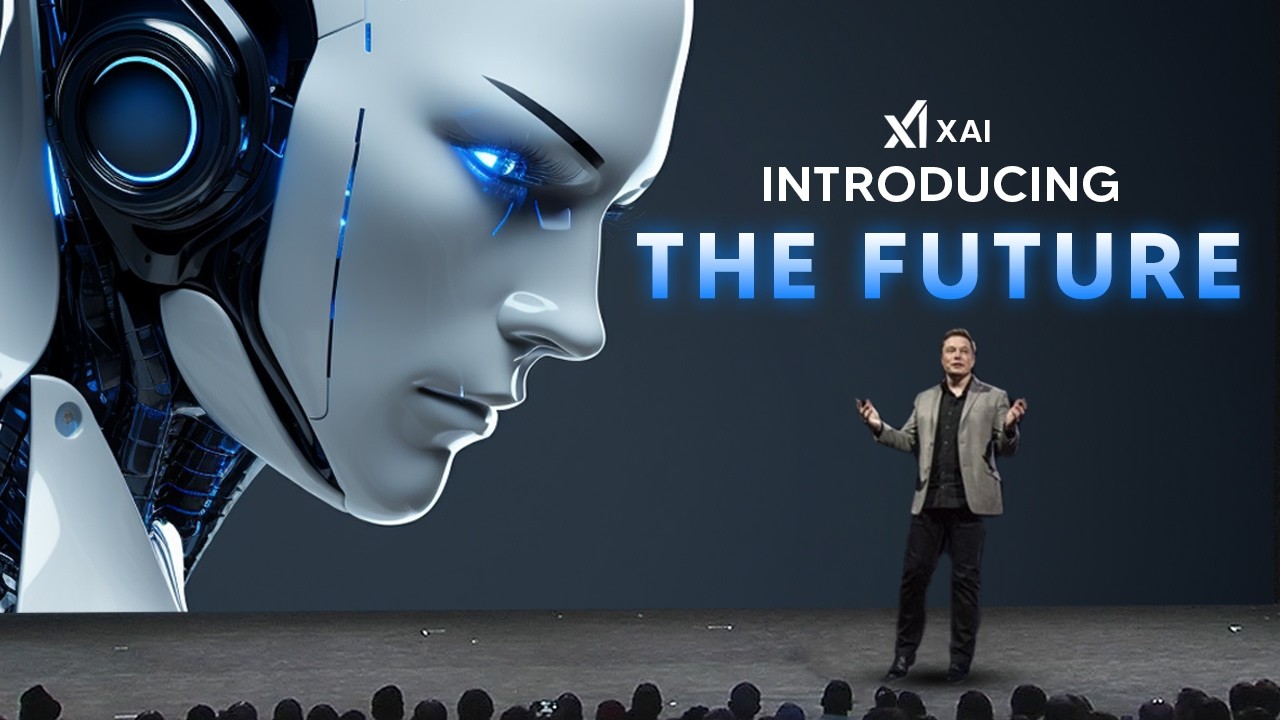
Elon Musk and the XAI team unveiled their ambitious vision for the future of artificial intelligence, emphasizing that their goals extend far beyond chatbots. In just two and a half years, XAI has rapidly advanced to the forefront of AI development, surpassing much older and better-resourced competitors in areas such as voice, image, and video generation. Their Grok models have topped leaderboards in forecasting and reasoning, and their Imagine platform now generates more images and videos than all competitors combined. XAI’s Graipedia project aims to become a vastly more comprehensive and accurate knowledge base than Wikipedia, ultimately serving as an “Encyclopedia Galactica.”
The company is structured around four main application areas: Grok (main and voice), coding, image and video generation (Imagine), and Macrohard, which focuses on full digital emulation of entire companies. Each team highlighted their rapid progress, such as developing state-of-the-art voice and chat models in under a year, and building coding models that are approaching the point where AI can generate optimized binaries directly, bypassing traditional coding altogether. The Imagine team, starting from scratch just six months ago, now leads in video and image generation, with plans to enable users to create and interact with entire digital worlds in real time.
Macrohard represents one of XAI’s most ambitious projects: creating AI agents capable of fully emulating human companies, especially those whose output is digital. This would allow for end-to-end orchestration of complex tasks across digital platforms, potentially ushering in a new era of economic prosperity. The team is also focused on building robust infrastructure, including massive GPU clusters and data centers, to support the scale and reliability required for these advanced models. XAI’s engineering culture emphasizes speed, talent density, and minimal bureaucracy, attracting top-tier talent to solve some of the world’s hardest technical problems.
On the consumer side, the X app (formerly Twitter) has seen significant growth and transformation, with improvements in user engagement, onboarding, notifications, and core features like encrypted messaging and video calls. The app is evolving into an “everything app,” integrating AI-powered tools, communication, and soon, financial transactions through X Money. Musk envisions the app as a central hub for daily life, aiming for over a billion daily active users by making it indispensable for communication, knowledge, and commerce.
Looking to the future, Musk outlined a truly sci-fi vision: building orbital data centers, lunar factories, and compute infrastructure that could harness a fraction of the sun’s energy. By collaborating with SpaceX, XAI plans to launch AI data centers into Earth orbit and eventually establish factories on the moon to build and deploy AI satellites at an unprecedented scale. The ultimate goal is to expand humanity’s reach, both in terms of intelligence and physical presence, throughout the solar system and beyond—potentially even encountering alien civilizations. This grand vision is driven by the belief that to truly understand the universe, humanity must explore and extend its consciousness to the stars.