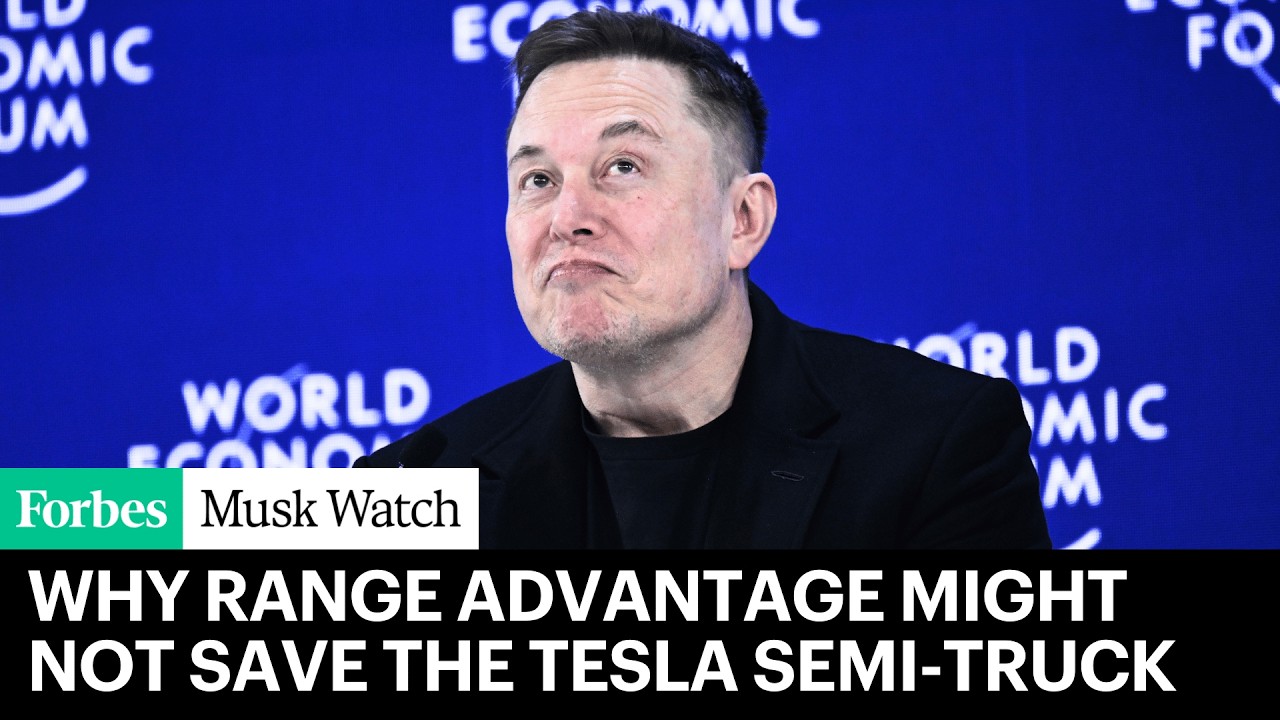
In this Forbes interview, reporter Britney Lewis and senior editor Alan Ohnsman discuss the uncertain future of the Tesla Semi truck amid Elon Musk’s strategic pivot away from electric vehicles (EVs) toward artificial intelligence (AI), robotics, and robo-taxis. Despite the Tesla Semi being the company’s largest vehicle rollout, it was notably absent from discussion during Tesla’s latest earnings call, reflecting Musk’s new focus. Ohnsman notes that while the Semi is finally entering regular production after years of delays since its 2017 unveiling, the lack of enthusiasm from Tesla’s leadership suggests it is no longer a priority.
The conversation highlights a disconnect between Musk’s vision for Tesla as an AI and robotics company and the public’s perception of Tesla as an EV manufacturer. This shift comes at a time when Tesla’s EV sales have declined for consecutive years, and the company has discontinued core models like the Model S and Model X. With only the Model 3, Model Y, Cybertruck, and potentially a new Cybercab remaining, Tesla’s abrupt pivot risks confusing consumers and investors who still associate the brand primarily with electric cars.
Timing for the Tesla Semi’s launch is particularly challenging. Federal support for electric trucks has waned, with the end of key subsidies and incentives, making the U.S. market less attractive for such vehicles. Ohnsman points out that other electric truck makers, like Nikola, have struggled or gone bankrupt due to these regulatory changes and lack of demand. While some large fleets like DHL and PepsiCo have shown interest in the Tesla Semi, the overall market for Class 8 trucks is small compared to passenger vehicles, and the high cost and infrastructure requirements further limit its appeal.
The Tesla Semi does offer a significant advantage in range, promising 500 miles per charge—much higher than competitors. This makes it attractive for certain logistics companies, especially in California, where state incentives and air quality regulations encourage the adoption of electric trucks. However, the high purchase price (estimated around $400,000) and rising electricity costs undermine Musk’s original claims of lower operating expenses compared to diesel trucks. As a result, the Semi is unlikely to transform the trucking industry as once envisioned.
Ultimately, Ohnsman suggests the Tesla Semi feels like a legacy project from an earlier era of the company, now overshadowed by Musk’s ambitions in AI and robotics. Tesla may end up being its own biggest customer for the Semi, using it internally or for SpaceX, but the long-term commitment to the product is uncertain. Meanwhile, Tesla’s stock continues to behave like a “meme stock,” with its valuation driven more by faith in Musk’s future promises than by current financial performance. This speculative environment, combined with the company’s strategic shift, leaves the future of the Tesla Semi—and Tesla’s core EV business—in question.