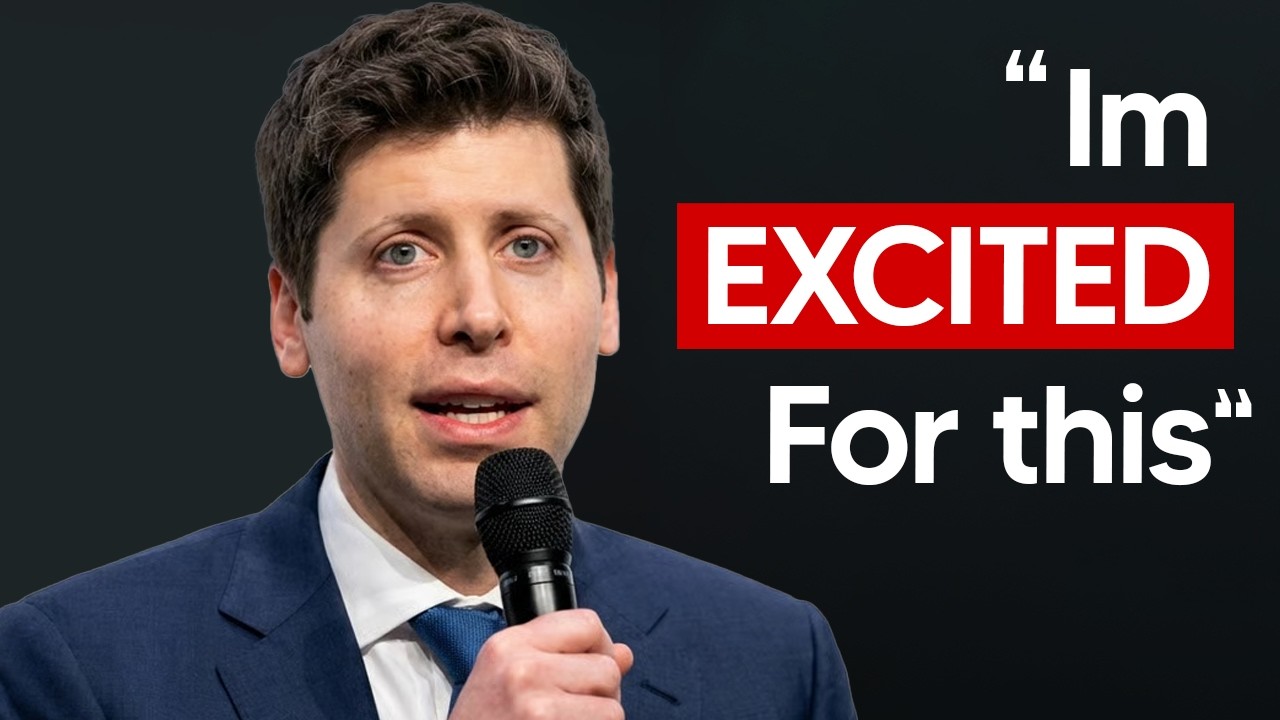
The video discusses the escalating legal battle between Elon Musk and OpenAI, particularly focusing on the upcoming trial where Musk is seeking $134 billion in damages. Musk claims that OpenAI’s leadership, including Sam Altman and Greg Brockman, misled him by promising to keep OpenAI a nonprofit dedicated to benefiting humanity, while secretly planning to transition to a for-profit model. Musk argues that if he had known about these intentions, he would have asked for equity instead of donating $38 million between 2016 and 2018. The trial is set for April 2026, and recent developments have intensified the conflict.
A key piece of evidence is Greg Brockman’s personal diary, which was unsealed in court documents. In it, Brockman wrote statements like, “I cannot believe that we committed to a nonprofit. If 3 months later we are doing BC Corp, then it was a lie,” and questioned what it would take for him to become a billionaire. Musk’s legal team views this as a “smoking gun” that supports their claim of being deceived. The judge has already determined there is enough evidence of potential fraud for the case to proceed to trial.
However, OpenAI’s defense points out that Musk was aware of discussions about transitioning to a for-profit structure as early as 2017. They argue that negotiations broke down because Musk wanted full control and to merge OpenAI with Tesla, which the other founders rejected. OpenAI claims Musk left voluntarily, telling them to find their own way to raise billions, and that no one lied to him or accepted his terms under false pretenses. The context provided by additional documents and communications suggests the situation is more nuanced than Musk’s narrative implies.
The situation took a dramatic turn when it was revealed that Musk had a policy of auto-deleting sensitive messages at his own AI company, xAI, using apps like Signal with short retention settings. This practice, described by a former CFO, means that the more sensitive or potentially incriminating the information, the faster it was deleted. In legal terms, this is called “spoliation of evidence,” and it could severely damage Musk’s case. Judges and juries typically view the destruction of evidence very negatively, and the court may instruct the jury to assume that deleted messages would have been unfavorable to Musk.
The video concludes by noting the irony that while Brockman’s diary could be damaging to OpenAI, Musk’s systematic deletion of his own communications could be even more detrimental to his case. Both sides have damaging evidence against them, and the trial’s outcome is uncertain. There is speculation that the parties may settle before going to trial to avoid public scrutiny. The broader context is that this legal battle is part of a larger struggle over the future of AI, with Musk also suing Apple and OpenAI over alleged anti-competitive practices. The outcome of these lawsuits could have significant implications for the structure and direction of the AI industry.