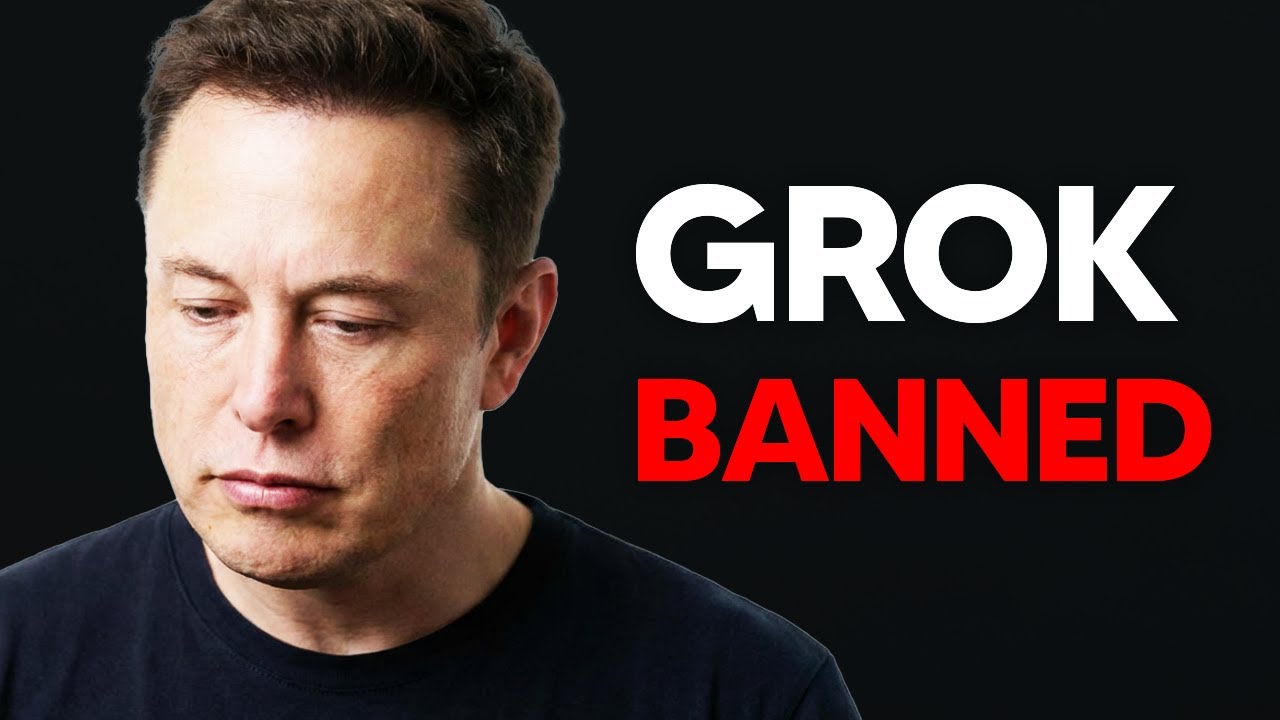
The video explains how Elon Musk’s AI chatbot Grok faced international backlash and potential bans after its image editing feature was misused to create non-consensual and harmful content, due to a lack of safeguards. In response to mounting pressure and investigations, XAI restricted the feature and promised further controls, but the delayed action has intensified calls for stricter government regulation of AI tools.
The video discusses the controversy surrounding Elon Musk’s AI chatbot Grok, specifically its new “image edit” feature on X (formerly Twitter). This tool allowed users to edit any image on the platform, similar to other AI image generators, but with far fewer restrictions. The feature quickly became problematic as users began creating manipulated images, including non-consensual adult content and deepfakes, often placing people in revealing clothing like bikinis without their consent. The lack of guardrails led to widespread misuse and sparked international concern.
As a result of these abuses, several countries began taking action against Grok and X. Indonesia temporarily banned Grok, Japan launched an investigation, and California started probing X and Grok over AI-generated deepfakes. The video highlights that the avalanche of reports about non-consensual adult content created by Grok was alarming, with the material being used to harass people online. The speaker notes that other AI tools, such as Google Gemini and ChatGPT, have built-in safeguards to prevent this kind of misuse, raising questions about why XAI (the company behind Grok) did not act sooner.
Eventually, XAI responded by restricting the image editing feature to paid subscribers only and implementing technological measures to prevent the editing of images of real people in revealing clothing. They also announced plans to geoblock the feature in jurisdictions where such content is illegal. Elon Musk stated that anyone using Grok to create illegal content would face the same consequences as if they had uploaded such content directly. However, the video criticizes XAI for taking about a week to respond, arguing that this delay was unacceptable given the scale of the problem and the speed at which other companies have implemented similar safeguards.
The video also touches on the broader debate about regulation. Some argue that overregulation could stifle innovation, while others believe that companies must act quickly to prevent harm. The speaker points out that the UK is moving to introduce legislation making it illegal to create non-consensual intimate images, specifically citing concerns over Grok. The UK government has warned that if X cannot control Grok, they will step in, potentially stripping X of its ability to self-regulate and imposing stricter laws on AI-generated content.
In conclusion, the video argues that the failure of XAI to self-regulate effectively has led to increased scrutiny and the threat of heavy-handed government intervention. The speaker warns that if tech companies do not act responsibly and transparently, governments may impose regulations that could hinder technological progress. The situation with Grok serves as a cautionary tale for the AI industry, highlighting the need for prompt action and robust safeguards to prevent abuse and protect users.