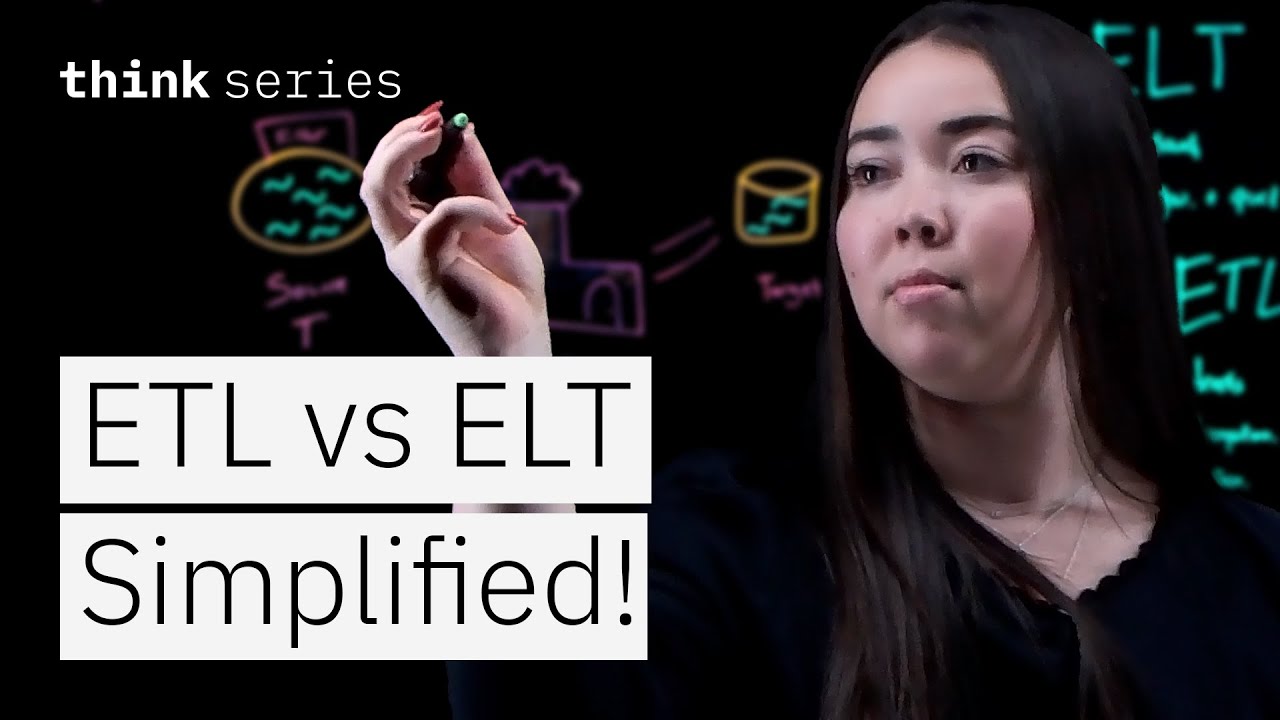
The video explains the concept of data integration, which involves moving and preparing data between various sources and targets for purposes such as reporting, analytics, or AI. It uses the analogy of a water filtration system to describe two primary methods of data processing: ETL (Extract, Transform, Load) and ELT (Extract, Load, Transform). Both methods aim to deliver clean, usable data but differ in where the data transformation or cleaning occurs within the pipeline.
ETL is the traditional approach where data is extracted from source systems, transformed or cleaned in a centralized processing engine, and then loaded into the target system like a cloud data warehouse or data lakehouse. This method is particularly effective for handling large volumes of complex data and sensitive information, as it allows for cleansing and filtering of personally identifiable information (PII) before the data reaches downstream systems. ETL is commonly used for migrating data to the cloud, processing data from cloud applications, and working with financial or marketing systems.
In contrast, ELT reverses the order by extracting raw data, loading it directly into the target system, and then performing transformations within the cloud data platform using its scalable compute resources. This approach leverages modern cloud data warehouses and lakehouses, making it ideal for analytics workloads and teams that use SQL or tools like DBT to generate insights. However, ELT can lead to higher costs if data volumes spike unpredictably, and it requires strong governance and quality controls since raw data lands before being cleaned.
The video also introduces a hybrid approach called TETL (Transform, Extract, Transform, Load), which adds a pre-transformation step at the source before extraction. This method acts like a lightweight filter to clean data early, preventing system clogging, followed by heavier transformations after data movement but before loading into the target system. TETL combines elements of both ETL and ELT to optimize data processing based on specific infrastructure and use case requirements.
Ultimately, the choice between ETL, ELT, and TETL depends on factors such as infrastructure, use case, performance, cost, and compliance needs. While ETL offers cost savings and compliance advantages by cleaning data upfront, ELT provides flexibility and scalability by leveraging cloud compute power. Regardless of the method, the goal remains consistent: to deliver clean, trusted data to the right people at the right time for effective decision-making.