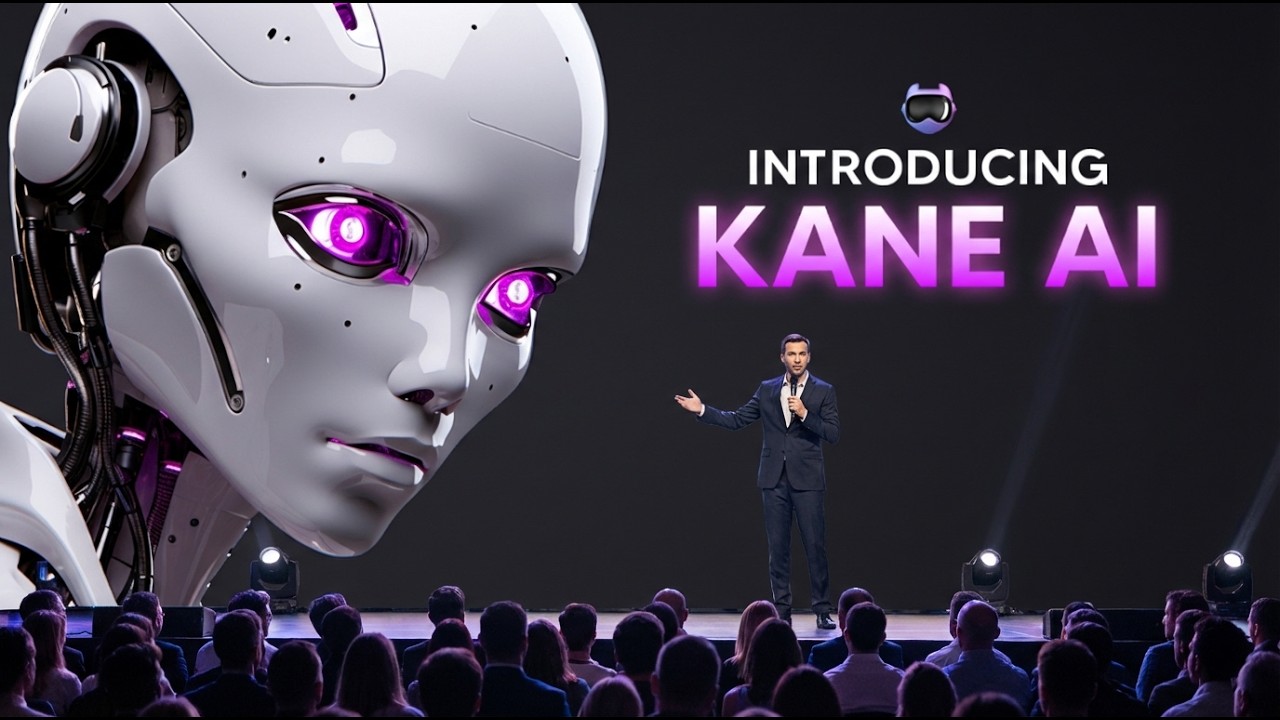
The video introduces Kane AI (KAI), an AI-powered tool designed to revolutionize software testing for developers, startups, and businesses. The creator highlights the common problem of launching apps or websites only to discover broken buttons, malfunctioning forms, or mobile crashes—issues that stem from inadequate testing. Traditional testing is described as tedious, time-consuming, and often expensive, requiring either manual labor or developers to write complex test code. Kane AI aims to eliminate these hurdles by allowing users to describe what they want to test in plain English, automating the entire process.
Kane AI stands out by generating tests from a wide variety of inputs. Whether you have a Jira ticket, a PDF of product requirements, a spreadsheet of user stories, or even images, audio, or video, KAI can analyze these and automatically create structured test cases. This feature saves significant time and effort, as users no longer need to manually write out every test scenario. The tool is robust enough for enterprise-level applications, making it suitable for both small projects and large-scale products.
A particularly impressive feature is natural language test authoring. Instead of writing code, users can simply type instructions like “go to the login page, enter the email, and click the login button,” and KAI will execute and record these steps as structured tests. The AI is capable of understanding complex conditions and logic, such as verifying free shipping for orders over a certain amount. This makes sophisticated testing accessible to non-developers and dramatically simplifies the process for experienced teams.
Kane AI also excels at API testing, which is crucial for modern applications that rely on backend services. By providing API details, users enable KAI to understand expected data flows and behaviors, automatically generating comprehensive test suites. This ensures that APIs function correctly and helps catch issues that might otherwise go unnoticed, providing an extra layer of reliability for products that depend on external or internal APIs.
Finally, the video highlights KAI’s advanced features like auto bug detection and auto healing. The AI can identify and flag issues, such as broken links, without user intervention. When UI changes occur—like a button being moved or renamed—KAI adapts existing tests automatically, preventing them from breaking and saving teams countless hours of maintenance. Overall, Kane AI is presented as a transformative tool that streamlines testing, reduces friction, and allows developers to focus on building rather than debugging, making it highly recommended for anyone involved in software development.