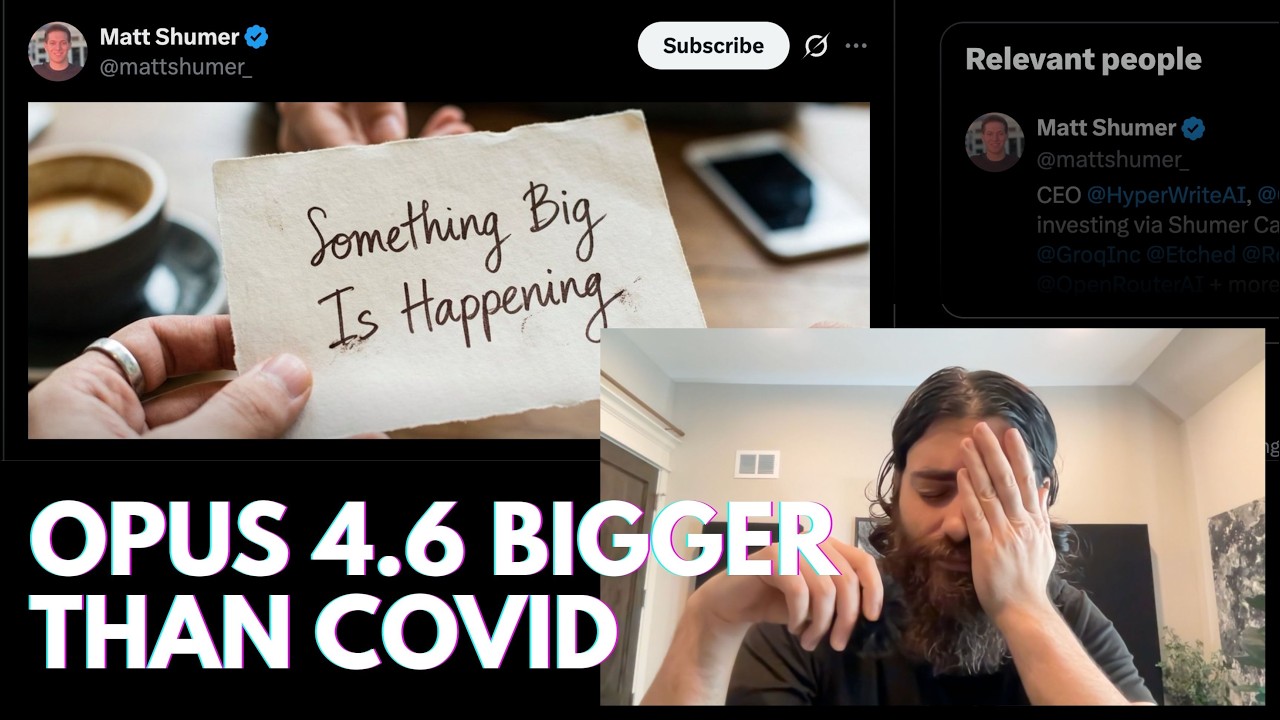
Matt Schumer’s article, “Something Big is Happening,” has gone viral on X (formerly Twitter), amassing over 33 million views and sparking intense debate. The article’s opening draws a vivid parallel between the early days of the COVID-19 pandemic and the current moment in AI, suggesting that we are on the brink of a similarly transformative event. Schumer, an AI startup founder, writes for people outside the tech bubble, aiming to convey the urgency and scale of the changes AI is bringing. The article’s cinematic introduction and relatable tone have contributed to its widespread resonance, with prominent figures like Matt Walsh and Nikita Bier amplifying its message.
Schumer describes his recent experiences with advanced AI models, particularly their ability to autonomously execute complex tasks, such as building and launching software applications. He claims that tools like Cursor can now take plain English instructions, generate tens of thousands of lines of code, and even open and test the resulting app on their own. Schumer frames this as a form of emergent intelligence or proto-sentience, suggesting that AI is rapidly approaching a point where it can perform technical work better than most humans.
The video’s narrator, however, is highly skeptical of Schumer’s claims, arguing that the article exaggerates the capabilities of current AI. They point out that while AI can automate some coding tasks, it still requires human oversight and instruction. The narrator accuses Schumer of using deceptive language to imply sentience or agency where none exists, and of misleading readers who may not be familiar with the technology’s actual limitations. They also criticize the article’s narrative style, likening it to sensationalist storytelling designed to provoke fear and awe.
A key point of contention is Schumer’s assertion that AI is now building the next generation of AI, citing technical documentation from OpenAI. The narrator dismisses this as marketing spin, explaining that while AI tools can assist in their own development, humans remain firmly in control of the process. They argue that claims of self-improving, autonomous AI are overblown and serve more as propaganda than as accurate descriptions of the technology’s state.
In his conclusion, Schumer urges readers to “start using AI seriously” and to integrate it deeply into their work, even suggesting that people should spend an hour a day outsourcing tasks to AI. The narrator finds this advice both amusing and troubling, interpreting it as an encouragement to abandon skill development in favor of reliance on AI tools. They warn that such messaging is more about promoting paid AI services than genuinely preparing people for the future. Ultimately, the video frames the article as a mix of hype, marketing, and misplaced urgency, reflecting broader anxieties and misunderstandings about the rapid evolution of artificial intelligence.