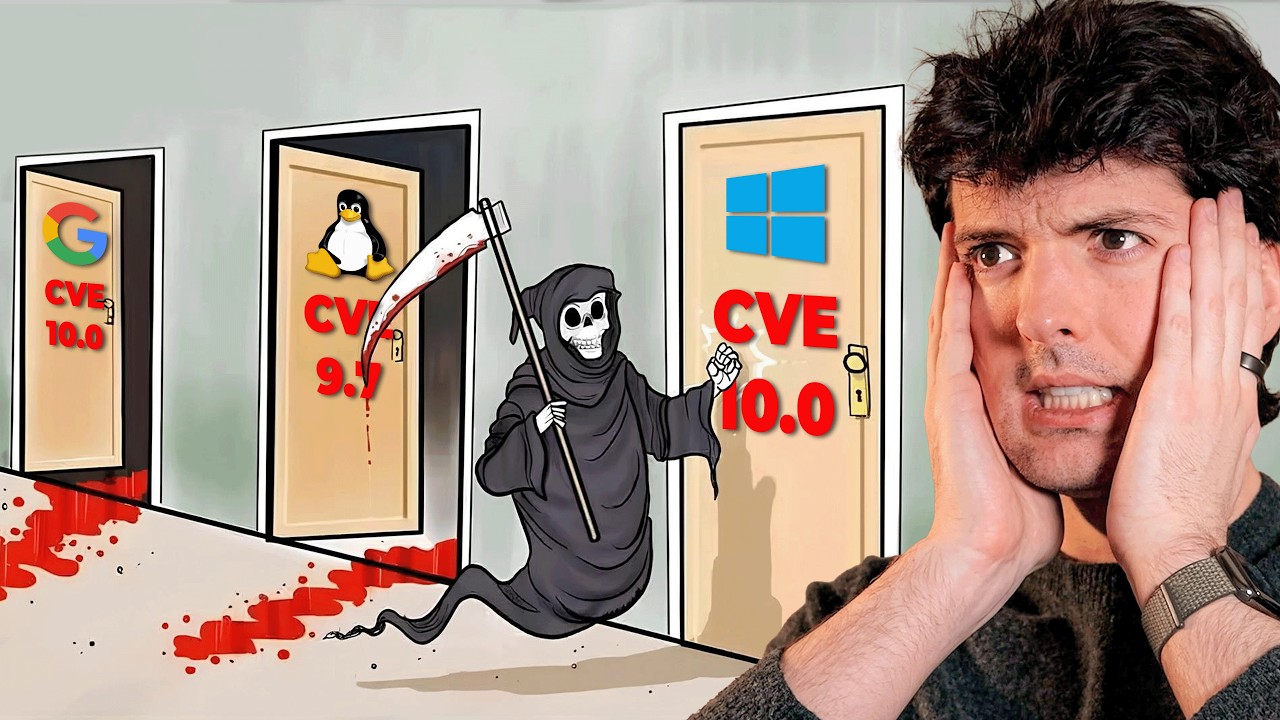
The video discusses a critical and escalating crisis in software security, highlighting a series of severe vulnerabilities affecting major Linux distributions and popular software packages. Notable exploits like Copy Fail, Dirty Frag, and others have exposed fundamental weaknesses in widely used systems, enabling trivial privilege escalations and remote code executions. The speaker emphasizes that these vulnerabilities are not isolated incidents but part of a broader, alarming trend fueled by the rapid advancement of AI technologies, which drastically lower the barrier for discovering and exploiting security flaws. This shift undermines long-standing security practices and threatens the very foundation of software trust.
A key issue raised is the collapse of traditional vulnerability disclosure processes. The once-standard 90-day window for reporting and patching security flaws is no longer sufficient, as AI accelerates both the discovery and exploitation of vulnerabilities. The video explains how patches, often merged quietly with vague commit messages, can be quickly analyzed by AI to identify security fixes and generate exploits, effectively nullifying the protective delay that disclosure windows once provided. This dynamic creates a dangerous environment where attackers can act almost immediately after a patch is released, while many users and distributions lag in applying updates.
The speaker proposes a fundamental overhaul of how open-source software handles security disclosures. They suggest creating a new tier of “trusted actors” who would receive early, confidential information about vulnerabilities and patches, bridging the gap between maintainers and the broader ecosystem, including Linux distribution teams. This approach would require significant changes to current open-source practices, licensing, and platform capabilities, such as more granular control over code visibility and staged releases. Although complex and controversial, such measures are presented as necessary to restore some level of security and trust in software development and distribution.
On a personal and practical level, the speaker advises treating all systems as if they are already compromised, emphasizing the importance of extensive and secure backups, air-gapping critical data, and educating family members about security risks like SIM swapping and identity verification. They stress the urgency of keeping operating systems and critical software up to date while balancing the risks of supply chain attacks that can come through updates themselves. The speaker acknowledges the psychological toll of this reality but underscores the necessity of proactive defense strategies in an increasingly hostile digital landscape.
Finally, the video offers a cautious note of hope, suggesting that if the current surge in vulnerability discoveries is a burst of “low-hanging fruit,” the situation might stabilize as these issues are addressed. Additionally, initiatives like OpenAI’s Daybreak, which uses AI to proactively scan for vulnerabilities, could help defenders keep pace with attackers. However, the speaker warns that without rapid cultural and procedural changes in software security, the accelerating arms race between attackers and defenders will continue to erode trust in software ecosystems, making the current moment a pivotal turning point for the industry.