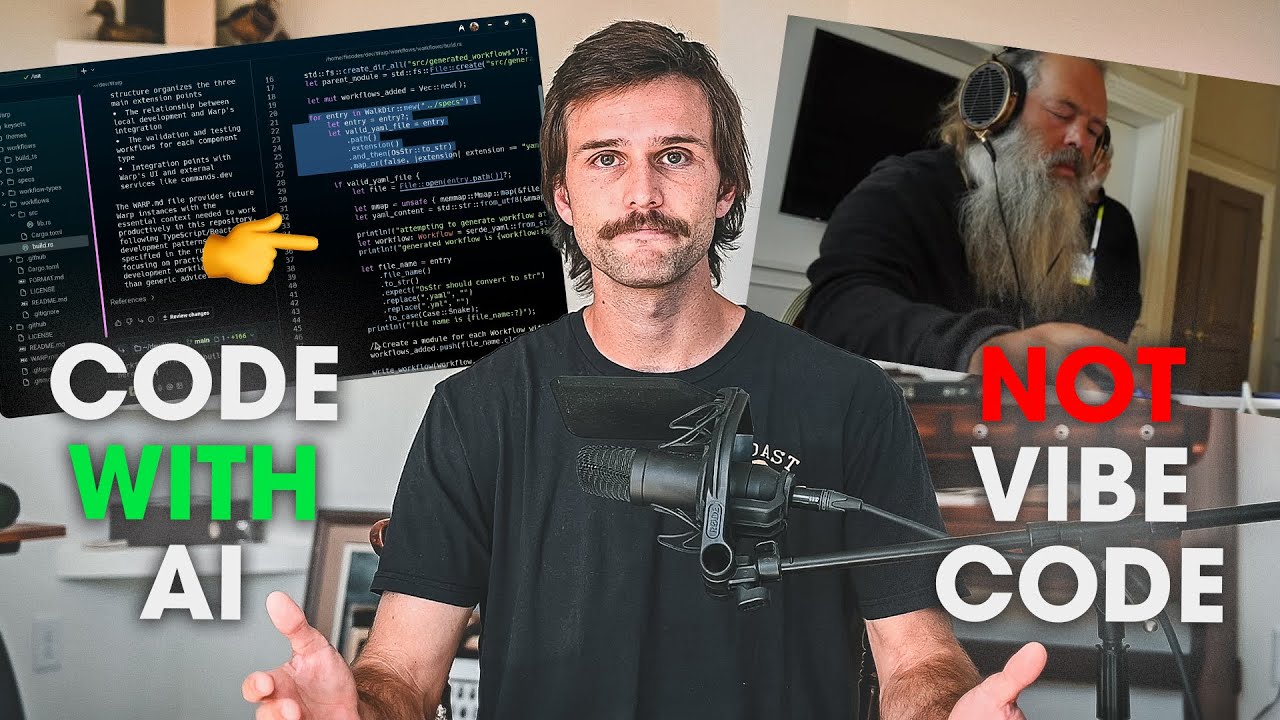
The video emphasizes the growing trend of using AI to assist in coding but highlights a crucial distinction between developers who strategically guide AI and “vibe coders” who let AI take full control without direction. The presenter uses Warp Code, the sponsor of the video, to demonstrate best practices for coding with AI, though the principles apply universally across different AI coding tools. The first step is to avoid repetition by having the AI index the entire codebase to provide context. Setting up clear rules is essential, with global rules covering coding standards and project-specific rules detailing stack versions, database schemas, and naming conventions. This foundation ensures AI interactions are aligned with your preferences without needing to repeat instructions.
Prompting the AI effectively is a key focus. The presenter stresses the importance of specificity in prompts, contrasting vague requests like “make the edit button toggle” with detailed instructions that specify database changes, API endpoints, and UI behavior. Adding context by referencing specific files or code snippets further refines the AI’s understanding, saving time and reducing costs. The video also advises against open-ended prompts and encourages specifying which AI model to use to manage expenses and maintain consistency. Keeping conversations short and focused helps minimize token usage and keeps the AI’s responses relevant.
The workflow with AI should mirror traditional software development practices. Tasks should be planned thoroughly before coding, with the AI helping to create detailed implementation plans that consider data flow, key functions, and integration points. Once a plan is agreed upon, the AI can implement the code with clear restrictions and deliverables. Reviewing AI-generated code critically, as if pair programming with a junior developer, is vital. Developers should question design choices, error handling, and performance implications, and not hesitate to edit the code themselves, using AI to refactor if needed. This collaborative approach ensures quality and maintains developer control.
The video also explores advanced workflows involving multiple AI agents working on different aspects of a task simultaneously, such as coding, reviewing, testing, and refactoring. While this can increase efficiency, it can also become overwhelming, so managing these agents carefully and knowing when to stop or revert changes is important. The presenter highlights tools like Warp Code that simplify git operations through natural language commands and support uploading images or documentation URLs to provide additional context for UI bugs or API implementations. AI can also be a powerful tool for exploring unfamiliar codebases, aiding onboarding by summarizing components, tracing data flow, and explaining architecture.
Ultimately, the video underscores that AI is a tool to amplify, not replace, engineering judgment. Developers should treat AI like a capable intern who requires clear guidance and oversight rather than delegating tasks blindly. By combining strong software engineering skills with strategic AI use, developers can code faster, maintain quality, and reduce frustration. The presenter encourages viewers to try Warp Pro with a free trial and concludes with a humorous note about explaining to AI why blockchain isn’t a solution for a CSS bug, reinforcing the importance of human judgment in the coding process.