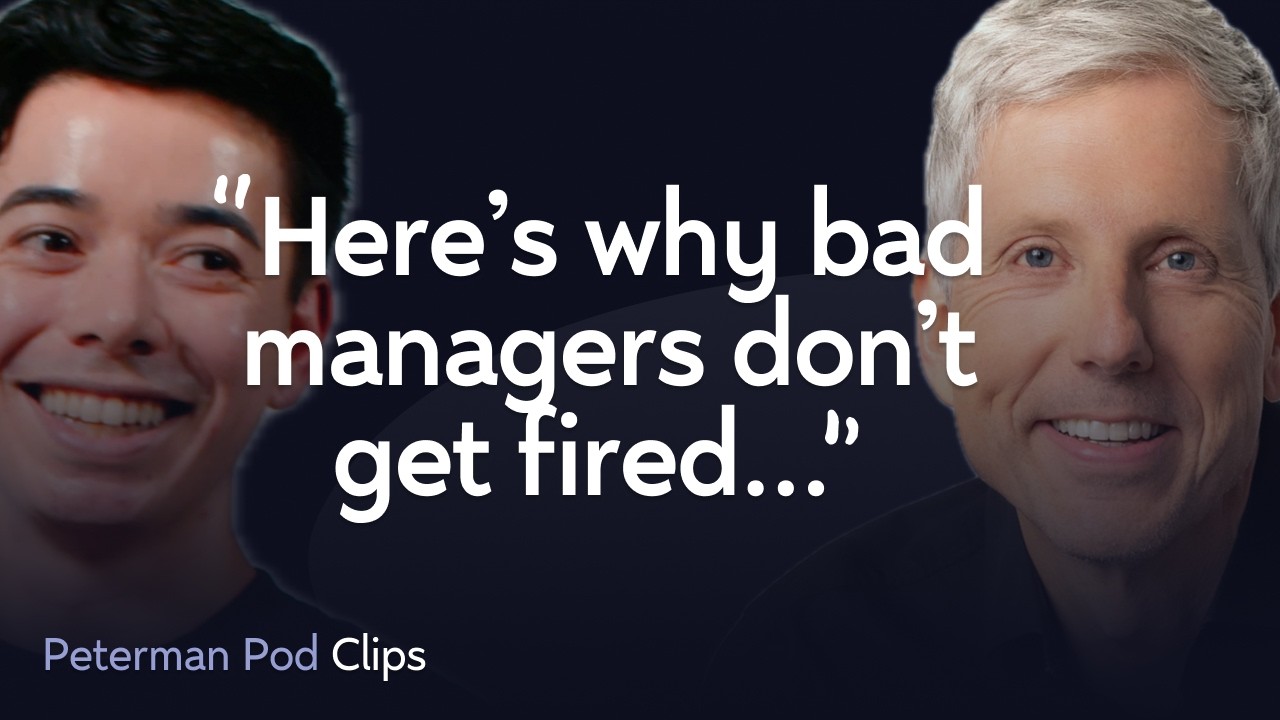
Ethan Evans explains that bad managers often remain in their roles because leadership hesitates to act on single complaints due to the complexities involved, and he advises employees to build collective support before escalating issues to increase credibility and reduce personal risk. He also recommends strategic communication, such as framing requests for role changes positively and carefully managing tone and delivery, to navigate managerial challenges and protect career growth.
In the video, Ethan Evans, a former Amazon VP, discusses why bad managers often don’t get fired and how employees can navigate this challenging situation. He explains that when an employee reports a manager’s shortcomings to higher-ups, the leader faces a dilemma: either dismiss the complaint as the employee being overly sensitive or acknowledge the problem and deal with the complex consequences of managing out a manager, hiring a replacement, and covering the workload in the interim. This subconscious resistance often leads to inaction, making it difficult for bad managers to be removed based on a single complaint.
Evans emphasizes the importance of collective action when addressing a problematic manager. He advises employees to build alliances with coworkers who share similar concerns before escalating the issue to higher management. Multiple consistent reports are more likely to be taken seriously than isolated complaints. This approach not only validates the concern but also reduces the risk for individuals who might fear retaliation or being labeled as troublemakers. The analogy of “never mutiny alone” highlights the power of group solidarity in confronting leadership issues.
For individual contributors struggling with a difficult manager, Evans suggests first seeking to understand if others share their perspective. This sanity check can reveal whether the issue is a matter of personal style or a genuine managerial deficiency. If others confirm the problem but are hesitant to speak up, the employee can act as a spokesperson, presenting a united front to the skip-level manager. This strategy increases credibility and encourages leadership to investigate further, balancing the delicate dynamics of reporting on someone who still holds authority over the complainants.
Evans also discusses an alternative approach where an employee frames their desire to move teams or roles without directly criticizing their manager. By making a strong business case for why they would be more productive elsewhere, the employee can avoid confrontation and potentially secure a transfer. If this approach fails, a more candid conversation can be had, carefully worded to avoid blame and present the situation as a mutual incompatibility rather than an attack. Evans shares a personal example where he leveraged a job offer from another senior leader to prompt his manager to agree to a desired role change, demonstrating the importance of strategic communication and understanding the manager’s perspective.
Throughout the discussion, Evans highlights the significance of preparation, tone, and body language in these sensitive conversations. He advises employees to think through their wording carefully and deliver their messages with sincerity and warmth to avoid triggering defensiveness. While some may dislike the political nature of such interactions, Evans stresses that mastering these human dynamics is crucial for career success. Understanding and navigating the emotional and political landscape of the workplace can empower employees to address managerial issues effectively and protect their own professional growth.