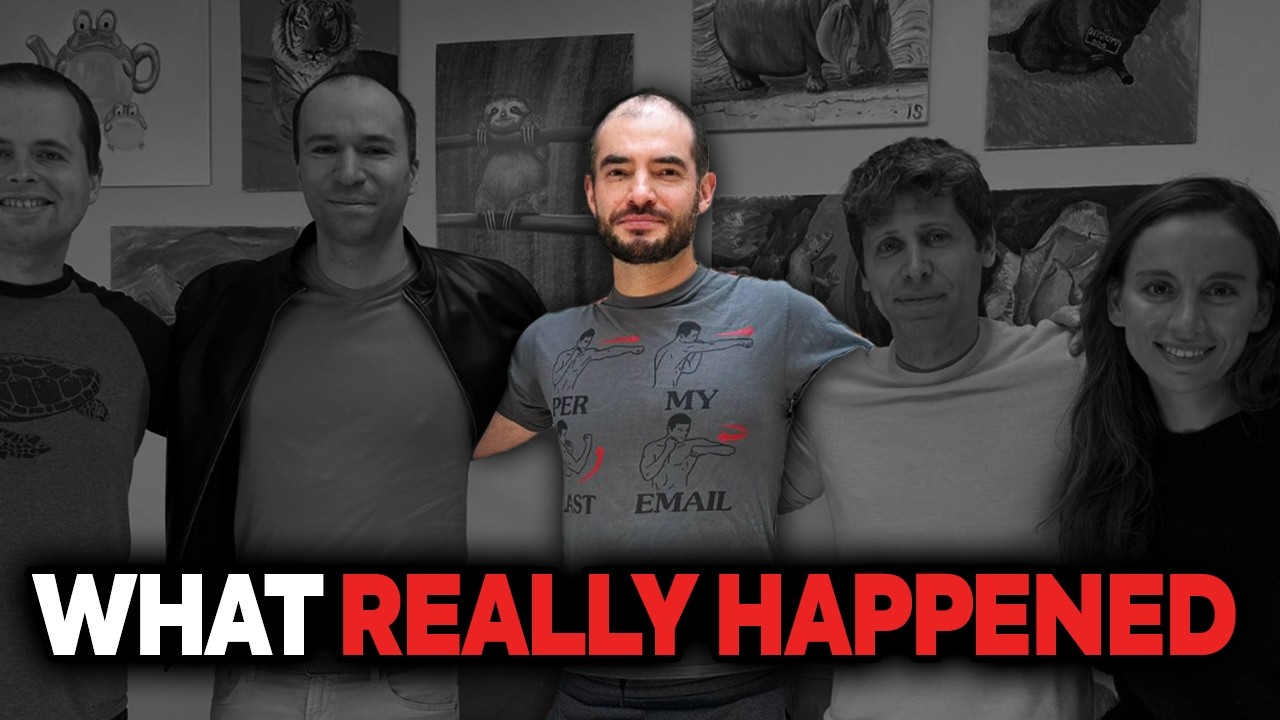
The deposition of Ilia Sutskever, former co-founder of OpenAI, has revealed a dramatic and complex saga involving key figures like Sam Altman, Greg Brockman, and board members such as Helen Toner and Tasha McAulay. The context of this deposition is Elon Musk’s lawsuit against Sam Altman, accusing him of illegally converting OpenAI from a nonprofit into a for-profit entity. The deposition, recorded in October 2025, centers on internal conflicts at OpenAI, particularly the board dynamics leading up to Altman’s firing and subsequent reinstatement. Ilia disclosed that he prepared a detailed 52-page memo at the request of independent board members, documenting Altman’s alleged pattern of lying, undermining executives, and fostering internal conflicts, which ultimately led to Altman’s temporary removal.
Ilia explained that the memo was shared only with independent directors, excluding Altman, because he feared Altman would suppress the discussions. The independent board members involved included Adam D’Angelo, Helen Toner, and Tasha McAulay, all of whom were critical of Altman’s leadership. Helen Toner, in particular, was vocal about her dissatisfaction and even wrote a critical article about OpenAI while still on the board. The deposition also revealed that some board members were willing to let OpenAI be destroyed if Altman did not return, believing that would still align with the company’s mission. This extreme stance highlights the deep divisions within the leadership during this turbulent period.
The deposition further explored Altman’s history, including his time at Y Combinator, where he stepped down to focus on OpenAI, and allegations about his management style, which were refuted by Paul Graham, co-founder of YC. Ilia also discussed internal rivalries, such as those involving Greg Brockman and Dario Amodei, co-founder of Anthropic, who sought to take over research leadership at OpenAI. Notably, Anthropic attempted to merge with OpenAI during the conflict, a proposal Ilia opposed despite some board members’ support. The deposition painted a picture of a highly political and cutthroat environment, with Altman described as a skilled power player who ultimately regained control after the board’s resignation.
Ilia’s departure from OpenAI to start his own company, Safe Super Intelligence, was also covered. He cited a new vision and the desire to pursue different research approaches as reasons for leaving. The questioning touched on Ilia’s equity stake in OpenAI, which has increased in value since his departure, and the mystery surrounding who is funding his legal defense in the ongoing lawsuit. The deposition included moments of tension and bickering between lawyers, underscoring the contentious nature of the case and the high stakes involved for all parties.
Overall, the deposition sheds light on the intense internal struggles at OpenAI, revealing a complex web of personal rivalries, strategic disagreements, and governance challenges. It highlights the difficulties of managing a cutting-edge AI company with competing visions and personalities, as well as the broader implications of transitioning from a nonprofit to a mission-driven for-profit structure. The revelations suggest that the story of OpenAI’s leadership battle is far from over and may well inspire future dramatizations given its high-profile cast and dramatic twists.