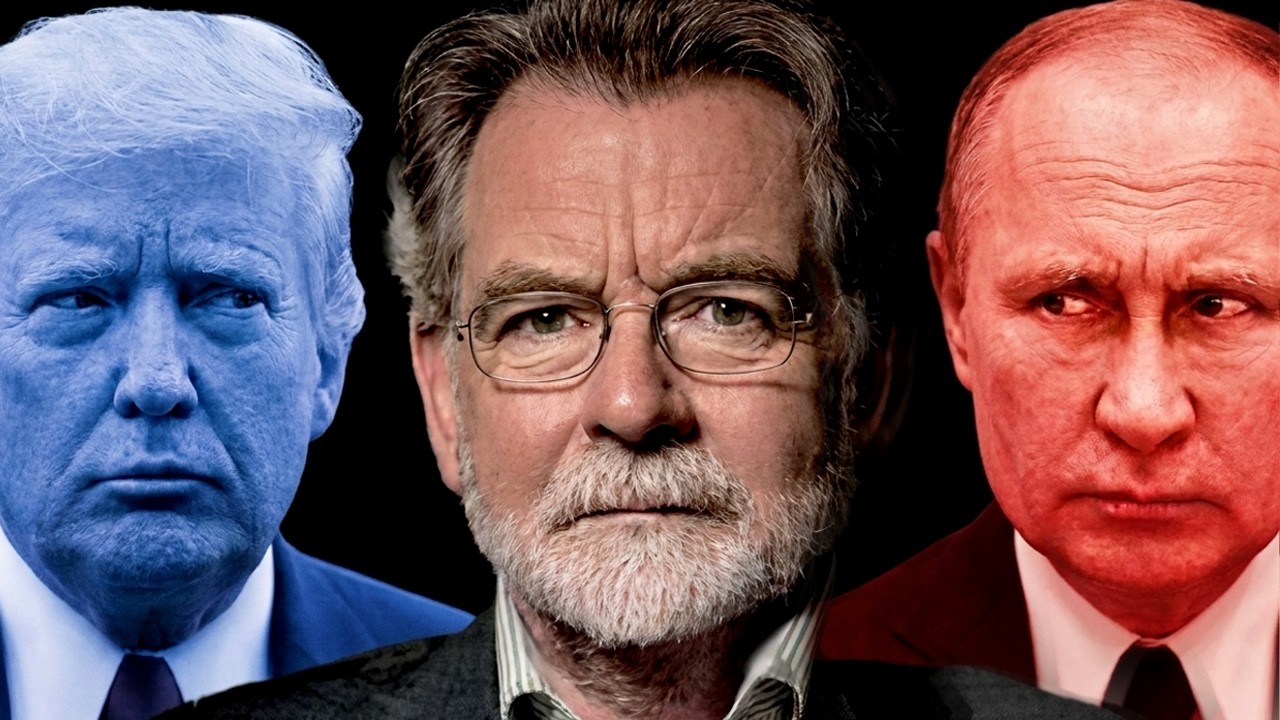
The expert argues that the United States cannot win a potential World War III due to its reluctance to engage in nuclear conflict and its declining military position relative to rivals like Russia and China, especially in contested regions such as Ukraine and East Asia. Instead of pursuing unrealistic global dominance, the U.S. should accept a multipolar world, focusing on pragmatic cooperation and regional strength to maintain influence and security without risking catastrophic war.
The expert explains that the risk of nuclear war, particularly between the United States and Russia, has resurfaced due to the current geopolitical tensions. Russia can credibly threaten nuclear use against Ukraine, knowing the U.S. is unlikely to retaliate with nuclear weapons, as President Biden has stated America will not fight World War III in Ukraine. This restraint reflects a broader reluctance by the U.S. to engage in nuclear conflict, which contrasts sharply with Cold War-era leadership that was willing to risk nuclear war to defend its interests.
The expert highlights the challenges America faces in maintaining its global dominance, particularly against Russia in Europe and China in East Asia. Both Russia and China assert strong spheres of influence near their borders, pushing the U.S. out of these regions. Despite rhetoric from recent U.S. administrations about confronting China, actual military and strategic responses have been insufficient. Unlike during the Cold War, current U.S. political leaders have not prepared the American public for the sacrifices and risks, including nuclear war, that would be necessary to preserve U.S. leadership.
The rise of China is a central concern, with China now capable of denying the U.S. any conventional military victory in East Asia. The expert argues that the U.S. has allowed its military position to decline relative to China’s growing capabilities and that the American public is unwilling to bear the costs of a serious strategic confrontation. Taiwan’s defense is particularly precarious; it is essentially indefensible against China’s overwhelming power, and any conflict there risks escalating into a nuclear war. The U.S. faces a difficult choice between resisting China, negotiating a compromise, or stepping back from its leadership role in the region.
The expert foresees a multipolar world where the U.S. no longer dominates globally but remains a powerful state within its own hemisphere. Europe may emerge as a strategic great power capable of standing up to Russia if it develops indigenous military capabilities. Meanwhile, countries like Japan and South Korea may need to acquire their own nuclear weapons to ensure their security in a region dominated by China and North Korea. This multipolar future is darker and more complex but preferable to the catastrophic risks of trying to preserve a unipolar American-led order.
Ultimately, the expert urges the U.S. to abandon the outdated goal of global primacy and instead focus on being a strong, wise participant in a multipolar world. The old foreign policy establishment’s insistence on maintaining U.S. dominance is dangerous and unrealistic. By accepting the new global reality and cooperating with other powers, America can still achieve significant influence and security without risking devastating conflict. The expert calls for pragmatic leadership that recognizes the limits of American power and the necessity of adapting to a changing international order.