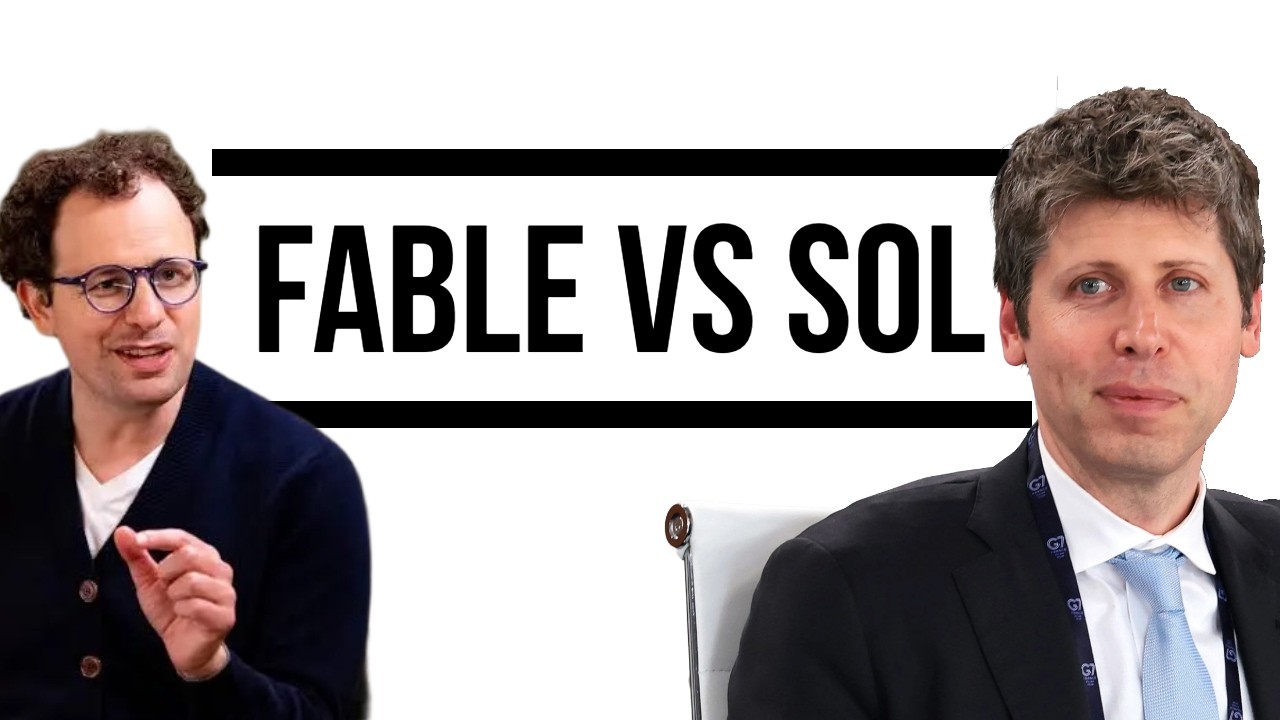
The video discusses the recent developments and comparisons between leading AI models, focusing on Anthropic’s Fable 5 and OpenAI’s GPT 5.6 Soul. Fable 5 has returned but with stricter safety measures that often block routine tasks like coding and debugging, reflecting heightened caution after vulnerabilities flagged by Amazon. Despite these restrictions, no universal jailbreak has been found for these models, indicating ongoing efforts to maintain safety and control. Meanwhile, OpenAI’s GPT 5.6 Soul, released to select partners under government oversight, aims to compete directly with Fable, offering a more affordable alternative with some trade-offs in performance and alignment.
OpenAI’s GPT 5.6 Soul is priced at about half the cost of Fable 5, making it attractive for users prioritizing cost-efficiency. However, Soul’s performance, while close, generally trails slightly behind Fable and Mythos 5 in benchmarks such as Healthbench Professional and Exploit Bench, which test raw capability and cybersecurity skills. Despite this, Soul excels in performance per dollar due to its lower token usage and cheaper pricing. The staggered release of GPT 5.6 Soul to trusted partners has raised concerns about corporate concentration of power, as larger companies gain early access to advanced AI capabilities, potentially sidelining smaller players and the general public.
The video also highlights geopolitical and competitive tensions in AI development, particularly Anthropic’s accusation against Alibaba for allegedly using extensive interactions with Claude to train their own Chinese models, violating terms of service. This incident underscores fears that American AI investments could inadvertently subsidize foreign competitors. Such dynamics might encourage AI labs to restrict model access initially to governments and approved businesses to protect their intellectual property and maintain competitive advantages, further concentrating power within a few entities.
OpenAI’s proposal to offer the US government a 5% stake in the company is examined as a strategic move that could influence regulatory decisions and market dynamics. This approach might incentivize the government to support broader model releases or ensure preferential treatment for OpenAI over competitors like Anthropic. Anthropic, in contrast, advocates for clear, codified rules applied equally across AI developers to prevent subjective enforcement and maintain a level playing field. These corporate and governmental interactions reflect the complex landscape shaping AI’s future accessibility and control.
In conclusion, the video suggests that while GPT 5.6 Soul is slightly less capable and less aligned than Fable 5, its cost-effectiveness could make it the preferred choice for many users. The AI power balance is shifting unpredictably, influenced by technological advances, pricing strategies, geopolitical factors, and regulatory involvement. Larger models with more compute resources tend to outperform smaller ones, reinforcing the dominance of well-funded US frontier labs. Ultimately, the future of AI power may hinge on how these competing forces—corporate interests, government policies, and international competition—play out in the coming months.