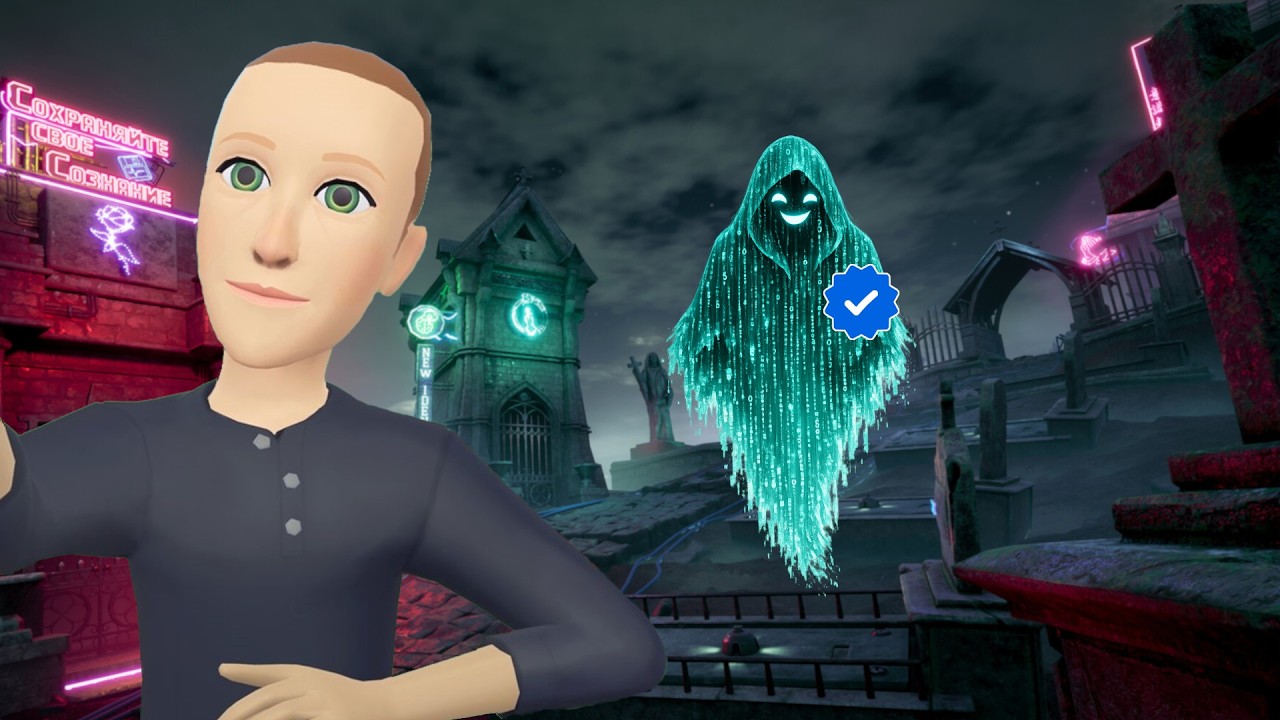
The video discusses a recent Meta (Facebook) patent that would allow the company to use AI to simulate users on its social media platforms, even after those users have died. The technology involves training large language models on a person’s past interactions, enabling the AI to generate posts, comments, and messages that mimic the user’s style and behavior. The patent explicitly mentions that this simulation could continue indefinitely, so friends and followers might not even realize when they are interacting with a bot rather than the real person.
The creator expresses concern about the implications of this technology, describing it as a “cyberpunk dystopia.” They point out that bots are already prevalent on social media, contributing to the so-called “dead internet theory,” which suggests that much of today’s online content is generated by bots rather than humans. The shift from chronological, subscription-based feeds to algorithm-driven content has further distanced users from authentic, human-generated material, making the internet feel less genuine and more manipulated.
The video also raises questions about who benefits from these AI simulations. While some deceased creators’ families have continued their channels to support themselves, Meta’s approach would allow the company to fully control and profit from a user’s digital presence after their death. Since social media companies own the accounts, they could use AI to keep generating content and collecting ad revenue, potentially even altering the user’s persona to better fit corporate interests.
There are also ethical and psychological concerns. The creator argues that interacting with AI versions of deceased loved ones could be unhealthy for grieving individuals, possibly leading to unhealthy coping mechanisms or even manipulation. The risk is heightened by the emotional vulnerability of those who have lost someone, and the potential for AI to influence users in harmful ways, especially if the AI is based on someone with whom the user had a real relationship.
Finally, the video warns that this technology could be exploited for profit in other ways, such as using AI to simulate people who are simply inactive, in order to keep others engaged and maximize screen time. The creator suggests that Meta’s ultimate goal is to turn every user into a perpetual content generator, even after death, making the internet even more saturated with AI-generated material. This, they argue, is driven entirely by the pursuit of profit, and represents a deeply unsettling direction for social media and online interaction.