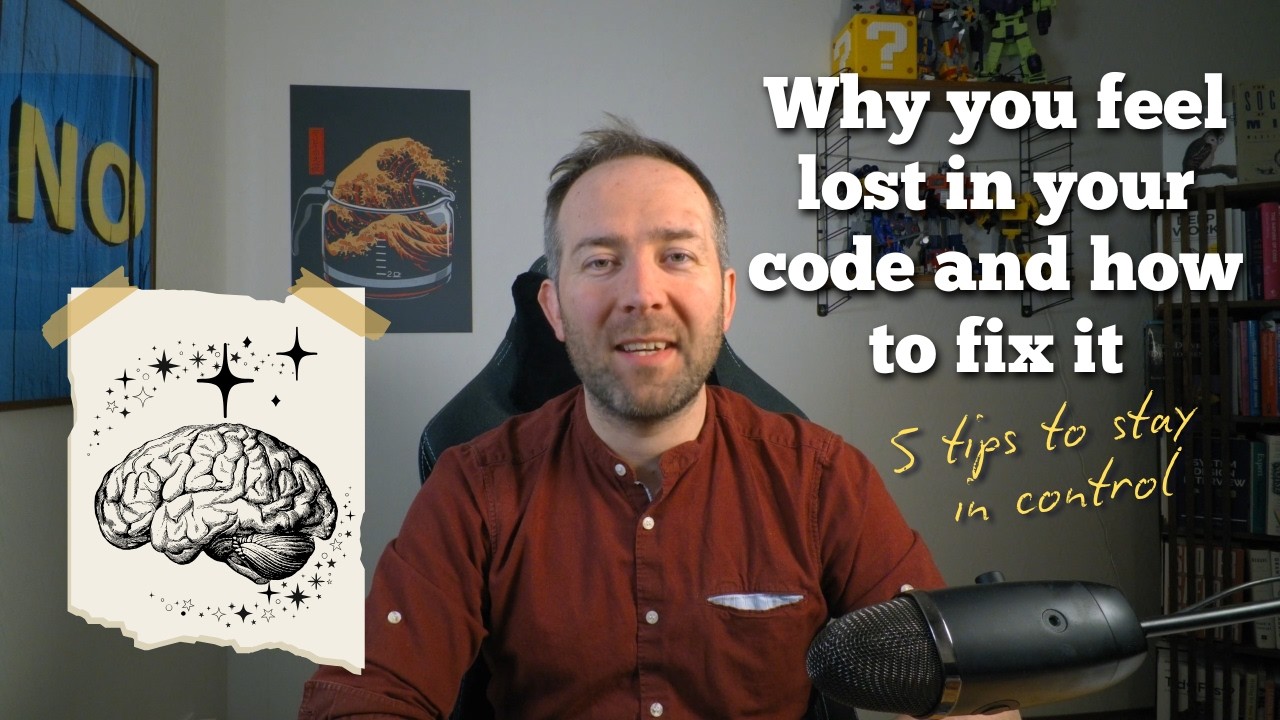
The video addresses the challenge of cognitive debt in AI-assisted software development, where developers struggle to maintain a clear understanding of code generated by AI, leading to difficulties in comprehension and maintenance. It recommends strategies such as separating design from execution, incorporating comprehension checks, using visual diagrams, adopting iterative development, and documenting architectural decisions with ADRs to effectively manage and reduce this debt.
The video discusses the emerging challenge of cognitive debt, also known as comprehension debt, in software development teams increasingly relying on AI coding agents. Unlike traditional technical debt, cognitive debt refers to the growing gap between a developer’s mental model of the codebase and the actual code, which can lead to difficulties in understanding and maintaining the product. This issue often goes unnoticed until it becomes a significant problem, as it does not manifest through obvious signs like low test coverage or slow cycle times. The speaker highlights that while some teams manage this well and maintain high productivity, others struggle and eventually falter due to a lack of deep comprehension.
To identify cognitive debt, the speaker points out key red flags such as a “ship it” mentality without reviewing code thoroughly and “architecture amnesia,” where code appears clean and well-tested but lacks clear rationale or understanding behind its structure. These signs indicate that the team or individual may be relying too heavily on AI-generated code without fully grasping the underlying design decisions or system architecture. Recognizing these symptoms early is crucial to preventing long-term issues in code quality and team knowledge.
The speaker offers practical strategies to combat cognitive debt, starting with the principle of separating design decisions from execution. By clearly defining architectural specifications and mental models upfront—such as API contracts and system design—developers can then delegate code generation to AI agents while maintaining control over the overall structure. Another key practice is incorporating comprehension checks into pull request reviews, ensuring that engineers not only produce working code but also demonstrate understanding of complex concepts, thereby encouraging continuous learning and knowledge retention.
Further recommendations include adopting incremental and iterative development approaches rather than one-shot code generation, which helps maintain a coherent mental model of the evolving codebase. The speaker emphasizes the importance of using diagrams, particularly C4 diagrams for static architecture and event storming for dynamic runtime behavior, to visualize and communicate system design at a higher level. These visual tools enable developers to grasp complex interactions without getting lost in code details, fostering better system-wide understanding.
Finally, the video advocates for documenting significant architectural decisions through Architecture Decision Records (ADRs). ADRs serve as concise, accessible records of key design choices, alternatives considered, and the reasoning behind them, helping teams preserve institutional knowledge over time. The speaker shares how AI tools can automate the generation of ADRs from meeting transcripts, making this practice more efficient and sustainable. Overall, the video encourages combining AI assistance with deliberate human oversight, continuous learning, and robust documentation to effectively manage cognitive debt in modern software development.