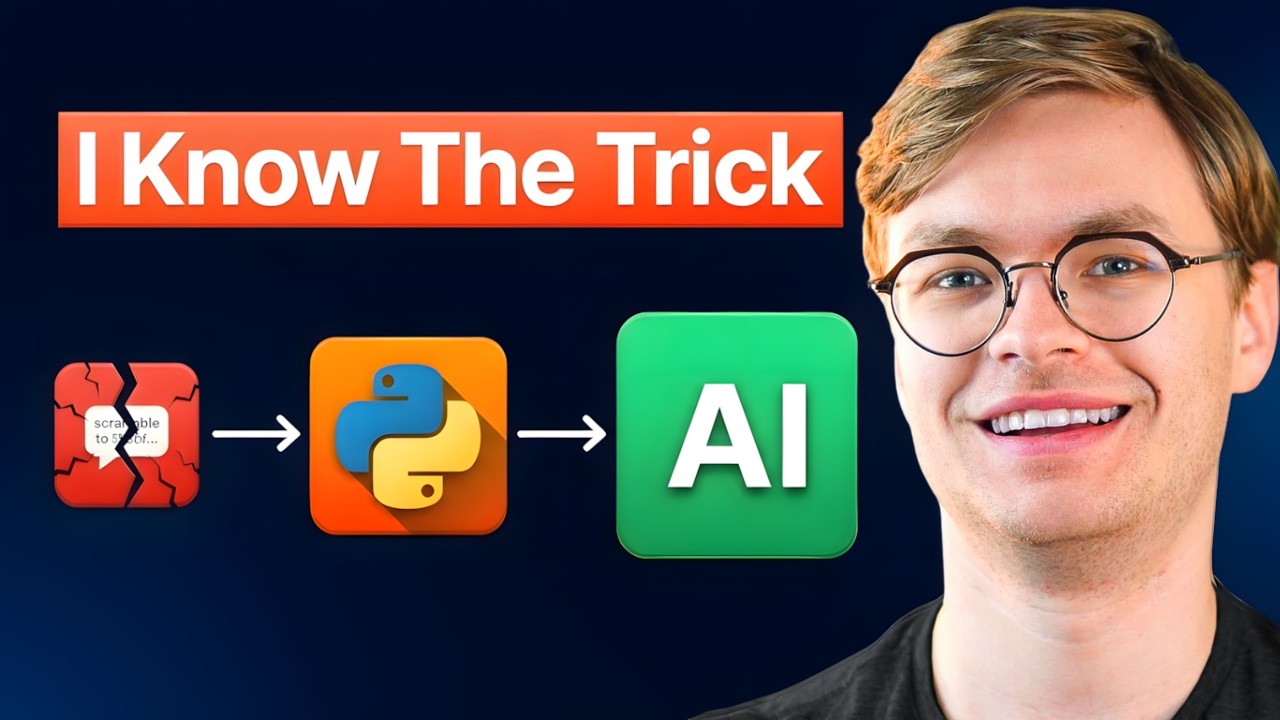
In this video, the creator shares their experience fine-tuning an AI model using YouTube transcripts from their channel to make the AI sound like them. Initially, the fine-tuning produced poor results due to issues with the raw transcript data. The key takeaway is that successful fine-tuning depends heavily on the quality and preparation of input data, not just the training step itself. The video emphasizes the importance of a comprehensive data pipeline involving fetching, cleaning, rewriting, and augmenting data before fine-tuning.
The first step involves fetching transcripts using tools like YouTube DLP to extract automatic captions from videos. However, these auto-generated transcripts often contain errors such as spelling mistakes, awkward formatting, and misinterpretations. Cleaning the data is crucial to remove filler words, fix punctuation, correct capitalization, and address transcription errors. The creator uses a local large language model (Mistral 14B) to automate much of this cleaning process, which significantly improves data quality and reduces training issues.
Rewriting the transcripts is another important step because spoken content in videos is often structured differently than how one would naturally converse or answer questions. The creator reformats the transcripts into a question-and-answer style to better suit interactive AI applications. Additionally, data augmentation is performed by generating multiple question prompts for the same answer, enabling the fine-tuned model to handle various types of user queries such as direct questions, opinion requests, or writing tasks.
To further improve the model’s personality and relevance, the creator employs persona oversampling, duplicating specific training examples that reflect their personal traits or opinions. This technique ensures the model better captures their unique voice and identity, despite such content being a small fraction of the overall dataset. The video also highlights the importance of splitting long transcripts into shorter segments to speed up training and produce more concise, natural responses, reducing computational complexity and training time from many hours to just a few.
Finally, the video encourages viewers to understand the entire data pipeline and not just focus on the fine-tuning step. By mastering data fetching, cleaning, rewriting, augmenting, and optimizing training data, creators can achieve much better fine-tuned AI models. The creator offers free local AI projects and plans to release more tutorials to help others learn effective fine-tuning techniques, emphasizing that a well-prepared dataset is the foundation of a successful personalized AI model.