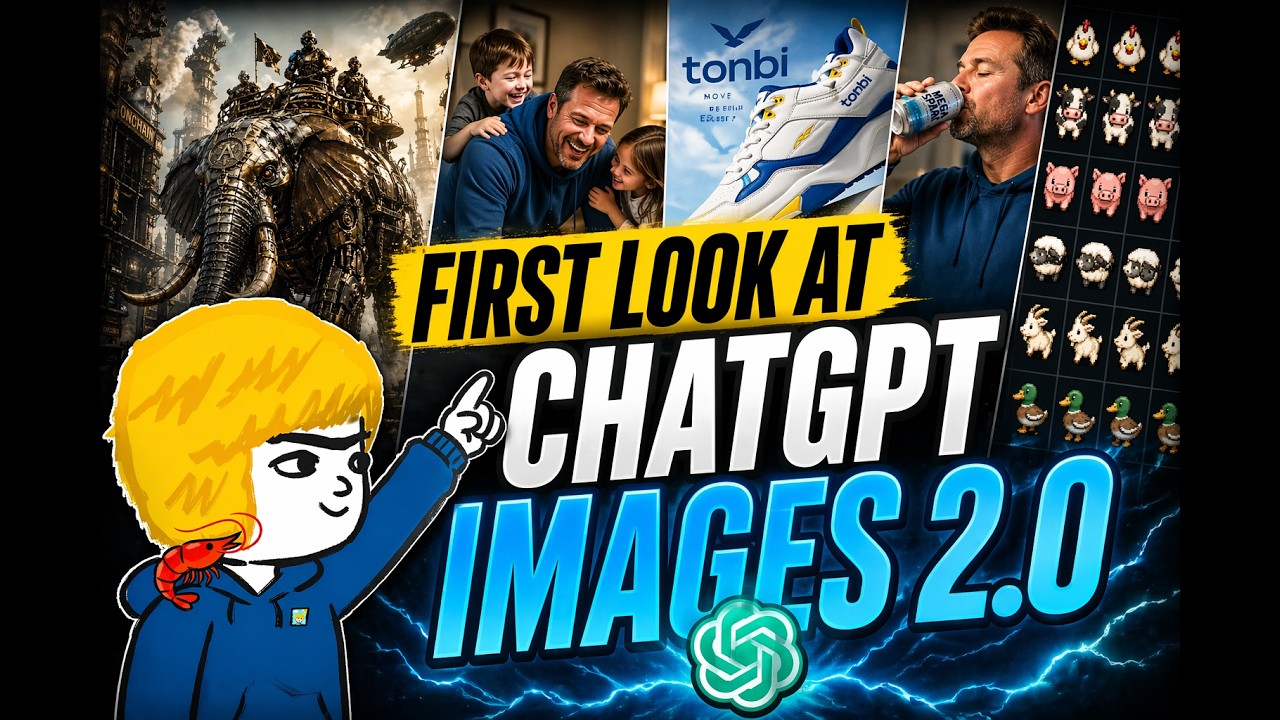
OpenAI has released ChatGPT Images 2.0, a state-of-the-art image generation model that represents a significant leap forward in visual AI technology. This new model excels at handling complex visual tasks, producing sharp, precise, and immediately usable images with enhanced editing capabilities, richer layouts, and advanced reasoning abilities. It supports greater precision and control, stylistic sophistication, photorealism, flexible aspect ratios, and multilingual text generation. Notably, the “thinking model” feature allows it to search the web for real-time information and generate multiple distinct images from a single prompt, making it highly versatile and intelligent.
The video creator tested the model with various prompts to explore its capabilities. First, they asked it to create a media kit for their content brand using existing assets like their YouTube banner and profile picture. The model successfully generated a cohesive media kit that maintained the brand’s playful, marker-style aesthetic, accurately capturing colors and text. Next, they experimented with generating images of a house featuring a specific heat pump model for a business project involving local contractors. While the model produced generally good results, some details like color accuracy and heat pump design required refinement, but it showed promise for practical business applications.
Further tests included creating a sneaker brand campaign with consistent branding across multiple angles, which the model handled impressively by even incorporating thematic branding elements based on the brand name without explicit instructions. The model also generated a 12x12 pixel sprite sheet for a farming game, producing consistent and cute animal characters with walking animations, demonstrating its utility for game development. Additionally, it created a realistic slideshow sequence for a TikTok-style ad campaign, maintaining character consistency across multiple frames, which is valuable for marketing content.
The model’s multilingual capabilities were also tested by translating English text into Japanese while preserving style and layout, with generally good results despite some literal translations. A hyperrealistic movie poster featuring a steampunk mechanical elephant and futuristic characters was generated with impressive detail and realism, showcasing the model’s ability to create complex, high-quality artwork. Finally, the model was tasked with creating a YouTube thumbnail incorporating various images and an illustrated character with a transparent background, producing a professional and eye-catching result that could potentially replace other thumbnail creation tools.
Overall, ChatGPT Images 2.0 demonstrates a wide range of practical applications across branding, marketing, game development, and creative projects. While some outputs may require iterative prompting and minor adjustments, the model’s precision, stylistic flexibility, and real-time intelligence mark a new era in image generation technology. The video creator expressed enthusiasm about exploring further uses and encouraged viewers to share their experiences and tips for prompting the model effectively. This release opens up exciting opportunities for businesses and creators looking to leverage AI-driven visual content.