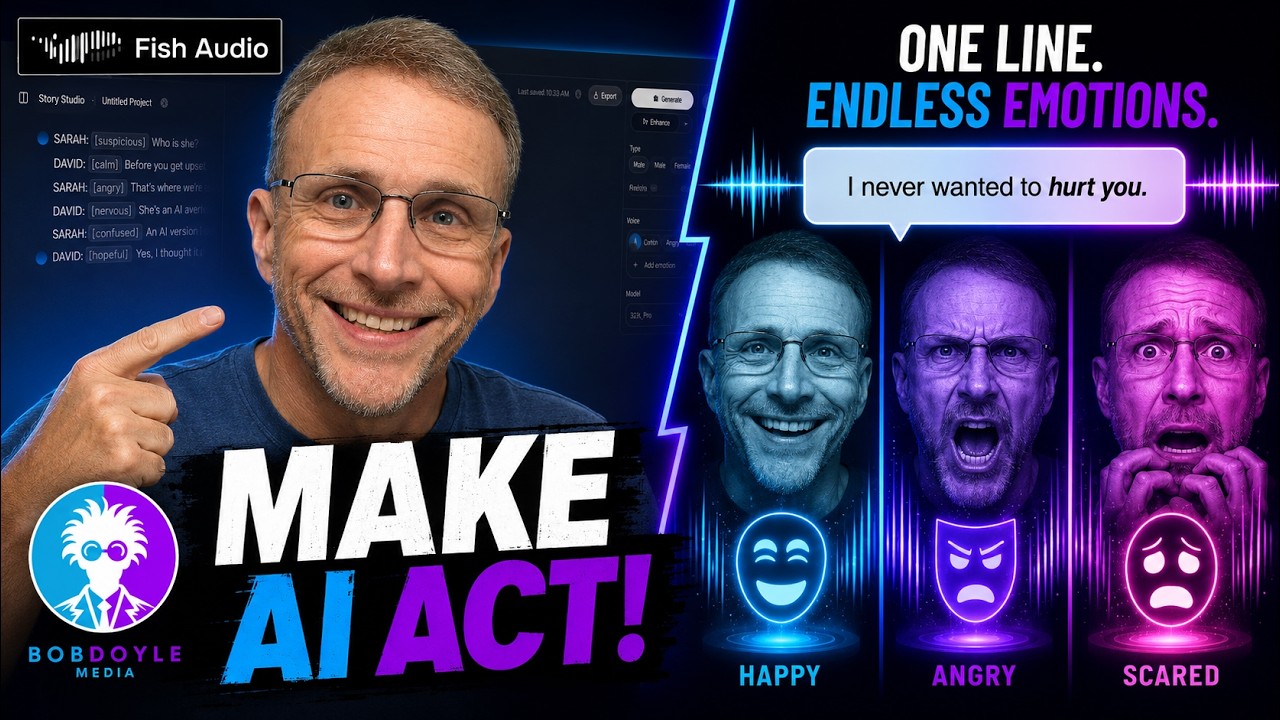
The video showcases Fish Audio’s Emotion Control system, which enhances text-to-speech performances by allowing users to add nuanced emotional cues through natural language tags, creating realistic and expressive character voices with a wide range of emotions. It highlights features like AI-powered autotagging, custom voice creation, and the Story Studio for producing full scenes, emphasizing how these tools help storytellers craft compelling, emotionally rich audio content efficiently.
The video explores Fish Audio’s Emotion Control system, which enhances text-to-speech (TTS) performances by allowing users to direct voice emotions using natural language tags. By simply typing emotional cues in brackets, users can create varied emotional arcs for the same script, making the voices sound more realistic and expressive. The system supports a wide range of emotions and effects, such as nervousness, frustration, whispering, laughing, and sobbing, enabling nuanced character portrayals beyond basic happy, sad, or angry tones.
Fish Audio offers multiple ways to apply these emotion tags, including manual input and an AI-powered autotag feature that suggests appropriate emotional cues based on the script context. The video demonstrates how subtle changes in phrasing and the addition of effects like giggles can significantly improve the naturalness of the speech. Users can also select from a broad library of voices or create custom voices through instant voice cloning, allowing for consistent character voices with unique dialects and mannerisms.
The platform’s Story Studio feature is highlighted as a powerful tool for producing full scenes and dialogues with emotional progression. It allows users to paste entire scripts, assign voices, adjust timing, and add sound effects or music, effectively creating complete audio productions. The video showcases examples such as a cooking show scene where a sauce becomes sentient, illustrating how emotional tags help convey the character’s shifting feelings and maintain realism throughout the narrative.
Creating custom voices is emphasized as a key advantage, enabling users to build a stable of characters with distinct personalities and emotional ranges. This approach ensures consistency across projects and enhances storytelling by matching voice style and emotional expression to the character’s role. The video also stresses the importance of combining audio with video and sound effects to create immersive experiences, as the emotional impact is amplified when paired with visual context.
Ultimately, the video demonstrates that Fish Audio’s emotion controls are not just about making voices sound different but about telling compelling stories with believable characters. The system’s flexibility and ease of iteration allow creators to refine performances quickly, making it a valuable tool for video producers, podcasters, and anyone seeking to add depth and realism to AI-generated speech. The presenter encourages viewers to explore Fish Audio and subscribe for more insights into innovative audio technologies.
Useful Links
- Fish Audio Official Website — Direct source of the platform and tools demonstrated in the video for emotion-controlled AI voice generation.