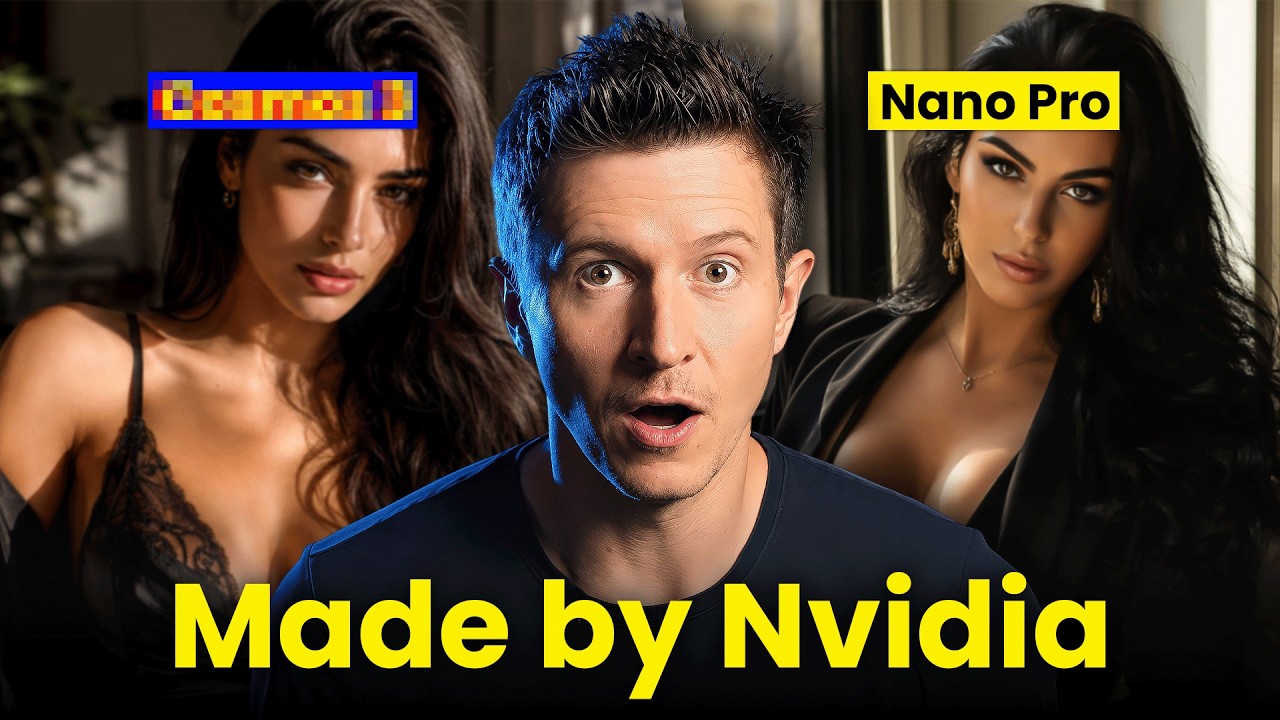
In this video, AI Samson introduces two impressive open-source AI image models, Cosmos 3 from Nvidia and Idoggram 4, which rival leading paid models like Google Nano Banana. Cosmos 3 is a versatile model designed not only for image generation but also for audio, video, and realistic physical simulations, primarily aimed at robotics and autonomous driving. It excels in maintaining physics and temporal consistency, producing highly realistic images and videos, though it requires powerful hardware to run. Idoggram 4, on the other hand, focuses on graphic design and text rendering, delivering exceptional results in typography, product design, and cinematic imagery, with features like background removal and prompt editing that enhance creative control.
The video compares these free models against paid options such as Nano Banana Pro and GPT Images 2 through blind testing across various categories including photorealistic hands, human faces, text rendering, cinematic scenes, anime, animation, and artistic styles. Results show that while Cosmos 3 and Idoggram 4 perform admirably, especially in their specialized areas, GPT Images 2 often leads as the best all-round model. Idoggram 4 shines in text and graphic design, Cosmos 3 excels in mechanical realism and physics-based scenes, and Nano Banana Pro impresses with cuteness and artistic balance, demonstrating that open-source models are closing the gap with commercial offerings.
For cinematic video creation, the video highlights the use of Hicksfield, a platform offering access to multiple AI models including Seed Dance 2.0 Mini for video animation. Hicksfield allows users to animate images generated by these AI models, providing a streamlined workflow for turning still images into dynamic videos. The video also introduces Grok Imagine Video 1.5, another top-ranking AI video model, comparing it favorably with Seed Dance 2. The integration of AI assistants like Claude within Hicksfield further enhances creative capabilities by enabling batch creation and complex project management.
A standout mention is the innovative Revy 2 model, which takes a different approach by separating image planning from rendering. This allows users to select and edit individual elements within an image with precision, overcoming common limitations in AI image editing where changes can be unpredictable. Revy 2 combines the aesthetic strengths of diffusion models with the intelligence of autoregressive models, offering a more controllable and detailed image generation process. It is accessible for free experimentation via its website, making it a promising tool for creators seeking fine-grained control over AI-generated images.
Overall, the video emphasizes the rapid advancement of open-source AI image models that are now capable of competing with paid solutions across various creative domains. While each model has its strengths and ideal use cases, the availability of free, high-quality AI tools democratizes access to advanced image generation, lowering costs and reducing censorship constraints. The video encourages viewers to explore these models and platforms, highlighting the exciting future of AI-assisted media creation.