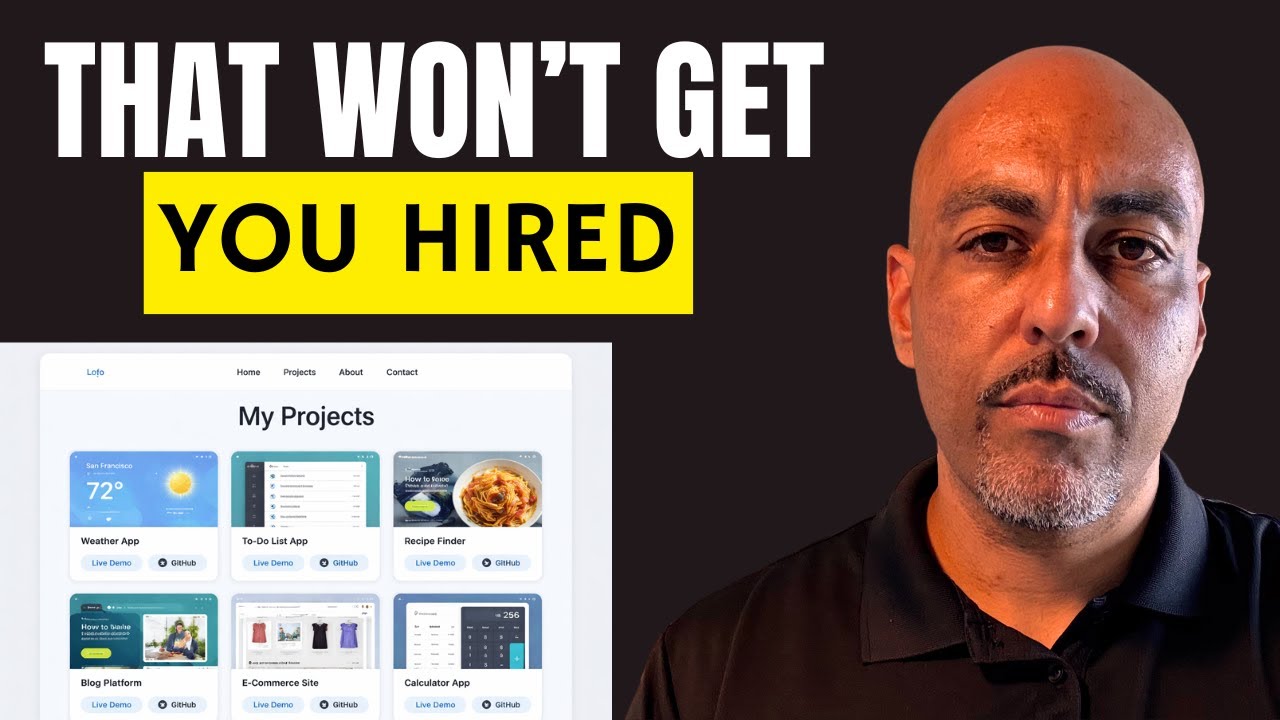
The video argues that junior developers face increasing challenges in today’s job market, as companies are hiring fewer entry-level candidates and expecting more autonomy and experience from new hires. Traditional approaches, like building generic portfolios filled with front-end projects or tutorial apps, no longer stand out to employers. The speaker emphasizes that most companies are not looking for strictly front-end developers, and building the same projects as everyone else makes it nearly impossible to differentiate yourself.
Instead of focusing on portfolios, the speaker recommends building a real product with the intention to sell it, even if it never makes money. This mindset shift forces you to consider real-world concerns like reliability, user experience, maintenance, and even billing. By treating your project as a potential business, you start asking better questions and gain experience that is far more relevant to employers than simply completing coding exercises.
A key step is to try to get one or two real users for your product. Even a single user will challenge your assumptions and force you to address onboarding, support, and edge cases that never arise in demo projects. Sharing your progress publicly, despite the risks of online criticism, can help you stand out and attract valuable feedback. This process exposes you to the realities of software development that matter most to employers, such as deployment, iteration, and ownership.
The speaker also suggests that you can turn these projects into legitimate experience by listing them on your resume or LinkedIn, even forming an LLC if you wish. Whether or not your project earns revenue, the experience is real and mirrors what happens in many startups, which often operate pre-revenue. Building and deploying a real product gives you stories and technical challenges to discuss in interviews, making you sound like an insider rather than an outsider.
Finally, the video encourages developers to look for problems worth solving, either by examining inefficiencies in their own workplaces or by finding niche markets underserved by existing solutions. The speaker shares examples of simple but impactful projects, like automating inventory for a smoothie shop, which are far more compelling than generic tutorial apps. Ultimately, the message is that building and sharing real products is the best way to gain relevant experience, reduce your risk profile as a candidate, and potentially even create a business, all while learning far more than you would from traditional portfolio projects.