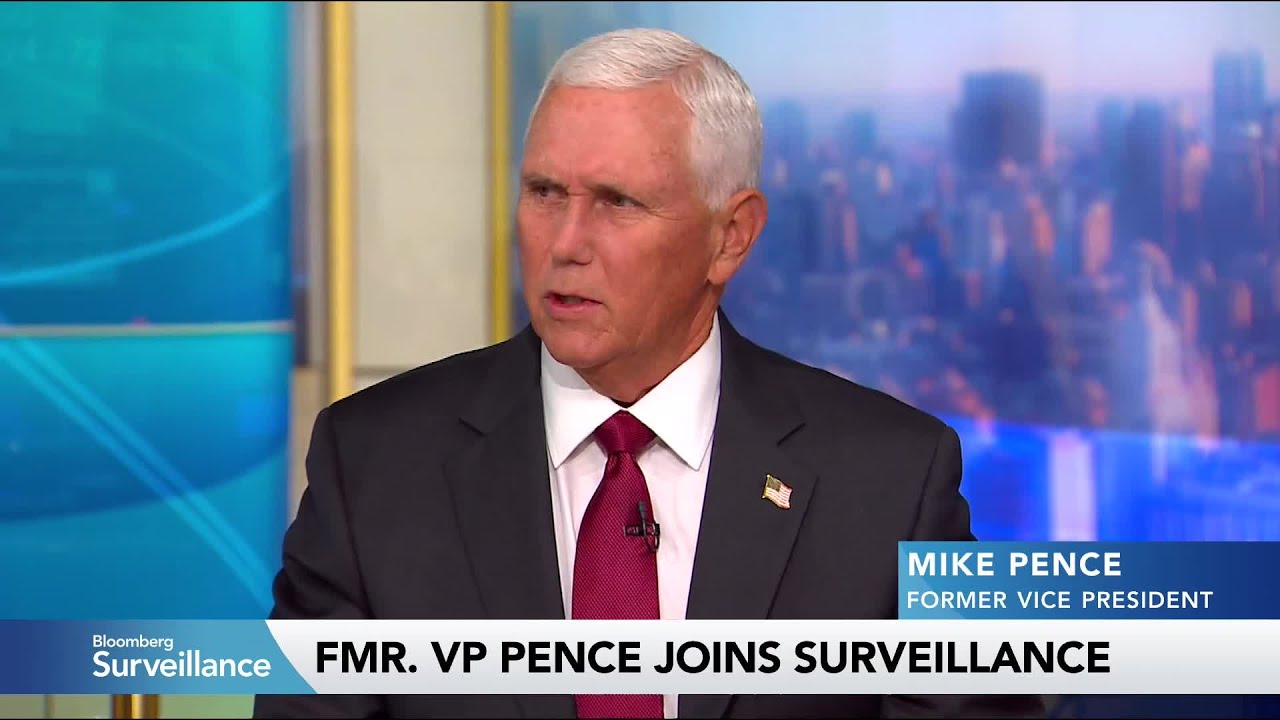
Former Vice President Mike Pence discusses the current state and future of conservatism in the Republican Party, emphasizing a commitment to traditional conservative principles such as limited government, free-market economics, strong national defense, American global leadership, and traditional values. He expresses concern about a growing populist right within the party that challenges these principles, particularly with policies that resemble socialist ideas like nationalization and price controls. Pence wrote his book, “What Conservatives Believe,” to clarify what conservatism means and to warn Republicans about these internal threats.
Reflecting on his time serving alongside Donald Trump, Pence acknowledges that Trump never explicitly identified as a conservative and often dismissed conservative positions as “common sense.” However, Pence believes their administration largely upheld conservative values through judicial appointments, tax cuts, deregulation, and energy policies. He criticizes some populist right policies emerging in the current Republican agenda, such as tariffs and nationalization efforts, which he sees as departures from traditional conservatism and more aligned with left-wing ideas.
Pence also addresses the influence of Trump within the Republican Party, noting that Trump remains a dominant figure with strong support among primary voters due to his fight against the radical left. Despite this loyalty, Pence warns against conflating support for Trump with an endorsement of the populist right’s agenda, which he argues threatens the party’s foundational conservative principles. He expresses particular concern about the populist right’s stance on foreign policy, including inconsistent support for Ukraine and Israel, and the troubling rise of rhetoric that borders on antisemitism.
On the topic of artificial intelligence (AI), Pence advocates for a conservative approach that views technology as neutral and emphasizes trust in the marketplace while ensuring AI respects core American values such as freedom and family. He stresses the importance of creating regulatory guardrails to prevent harmful consequences, like AI-assisted self-harm among teenagers, and encourages the development of AI alternatives that align with conservative principles. Pence contrasts this with the left’s likely approach of heavy taxation and redistribution, reaffirming that Republicans traditionally oppose tax increases.
Finally, Pence reflects on his personal relationship with Trump, noting they remain on good terms despite the administration’s difficult end. He expresses hope that Trump will listen to his counsel and that the Republican Party will stay true to its conservative roots rather than shift toward big government and protectionism. Pence’s book aims to awaken conservatives to these challenges and to promote a vision of the party grounded in freedom, free enterprise, and American leadership.