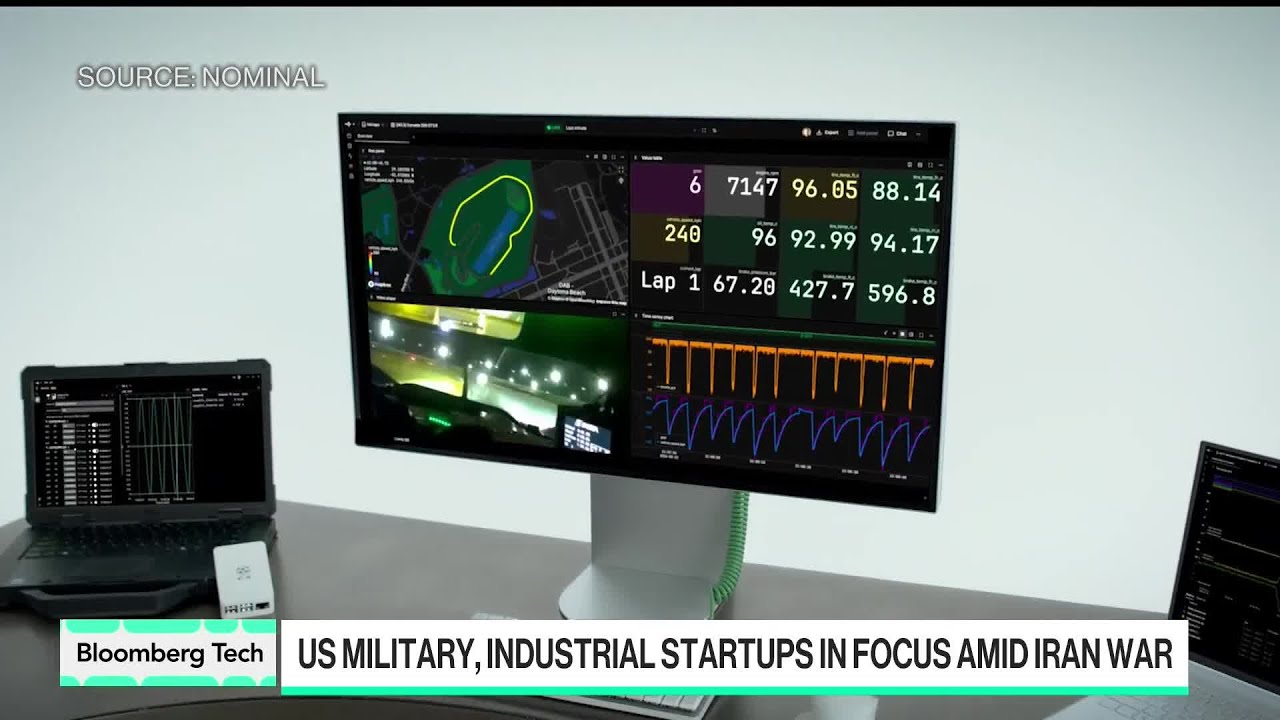
Founders Fund has led an $80 million investment in Nominal, an AI-driven manufacturing software company, marking a significant bet on the future of industrial automation. The discussion opens with the observation that the industrial sector largely missed out on the cloud revolution, and Nominal aims to build a modern, fully integrated platform for hardware testing and operations. Despite not having spent much of their previous $75 million raise, Nominal accepted Founders Fund’s preemptive offer due to the fund’s unique industry perspective, especially in hardware and defense technology.
Trey Stevens, executive chair of Anduril and a partner at Founders Fund, explains the rationale behind backing Nominal. He notes that while enterprise SaaS has exploded, organizations are increasingly focused on cutting unnecessary software spend, only retaining mission-critical tools. Nominal’s platform, already in use at Anduril, proved itself indispensable for managing complex hardware systems, increasing Founders Fund’s conviction in the company’s value and potential.
Cameron, Nominal’s founder, emphasizes the mission-critical nature of their software, especially in the current geopolitical climate. Unlike much of the “unserious” software optimized for consumer clicks, Nominal’s tools are trusted by engineers to automate and monitor complex hardware tasks in real-world operations. This reliability is crucial as the pace of global events accelerates and the need for robust, automated systems grows, particularly in defense and manufacturing.
The conversation also touches on the ethical considerations of AI in defense, referencing recent debates between Anthropic and the Pentagon. Stevens argues that it is ethical and necessary for American technology companies to work closely with democratic institutions to ensure national security. Both Anduril and Nominal are committed to providing advanced, reliable tools to support defense missions, with Nominal’s platform helping to streamline the entire process from manufacturing to deployment and field operations.
Finally, the discussion highlights the scale of ambition in defense manufacturing, with Anduril aiming to become a mass-scale producer akin to Tesla, requiring significant capital and partnerships. Cameron reflects on his background in defense technology and the challenges of bringing AI to the antiquated industrial sector. He notes that the Pentagon’s clear message is the need for speed and scale, and Nominal’s platform is positioned to help both government and private sector partners meet these demands by modernizing and operationalizing their manufacturing and testing processes.