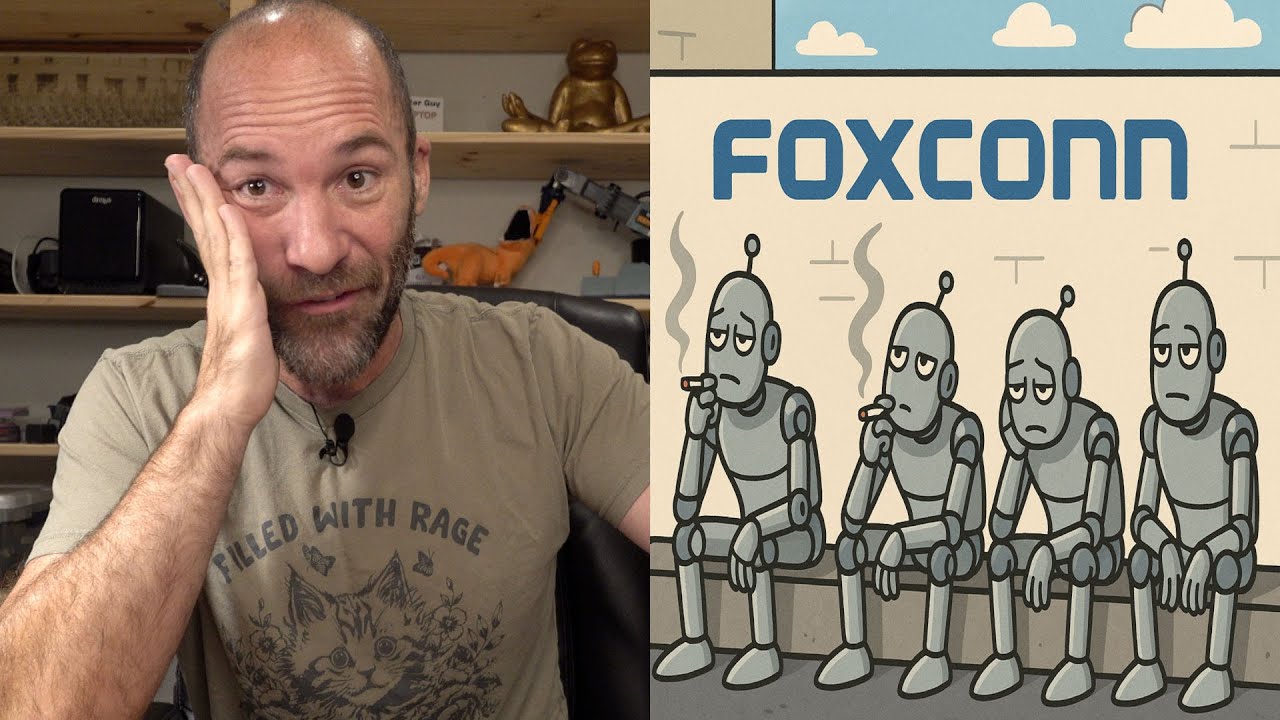
In this video, Eli from the Daily Blob discusses the recent news about Foxconn deploying humanoid robots in their Texas factory to build NVIDIA servers. He highlights the hype surrounding AI and robotics, cautioning viewers not to get swept up in the excitement without critically examining the actual value and productivity these robots bring. Eli points out that while humanoid robots are being introduced, details about their specific roles, capabilities, and impact on human workers remain vague, suggesting that much of the announcement serves more to pump the AI hype bubble than to reveal concrete advancements.
Eli also touches on the broader context of AI and technology deployment challenges, citing Microsoft CEO Satya Nadella’s statement about having GPUs sitting unused due to lack of infrastructure and capacity to deploy them. He mentions data centers that are fully built but not yet connected to power grids, illustrating the disconnect between AI ambitions and practical realities. This situation raises questions about the true readiness and scalability of AI technologies despite massive investments and public enthusiasm.
The video delves into the topic of humanoid robots specifically, questioning why the humanoid form is favored when it may not be the most efficient design for factory work. Eli compares humanoid robots to specialized machines like washing machines, which perform specific tasks effectively without mimicking human form. He also critiques Elon Musk’s vision of everyone owning an Optimus robot, calling it unrealistic and unnecessary. The slow speed of current humanoid robots further complicates their practical utility, though Eli acknowledges that continuous operation could offset slower individual task performance.
Eli shares personal insights from his family background, including his father’s work as an industrial safety engineer who studied robot-related accidents. He recounts how cheap labor in China historically slowed robot adoption in factories because human workers were more cost-effective. This economic factor delayed robotic progress for years, but now robots are gaining renewed interest as labor costs rise and economies face challenges. Eli raises concerns about the social and economic implications of replacing human workers with robots, especially as economic conditions worsen and societal tensions increase.
Finally, Eli reflects on the psychological and social dynamics of humanoid robots in the workplace, noting that humans may perceive robots as direct competition, unlike other automated systems such as surveillance cameras or washing machines. He warns of potential backlash, including protests or even sabotage, if robots are seen as threats to human jobs. Eli encourages viewers to think critically about the future of robotics, the motivations of tech companies, and the broader impact on society, while inviting discussion on these complex issues. He also promotes his in-person technology classes at Silicon Dojo in Durham, North Carolina, aimed at empowering people with hands-on tech education.