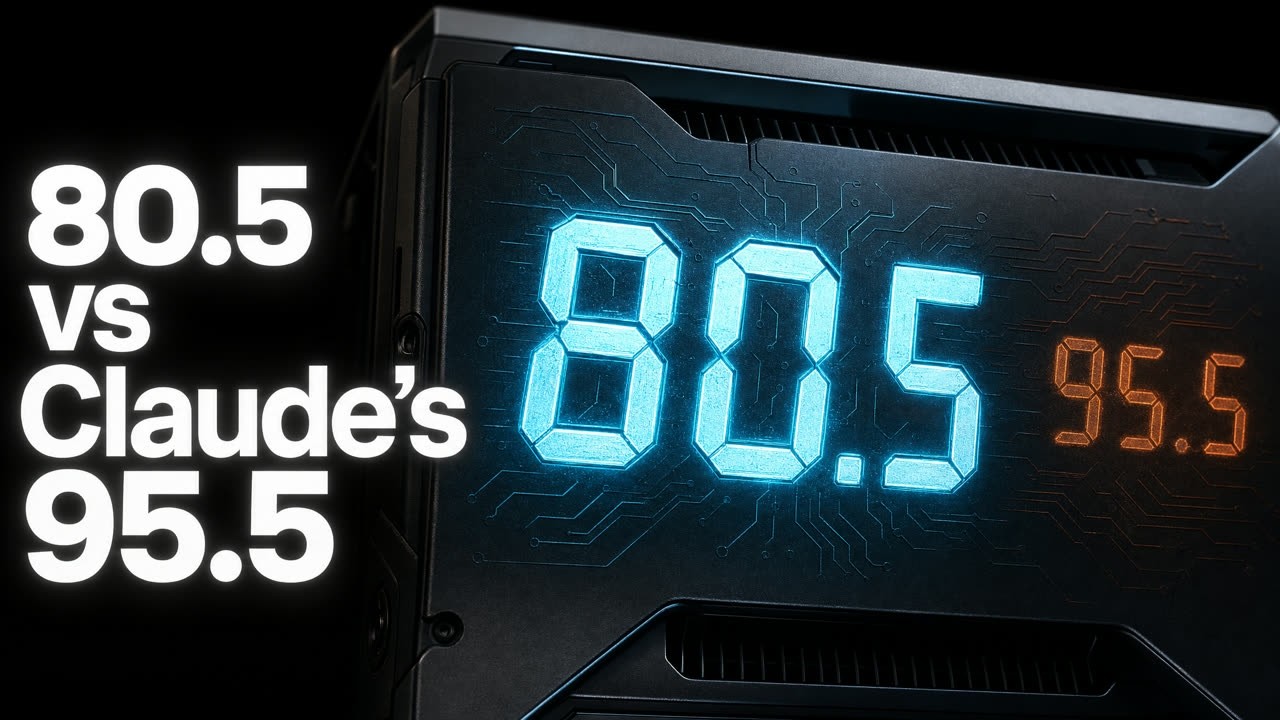
The current landscape of AI coding assistants is dominated by closed-source models like Anthropic’s Claude Opus 5, which leads the SWE bench Verified leaderboard with a 96% score. However, the best open-weight model, Ornith 1.0-397B from DeepReinforce AI, now scores an impressive 82.4%, surpassing previous closed models like Claude Opus 4.5 and 4.6. This marks a significant milestone, as freely downloadable models are beginning to rival and even outperform paid, closed-source offerings from earlier this year. The open-source field is crowded with competitive models clustered closely in performance, signaling rapid progress and narrowing gaps with proprietary solutions.
Benchmark discrepancies exist across different leaderboards, such as BenchLM, Steel, and the newer SWE bench Pro, which was created to address cheating and contamination issues in previous datasets. SWE bench Pro presents a tougher challenge, with scores dropping significantly for all models, and the open-weight leader there being GLM 5.2 at 62.1%. Despite variations in exact rankings and scores, all benchmarks agree on the market shape: closed models maintain a low double-digit lead, but open models are consistently close behind and improving quickly. This suggests the performance gap is not a fixed barrier but a sliding scale that is steadily closing.
The real advantage of paid models like Claude Code and Codex lies not just in the model weights but in the integrated agent scaffolding that automates coding tasks—reading repos, planning, editing, and testing code iteratively. To replace these paid APIs with free models, users must rebuild or substitute this entire loop. Open-source solutions are addressing this by developing self-scaffolding models like Ornith, which carry the agent loop internally, reducing the need for external tooling. Tools like Ollama and llama.cpp enable users to run these models locally with manageable overhead, while editor extensions like Continue restore the automated coding workflow within familiar environments.
Running high-performing open models locally requires substantial hardware, especially for the largest models scoring above 80%. However, desk-class models around 30 billion parameters are now capable and accessible on consumer GPUs with 24GB VRAM, such as Qwen3 Coder 30B, which delivers strong performance at reasonable speeds. Smaller models with 7 billion parameters can run on even modest hardware, including CPUs, and still produce useful code completions. This hardware accessibility means developers can run powerful coding assistants offline, eliminating API costs and data privacy concerns associated with cloud-based services.
Ultimately, the decision to pay for closed-source AI coding assistants hinges on the specific demands of the workflow. For routine coding tasks like writing functions or refactoring, free local models suffice and can replace paid subscriptions with minimal setup effort. The remaining advantage of paid models lies in complex, long-horizon agentic tasks involving iterative testing and retries, where closed APIs still hold an edge. However, this gap is rapidly shrinking as open models evolve to handle their own scaffolding. The era where free local AI can do most of the job is here, shifting the burden of proof onto paid services to justify their cost and data access requirements.