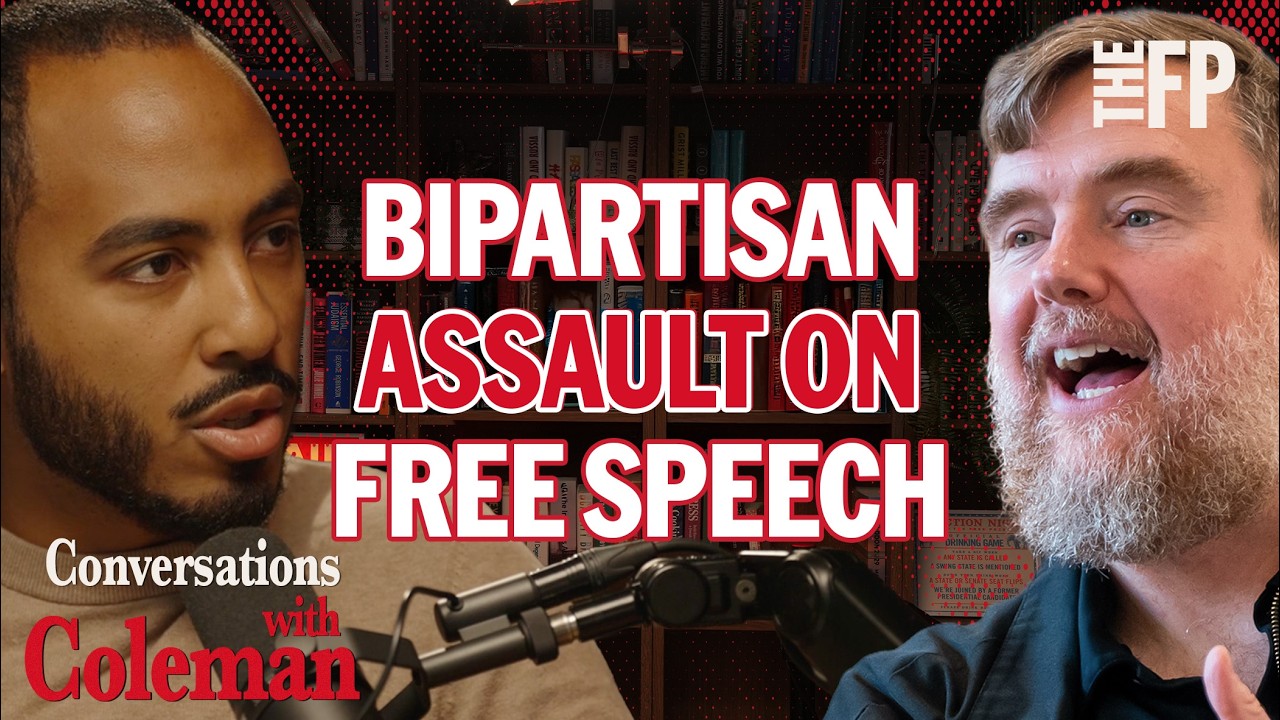
In this episode of “Conversations with Coleman,” Greg Lukianoff, president and CEO of the Foundation for Individual Rights and Expression (FIRE), discusses the complexities surrounding free speech today. Lukianoff clarifies that he does not consider himself a free speech absolutist but rather an “opinion absolutist,” emphasizing the importance of protecting individuals’ rights to hold and express their opinions while recognizing that certain types of speech, such as true threats or harassment, fall outside First Amendment protections. He highlights the challenges universities face in balancing free speech with preventing harassment and discrimination, especially in the context of federal regulations like Title VI and Title IX.
The conversation delves into the heightened tensions on college campuses following the events of October 7th, particularly regarding anti-Semitic speech and pro-Palestinian expressions. Lukianoff notes that while FIRE has defended many pro-Palestinian students and speakers, there have been numerous instances where speech crossed the line into intimidation or violence, which is not protected. He criticizes some university administrations for inconsistently enforcing free speech protections, sometimes tolerating or even encouraging censorship when it aligns with their sympathies, leading to a chilling effect on open discourse.
Lukianoff also addresses the Trump administration’s controversial actions related to free speech, including lawsuits against pollsters, intimidation of law firms, and pressure on universities like Harvard over alleged violations of anti-discrimination laws. While acknowledging that some of the administration’s concerns, such as racial discrimination in admissions, have legal merit, he condemns tactics that overreach, such as threatening to nationalize universities or banning law firms from federal buildings. He stresses the importance of upholding due process and constitutional limits, regardless of political affiliation.
The discussion expands to free speech rights of foreign students and visa holders in the U.S., highlighting cases where individuals faced deportation or legal action for expressing controversial opinions. Lukianoff argues that while visa issuance is discretionary, once legally present, individuals should enjoy free speech protections similar to citizens. He critiques the broad powers granted to government officials to deport individuals based on speech deemed adverse to foreign policy and calls for judicial review to prevent abuse of such authority.
Finally, Lukianoff reflects on the global free speech crisis, particularly in the United Kingdom and parts of Europe, where laws and enforcement have led to arrests for speech that would be protected in the U.S. He warns that hate speech laws often backfire by driving extremists into echo chambers, intensifying polarization rather than reducing hate. He advocates for open discourse as a means to expose and counter harmful ideas, emphasizing that censorship can exacerbate societal divisions and undermine democratic principles. Throughout, Lukianoff underscores the need for vigilance in defending free speech while navigating its complex boundaries in contemporary society.