The ongoing conflict involving Iran has triggered significant disruptions in global supply chains, affecting a wide range of consumer and industrial goods. One notable example is Calbee, Japan’s largest snack manufacturer, which announced it will switch its product packaging from colorful designs to black and white labels due to a shortage of naphtha. Naphtha, a petroleum-derived ink ingredient, is largely imported by Japan from the Middle East through the Strait of Hormuz, a critical shipping route that has been closed since the US and Israel attacked Iran in late February.
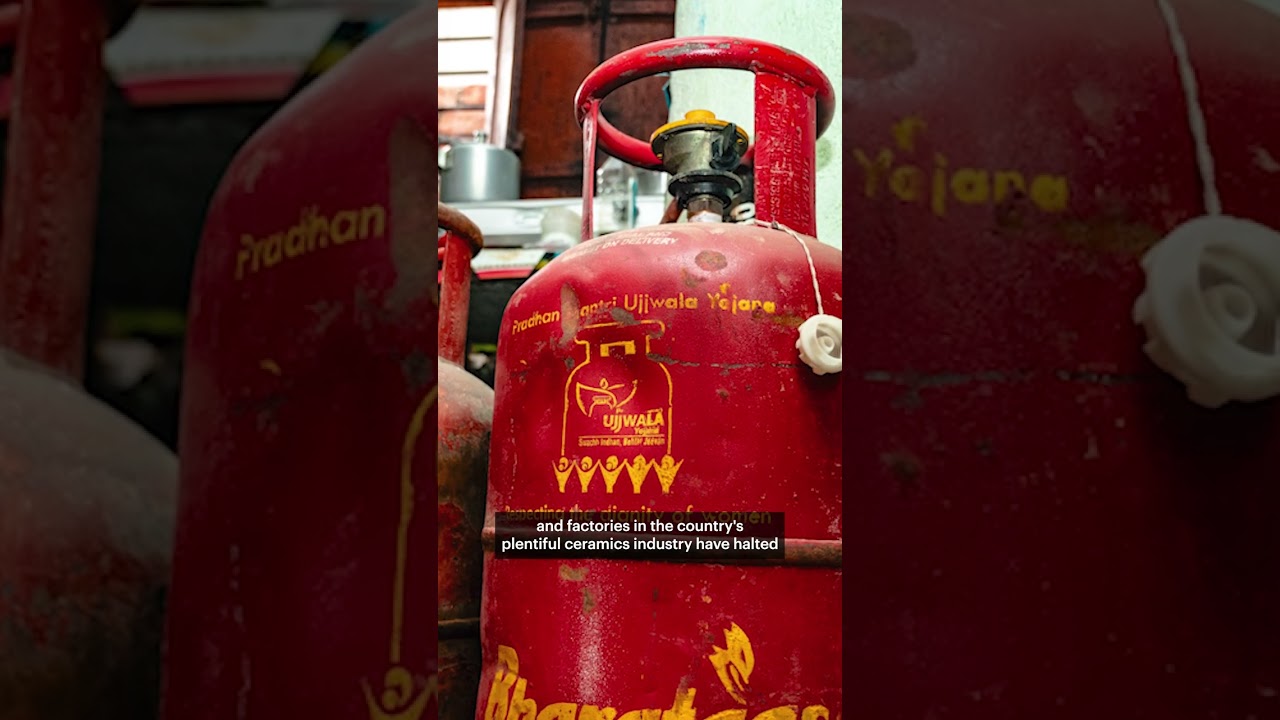
The closure of the Strait of Hormuz has led to shortages beyond packaging materials. In India, for instance, a scarcity of aluminum used for making cans has caused a shortage of Diet Coke, turning the beverage into a rare commodity often sold at marked-up prices. The country is also facing shortages of cooking gas, forcing some restaurants to consider closing, while natural gas shortages have halted production in the ceramics industry due to impacts on kiln operations.
Qatar, responsible for about one-third of the world’s helium supply, ceased helium production in March after Iranian strikes damaged two liquefied natural gas facilities. This helium shortage poses a threat to critical sectors such as healthcare, where MRI machines rely on helium, and technology manufacturing, including artificial intelligence chips, smartphones, and electric vehicles. The shortage of helium is thus having far-reaching consequences across multiple high-tech industries.
Another critical material affected by the conflict is tungsten, essential for manufacturing AI chips due to its heat resistance and electrical conductivity. Tungsten is also used in armor-piercing munitions, which the US and Israel are rapidly deploying in the conflict, depleting American tungsten reserves. This dual demand is straining global tungsten supplies, further complicating the production of advanced technology components.
Finally, the blockade of the Strait of Hormuz has disrupted roughly one-third of global nitrogen and phosphate shipments, key ingredients in fertilizers. This disruption threatens to cause severe shortages in fertilizer supplies worldwide, potentially leading to a sharp increase in food prices over the coming year. The Iran war’s impact on these critical supply chains underscores the interconnectedness of geopolitical conflicts and global economic stability.