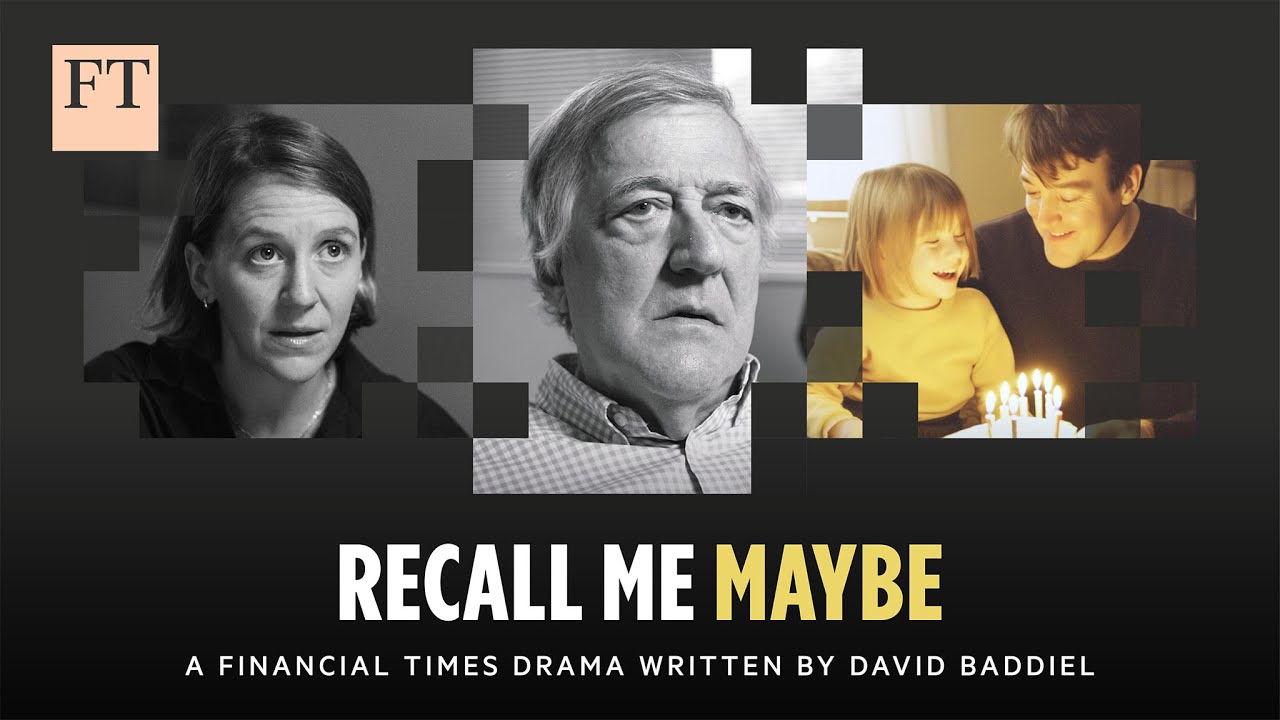
The video, an FT drama starring Stephen Fry, explores the profound and complex impact of AI on human identity and memory. It opens with a family scene where a father, grandfather, and child interact, highlighting everyday moments that are soon contrasted with the unsettling effects of AI on personal recollections. The father, suffering from memory loss, engages with an AI system designed to reconstruct and visualize his memories. This technology uses prompts and probability algorithms to generate images and narratives that reflect his past, blending actual memories with AI-generated content based on data patterns.
As the father reviews these AI-generated memories, the drama delves into the tension between truth and fabrication. The AI sometimes produces disturbing or false memories, such as an incident of abuse that the father does not recall and insists never happened. This raises ethical questions about the reliability of AI in reconstructing human experiences, especially when it fills gaps with probabilistic guesses rather than factual accuracy. The family grapples with whether these AI-created memories represent reality or a distorted version shaped by biases inherent in the system.
The narrative also touches on the subjective nature of human memory itself, emphasizing that memory is inherently biased, selective, and often unreliable. The characters debate whether AI-enhanced memories, even if imperfect, might still offer valuable insights or whether they risk becoming a form of propaganda that sanitizes or distorts the past. The drama suggests that both human memory and AI reconstructions are forms of storytelling, each with their own limitations and influences.
Throughout the story, the emotional and psychological impact of using AI to revisit and potentially alter memories is evident. The father’s cognitive abilities appear to improve with the AI’s intervention, enhancing his working memory and mental clarity. However, this progress is accompanied by fears about losing one’s authentic self and the possibility that the AI might rebuild a version of a person that is not truly them. The family’s struggle reflects broader societal concerns about identity, memory, and the ethical use of emerging technologies.
In conclusion, the drama presents a nuanced exploration of AI’s role in shaping human identity, memory, and truth. It challenges viewers to consider the implications of relying on AI to reconstruct personal histories and questions what it means to be truly human in an age where technology can alter our perceptions of ourselves. The story leaves open-ended questions about the balance between technological advancement and the preservation of authentic human experience, highlighting the complex interplay between memory, identity, and artificial intelligence.