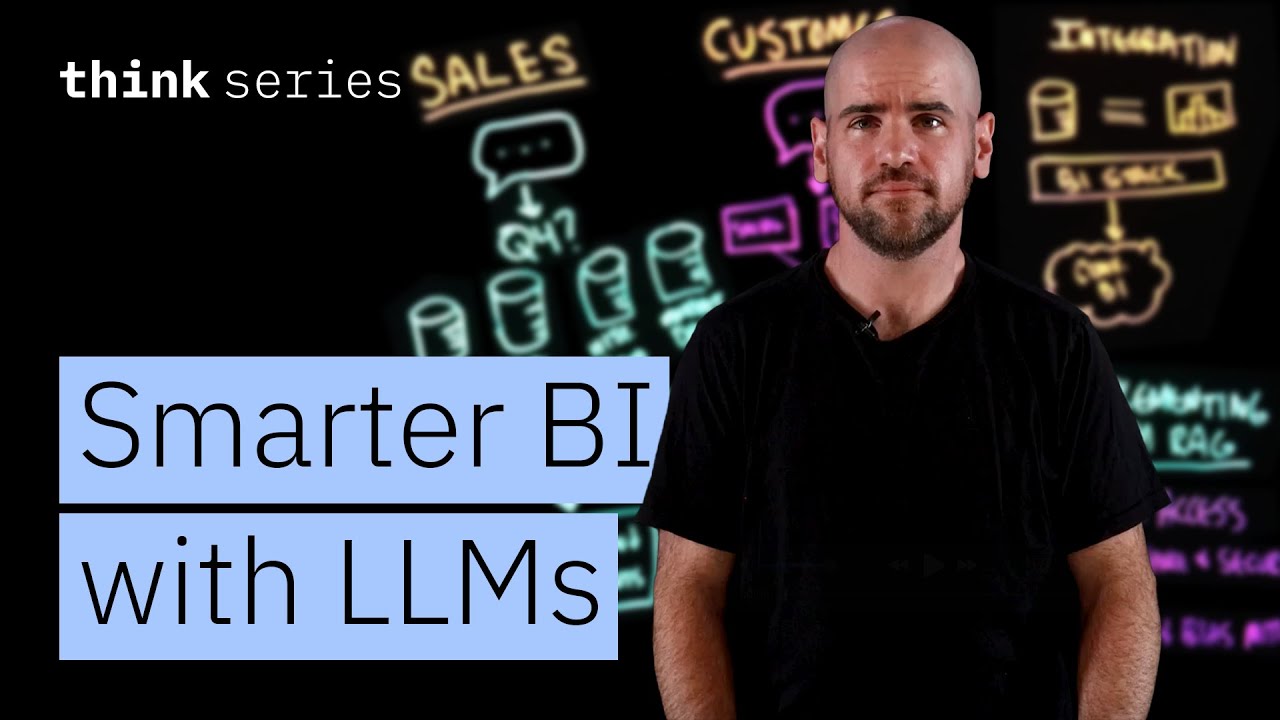
Business intelligence (BI) has long been essential for data-driven organizations, but traditional dashboards and reports often fail to keep pace with the complexity and speed of modern business needs. While these tools provide useful historical snapshots, they frequently leave decision-makers overwhelmed by data but starved for actionable insights. The gap between raw data and meaningful action remains wide, as users struggle to extract relevant information from a sea of static visuals and reports.
The next evolution in BI is not about creating more attractive dashboards, but about enabling smarter, more dynamic intelligence. This shift is ushering in the era of conversational BI, where users interact with their data through natural language conversations rather than static queries. Large language models (LLMs) are at the heart of this transformation, serving as powerful knowledge synthesizers that can understand context, nuance, and intent in human language, making data interactions more intuitive and accessible.
However, LLMs alone are not sufficient for enterprise-level BI, as they may lack the precision required for business-critical decisions. This is where Retrieval Augmented Generation (RAG) comes into play. RAG acts like a librarian for the LLM, converting user queries into vector embeddings, searching a vector database for the most relevant documents, and grounding the LLM’s responses in real, trustworthy company data. This combination ensures that insights are both contextually relevant and factually accurate.
RAG-powered BI enables real-time, conversational analytics that go beyond simply reporting what happened. Users can ask complex questions—such as the reasons behind a drop in quarterly sales or a summary of customer sentiment—and receive immediate, actionable answers grounded in their organization’s data. This approach transforms unstructured information into clear business signals, allowing for proactive decision-making and deeper understanding without the need to sift through endless dashboards and reports.
Integrating conversational BI into existing systems requires careful planning around data access, governance and security, and ethics and bias mitigation. Data access must be controlled to ensure only authorized users can query sensitive information. Strong governance and security measures are essential to safely accelerate AI adoption, while transparency and human oversight help mitigate bias in LLM outputs. Ultimately, the future of BI is about fostering better dialogue with data, empowering organizations to shape their future through meaningful, real-time conversations rather than retrospective reporting.