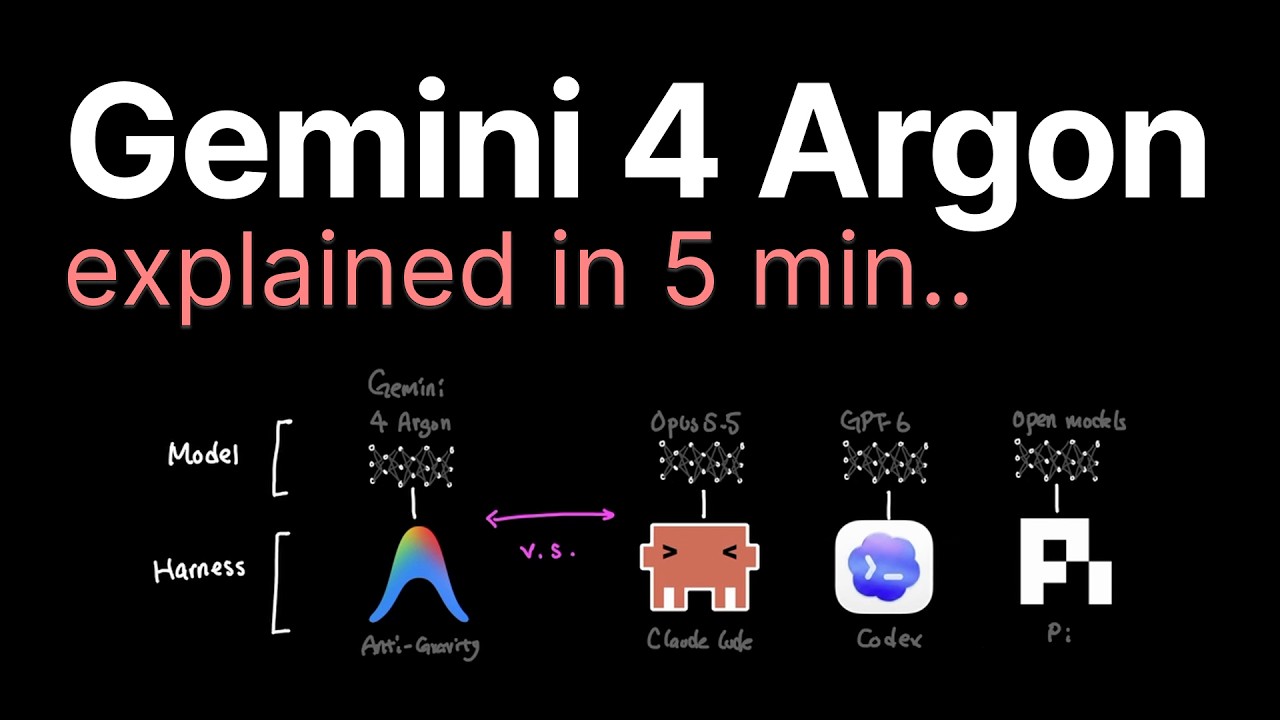
About seven months after Google’s announcement of the Gemini 4 Argon flagship model, expectations had been high for a new release during Google IO, but instead, Google focused on various flash models that struggled to gain market traction. The Gemini 4 Argon, however, marks a significant step forward, especially in coding benchmarks where it scored an impressive 77.9% on Deep SWE, surpassing all existing models. Despite this, skepticism remains due to identified flaws in the benchmark tasks and the public availability of these benchmarks, which allows labs to tailor their models post-training, complicating the assessment of genuine AI progress.
The public nature of many benchmarks, including Deep Suite, means that newer models can potentially overfit to these tests, leading to faster saturation and necessitating frequent updates to benchmarks. This situation places a heavy burden on consumers trying to discern real advancements in AI technology. Nonetheless, Google’s leap in benchmark performance with Gemini 4 Argon is a notable achievement, signaling their ability to compete at the forefront of AI development despite these challenges.
In the competitive landscape, Google still faces hurdles in gaining developer adoption for its coding harness, Anti-Gravity, which trails behind popular options like Codex and OpenAI’s offerings in terms of active users. Although Gemini 4 Argon offers a cost advantage over competitors like Anthropic and OpenAI, this does not translate into dominance on the Pareto Frontier, where efficiency and adoption are balanced. Enthropic and OpenAI maintain leadership in both model performance and user base, highlighting the ongoing challenge for Google to convert technical prowess into widespread market success.
Strategically, Google’s approach differs from its competitors, especially with upcoming IPOs for Anthropic and potentially OpenAI, who may heavily subsidize subscriptions to grow users. Google, as an established publicly traded company, prioritizes efficient allocation of compute resources to maximize ecosystem value and revenue. The rollout of Argon targets high-value segments such as ultra subscription and paid API users, aligning with Google’s broader revenue goals. Their Q2 earnings reveal massive API usage, underscoring the scale at which Google operates and the supply constraints they face, a challenge that competitors will also need to address while maintaining profitability.
A standout feature of Gemini 4 Argon is its extended output token capacity, increasing from 64,000 to 1 million tokens. This is a significant technical advancement, as maintaining coherence in auto-regressive models over such long outputs is notoriously difficult due to error compounding. Google’s confidence in deploying this capability commercially opens new possibilities for long-duration tasks like code migration and extended research projects. This development could mark a pivotal shift in how AI models handle complex, lengthy processes, potentially setting a new standard for future AI applications.
Useful Links