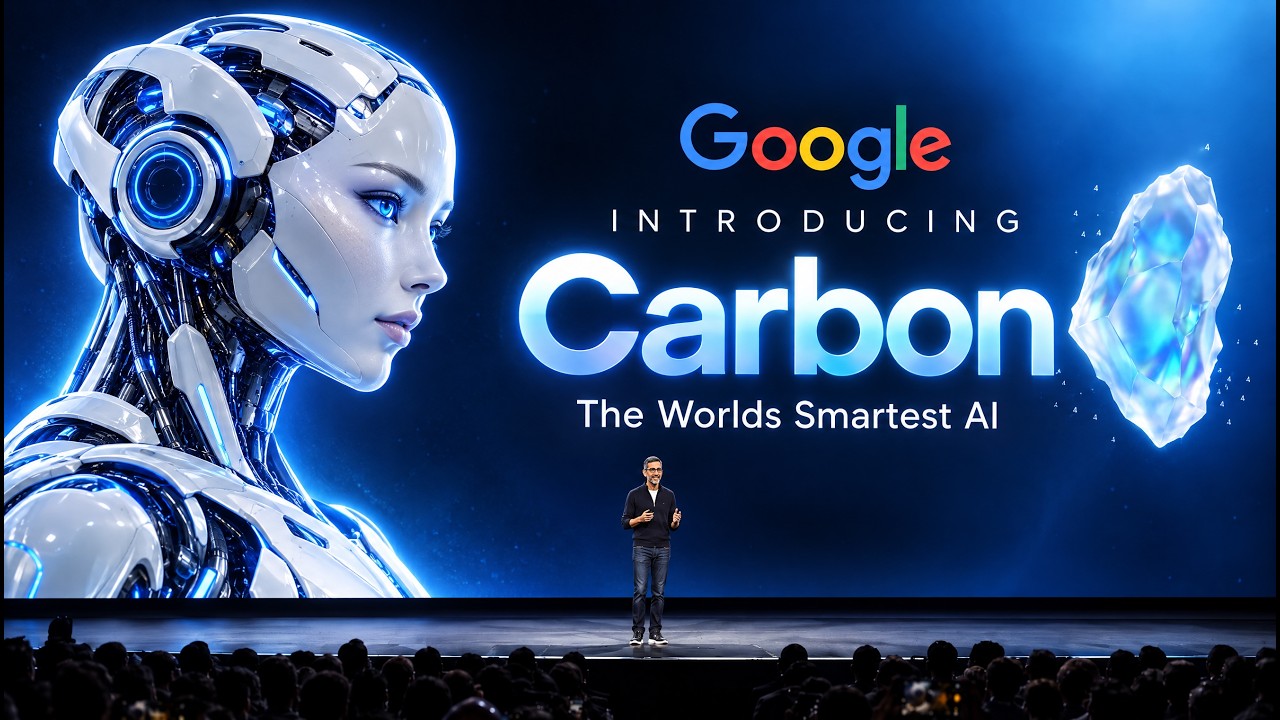
Google has surprised the AI community with the rapid release of Gemini 4 Carbon, its latest top-tier AI model, arriving just four weeks after Gemini 4 Argon. Carbon has quickly claimed the number one spot on respected independent AI rankings, surpassing leading models from OpenAI and Anthropic. This swift comeback challenges previous perceptions that Google was lagging behind in the AI race, demonstrating that no company is ever truly out of contention. The speed of these releases suggests that AI labs, including Google, may now be leveraging AI itself to accelerate the development of new AI models.
Gemini 4 Carbon is Google’s most advanced AI model to date, excelling particularly in coding, autonomous multi-step task execution (agents), and cybersecurity. Its ability to handle complex tasks like navigating websites and filling forms autonomously is enhanced by integrations such as Browserbase, which provides real browser environments for AI agents. Independent tests show Carbon leading in intelligence indexes and specialized benchmarks, especially in processing long documents and cybersecurity tasks, while also being more cost-effective than many competitors.
The pace of AI development has dramatically accelerated, with major new models being released almost monthly by various companies. Google’s advantages—custom AI chips, vast data centers, and extensive data from services like Search and YouTube—enable it to release two top models within a month. This rapid iteration cycle contrasts sharply with the multi-year gaps between earlier AI breakthroughs, meaning AI tools quickly become outdated and continuous adaptation is necessary for users and businesses alike.
A significant question arising from this rapid progress is whether AI labs are employing recursive self-improvement (RSI), where AI helps build better AI in a feedback loop that accelerates advancement. Google has openly stated that its researchers and AI models work hand-in-hand, and examples like Alpha Evolve show AI already optimizing AI training processes. While full RSI remains unproven publicly, partial self-improvement is clearly underway, contributing to the unprecedented speed of AI development and suggesting that internal AI models may be more advanced than those publicly available.
Despite Carbon’s impressive benchmarks, caution is advised. Many of the performance claims come from Google’s own tests, and some results are based on newer or specialized benchmarks that are harder to independently verify. Additionally, Carbon is currently only accessible to select cybersecurity professionals, with no public release date announced. Users should be aware that benchmark leads are often narrow and that real-world effectiveness may vary. Ultimately, the ongoing AI competition benefits users through improved quality and lower costs, but the rapid pace of change demands continual learning and flexibility in adopting new AI tools.
Useful Links