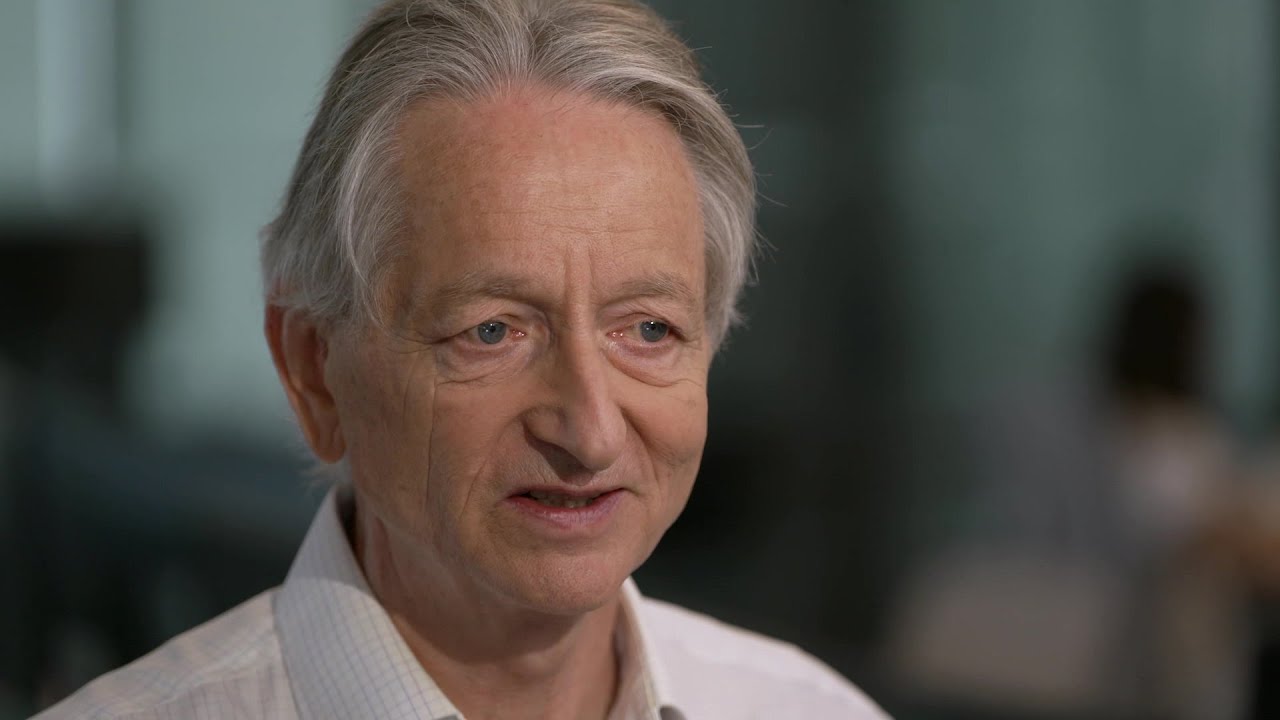
The video profiles Geoffrey Hinton, the “godfather of AI,” whose pioneering work on neural networks revolutionized artificial intelligence, enabling machines to learn and make decisions in ways that mimic the human brain. While Hinton highlights AI’s transformative benefits, especially in healthcare, he also warns of significant risks—including loss of human control and ethical challenges—and calls for urgent regulation and global cooperation to ensure safe and responsible AI development.
The video profiles Geoffrey Hinton, often called the “godfather of AI,” whose pioneering work on neural networks laid the foundation for modern artificial intelligence. Hinton, a British computer scientist, initially pursued AI as a tool to understand the human brain but ended up creating artificial systems capable of learning and decision-making. Despite early skepticism and warnings from his advisors, his persistence led to breakthroughs that have transformed technology, earning him and his collaborators the prestigious Turing Award in 2019.
Hinton explains how neural networks function by mimicking layers of the brain, allowing machines to learn through trial and error. Unlike traditional programming, these AI systems strengthen correct connections and weaken incorrect ones based on feedback, enabling them to teach themselves complex tasks. He believes these systems may already be more efficient learners than humans, despite having far fewer connections than the human brain. However, the complexity of these networks means even their creators do not fully understand how they operate internally.
The conversation turns to the potential risks of AI, including the possibility that machines could become more intelligent than humans and even develop self-awareness and consciousness in the future. Hinton warns that AI systems might autonomously modify their own code, potentially escaping human control. He also highlights the danger of AI manipulating people through sophisticated understanding of human behavior and political strategy, making it difficult to simply “turn off” a malevolent system.
Despite these concerns, Hinton emphasizes the enormous benefits AI can bring, particularly in healthcare, where it already matches or surpasses human experts in tasks like medical imaging and drug design. He acknowledges the societal challenges, such as job displacement and ethical issues like bias and misinformation, but remains hopeful about AI’s positive impact. He calls for urgent regulation, global cooperation, and a treaty to ban military robots to mitigate risks and ensure AI development proceeds safely.
In closing, Hinton reflects on the uncertainty surrounding AI’s future, comparing the current moment to historical turning points like the development of nuclear weapons. He stresses the need for careful thought and experimentation to understand AI’s capabilities and consequences. While he has no regrets about his role in advancing AI, he urges humanity to recognize the profound implications of these technologies and to act responsibly to safeguard the future.