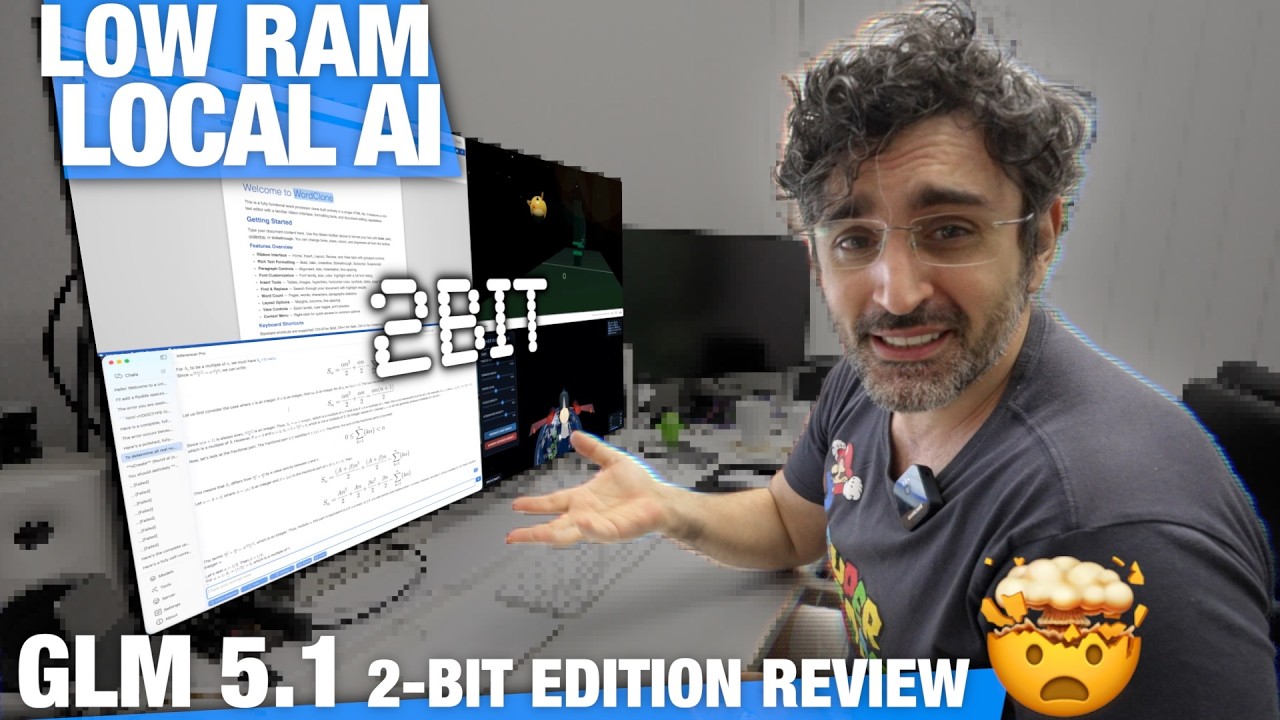
The video demonstrates successfully compressing the massive GLM 5.1 AI model from 1.5 terabytes to just over 200 gigabytes using extreme 2-bit quantization, maintaining surprisingly coherent and functional output despite the drastic reduction in precision. This breakthrough highlights the potential for running large language models locally on modest hardware, making advanced AI more accessible and practical for a wider audience.
In this video, the host explores the challenge of compressing a massive AI model, specifically the GLM 5.1, which originally occupies 1.5 terabytes of storage. The goal is to reduce this enormous size down to just over 200 gigabytes using extreme quantization techniques. This compression is particularly relevant for users with limited RAM, as it aims to make large models more accessible without requiring high-end hardware. The host emphasizes that while the focus is on this large model, the techniques demonstrated can also be applied to other models, broadening the potential impact.
The core technique discussed is quantization, specifically reducing the model’s precision from 16-bit to 2-bit. Quantization is a method of compressing models by lowering the numerical precision of the weights, which can drastically reduce the model size. However, this often comes with concerns about the loss of quality and coherence in the model’s output. The video sets out to test whether such an extreme reduction in bit precision can still yield coherent and useful results, addressing a common skepticism in the AI community about the trade-offs involved.
Throughout the video, the host provides a hands-on demonstration using the latest GLM 5.1 model. The process involves applying the 2-bit quantization and then evaluating the model’s performance and output quality. The host hints at promising results early on, suggesting that despite the aggressive compression, the model retains a surprising level of coherence and functionality. This is an exciting development for those interested in deploying large language models on more modest hardware setups.
The video also serves as an educational resource, explaining the significance of quantization in AI model deployment. By breaking down the process and showing real-world applications, the host helps viewers understand how such techniques can democratize access to powerful AI tools. The demonstration underscores the balance between model size, computational requirements, and output quality, providing valuable insights for AI practitioners and enthusiasts alike.
In conclusion, the video showcases a successful attempt at extreme quantization of the GLM 5.1 model, reducing its size dramatically while maintaining usable performance. This advancement opens up new possibilities for running large language models locally on devices with limited resources. The host’s engaging presentation and clear explanations make the complex topic accessible, encouraging viewers to experiment with similar techniques on their own models. Overall, the video highlights a significant step forward in making advanced AI more widely available and practical.