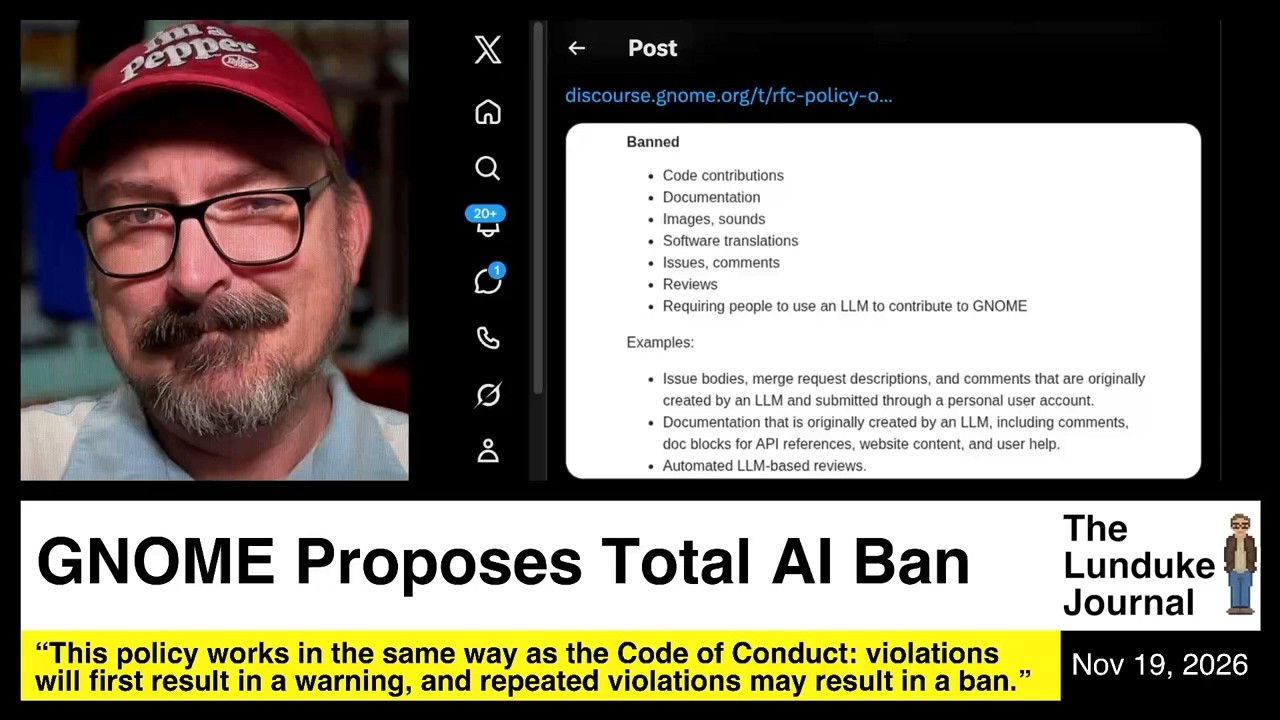
The Gnome Foundation is proposing a comprehensive ban on the use of AI-generated content in all aspects of the Gnome project. This ban covers code contributions, documentation, images, sounds, translations, issues, comments, and reviews, effectively prohibiting any AI involvement in the project. The policy is strict, allowing only private, local use of AI tools that do not interact with the Gnome project in any way. Violations of this policy would be treated similarly to code of conduct breaches, with warnings and potential bans for repeated offenses. The proposal appears to have unanimous support from the Gnome board and foundation, making its implementation highly likely.
Interestingly, some contributors to Gnome feel the ban is not strict enough, arguing that even private use of AI unrelated to Gnome should be prohibited. This extreme stance reflects a desire among certain members to police technology use beyond the project itself, which the presenter finds unreasonable and compares to banning people for using different gaming consoles. Despite these outlier opinions, the majority of the community seems to support the ban, with only minor suggested modifications. This situation highlights the deep divisions within open-source communities regarding AI’s role.
The divide over AI use in open-source projects is not unique to Gnome. Other projects like Haiku and some Linux distributions have also banned AI contributions, while the Linux kernel embraces AI development fully. This split is not only technical but also appears to align with political lines: more conservative or apolitical projects tend to accept AI, whereas left-leaning projects like Gnome are more likely to ban it. This political dimension adds complexity to the debate and suggests a growing rift in the open-source world.
Looking ahead, the ban could lead to significant consequences for Gnome. Developers who support AI may leave or be forced out, potentially forking the project into two versions: one embracing AI and one strictly banning it. The presenter predicts that the AI-friendly fork will likely advance faster and attract more productive contributors, while the original Gnome project may stagnate due to political infighting and reduced developer engagement. This scenario could mirror broader trends in open-source development, where AI acceptance becomes a key factor in project vitality.
Overall, the Gnome AI ban proposal exemplifies the broader tensions in the open-source community about AI integration. It raises questions about innovation, inclusivity, and the future direction of software development. As more projects take clear stances on AI, the landscape may become increasingly polarized, with significant implications for collaboration and progress. The presenter encourages following the ongoing discussions and notes that this debate will shape the open-source ecosystem in the coming months and years.
Useful Links