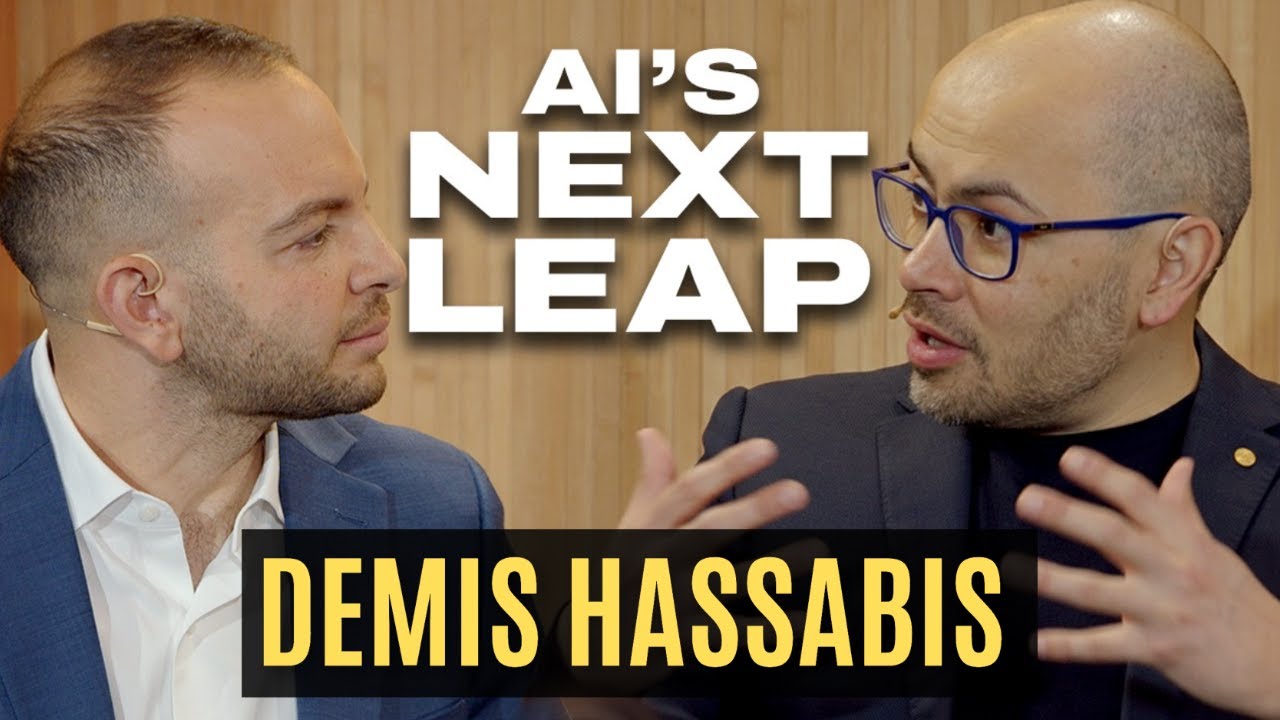
Demis Hassabis, CEO of Google DeepMind, discusses the rapid progress in artificial intelligence over the past year, emphasizing that internally, DeepMind never doubted the continued advancement of large language models (LLMs). He addresses concerns about data limitations and the supposed plateau of LLMs, explaining that significant improvements are still possible through better architectures, synthetic data, and innovative training techniques. Hassabis believes that while current models are impressive, achieving artificial general intelligence (AGI) will require breakthroughs in areas like continual learning, memory, and long-term reasoning—capabilities that current systems lack.
Hassabis distinguishes between AGI and superintelligence, arguing that AGI should be defined as a system capable of all human cognitive abilities, including creativity, scientific discovery, and physical intelligence. He criticizes the tendency to use AGI as a marketing term and insists that current models, despite their achievements, are far from true AGI. He highlights the need for systems that can not only solve existing problems but also generate entirely new theories or artistic genres, akin to the achievements of Einstein or Picasso. Physical intelligence, such as advanced robotics, is also a crucial component still missing from today’s AI.
The conversation shifts to product development, particularly the vision for AI-powered smart glasses. Hassabis explains that while using a phone as an AI interface works, it is not the ideal form factor for many real-world applications. He reveals that Google is actively developing AI glasses in partnership with companies like Warby Parker, Gentle Monster, and Samsung, aiming for a hands-free, context-aware digital assistant. He suggests that advances in AI, particularly with the Gemini model, have brought this vision closer to reality, with potential product launches expected soon.
On the business side, Hassabis addresses the role of advertising in AI products, clarifying that Google currently has no plans to introduce ads into the Gemini app. He stresses the importance of trust, privacy, and user-centric design in building AI assistants, warning that advertising models could undermine user confidence. Hassabis also comments on the competitive landscape, acknowledging the achievements of rivals like Anthropic in coding models, while expressing confidence in Google’s own progress and the broad applicability of AI across Google’s existing products and new ventures.
Finally, Hassabis reflects on the broader societal and philosophical implications of AI. He draws parallels between AI’s impact on games like chess and Go and its potential effects on knowledge work, suggesting that humans will adapt and find new sources of meaning, just as they have in the past. He shares his view that information, rather than energy or matter, is the fundamental unit of the universe, and describes how AI can help navigate complex information landscapes to solve scientific challenges. Looking ahead, Hassabis envisions a future where AI systems, once they reach and surpass human-level knowledge, will make groundbreaking discoveries in science and technology, fundamentally transforming society.