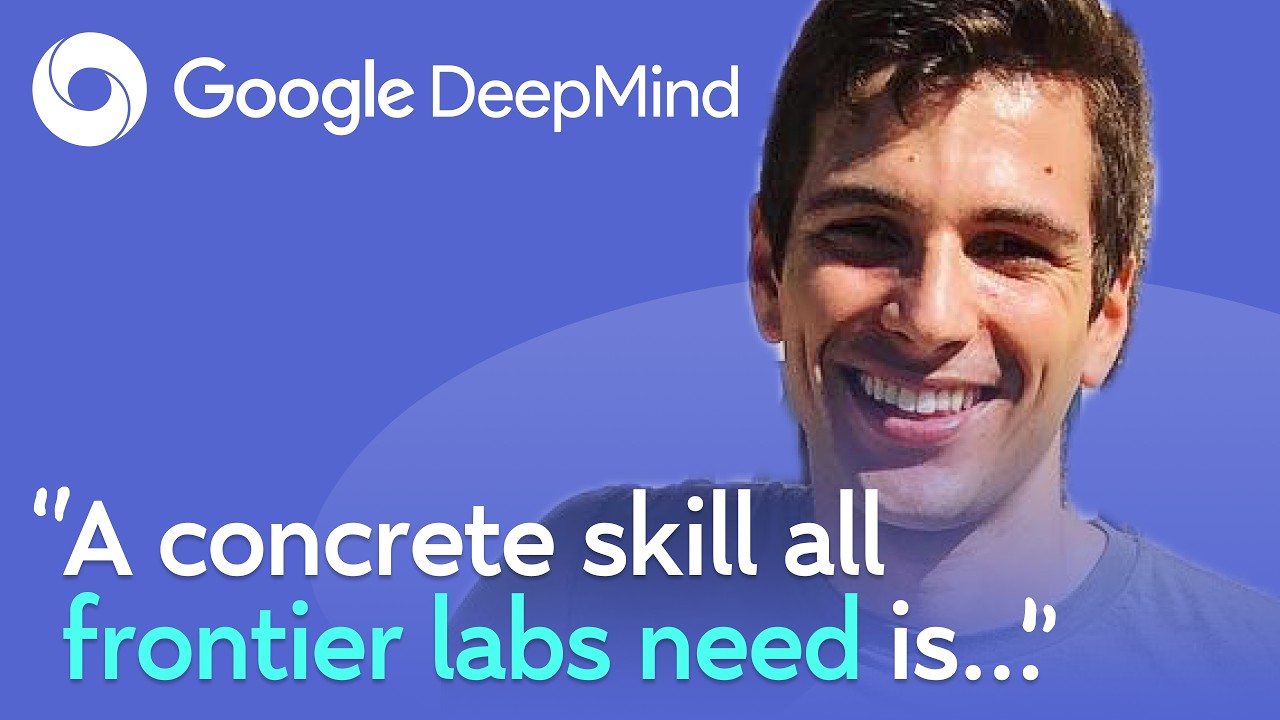
Vlad Feinberg, Google DeepMind’s pre-training lead, highlights the importance of combining research intuition with software engineering skills to optimize large language models through techniques like distillation, inference code design, and quantization, while encouraging candidates to demonstrate practical expertise via open-source contributions and internal collaborations. He also emphasizes a growth mindset focused on meaningful problem-solving, humility, and teamwork as essential for success in frontier AI labs amidst evolving industry challenges.
Vlad Feinberg, Google DeepMind’s pre-training area lead, shares insights on landing a job at frontier AI labs and the nature of work in such cutting-edge environments. He emphasizes the high demand for research skills, particularly in kernel development and low-level engineering to optimize large language models (LLMs) for high throughput and low latency. Feinberg highlights the blurred lines between research and applied roles within DeepMind, noting that even product-focused teams engage in significant research to ensure models are factual and reliable. He stresses the importance of being versatile across the research-applied spectrum and combining software engineering with research skills.
Feinberg explains the distinction between software engineering and AI research, describing research as a stochastic, high-risk, high-reward process requiring intuition and “research taste,” often developed through a PhD. He likens research to navigating a Markov decision process (MDP), where success depends on estimating the likelihood of various approaches working out. This contrasts with the more deterministic nature of software engineering projects. He points out that a major challenge for engineers transitioning into research is gaining deep contextual knowledge of the existing literature and developing mathematical maturity to understand and build upon prior work.
A significant part of Feinberg’s team’s work involves distillation, inference code design, and quantization to improve LLM efficiency and scalability. Distillation transfers knowledge from larger teacher models to smaller student models, requiring massive computational resources and optimized infrastructure. Inference code design focuses on creating neural architectures that maximize hardware utilization, while quantization reduces model size and power consumption by lowering numerical precision without sacrificing quality. These efforts are crucial for making LLMs practical for real-world applications, especially given the enormous computational costs involved.
Feinberg also discusses the importance of contributing to open-source projects and demonstrating practical skills as key signals for hiring at frontier labs. He encourages candidates to engage with existing LLM stacks, optimize kernels, and work on distributed systems related to LLM serving. For internal transfers within large organizations like Google, he advises becoming an expert in integrating LLMs into products effectively, which can naturally lead to collaboration with research teams. Feinberg invites candidates to complete specific exercises related to scaling laws and transformer implementation as a way to showcase their readiness for roles at DeepMind.
Finally, Feinberg addresses common fears about AI replacing jobs, advocating for a constructive mindset focused on skill development and leveraging AI to enhance productivity. He shares a personal anecdote about receiving a spot bonus from Jeff Dean for contributing to Bard’s early development, illustrating the value of hands-on involvement in impactful projects. He concludes with professional advice to pursue meaningful problems, embrace humility, and be a collaborative coworker, emphasizing that success in frontier AI research and engineering depends not only on technical skills but also on interpersonal qualities and a willingness to tackle important challenges.