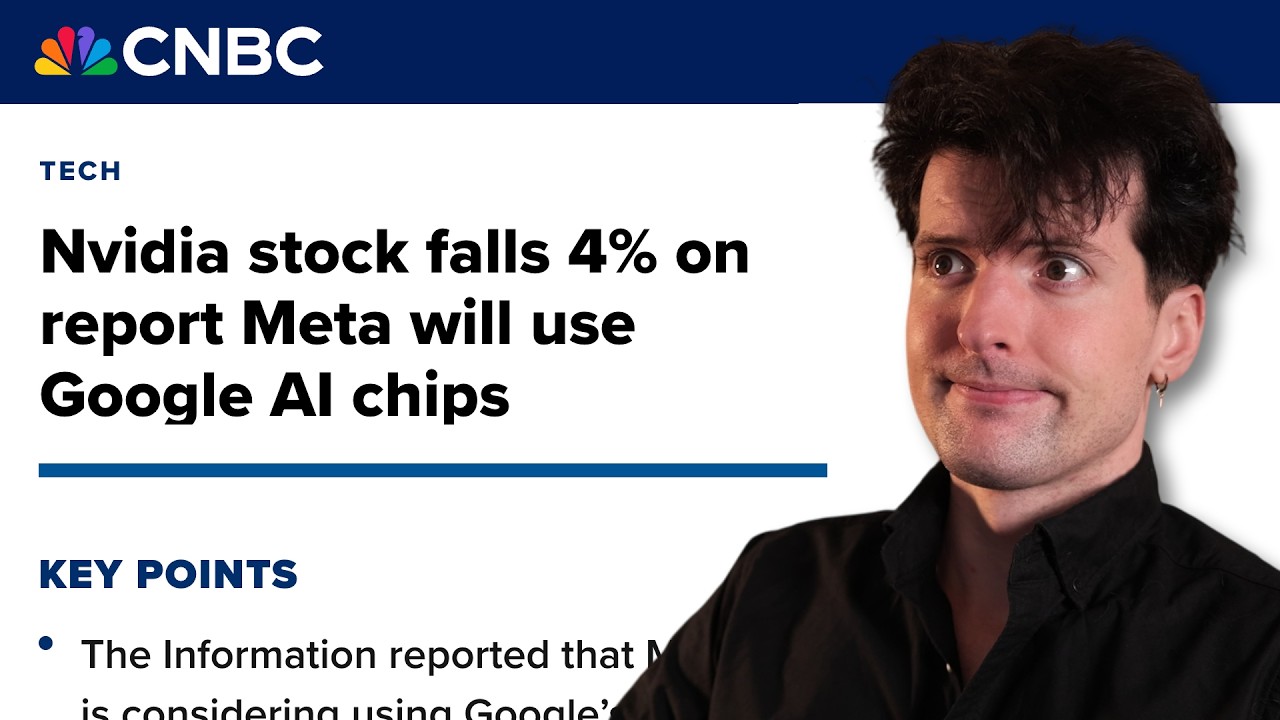
The video discusses the escalating competition between Google and Nvidia in the AI chip market, highlighting recent reports that Google and Meta are negotiating a multi-billion dollar deal for AI chips, which has caused Nvidia’s stock to drop significantly. The narrator expresses surprise and frustration at the rivalry between two favorite tech giants—Nvidia, known for gaming GPUs, and Google, the iconic search engine—now clashing over AI technology. The video delves into the history of chip manufacturing and how GPUs, originally designed for graphics rendering, became central to AI development, setting the stage for this intense competition.
Google has traditionally focused on one main competitor at a time, having moved through rivals like Yahoo, Microsoft, Apple, and Amazon. Now, Nvidia appears to be their primary target. Google and Meta are the only two companies generating significant ad revenue, yet Meta is partnering with Google rather than Nvidia, likely to avoid losing ground to a competitor not currently on their radar. The video also touches on Google’s apparent dislike for Nvidia’s GPUs, opting instead to use CPUs and their own Tensor Processing Units (TPUs) for AI inference, which adds complexity to the industry dynamics.
The video explains the AI value chain, breaking it down into four parts: AI applications, foundation models, cloud inference, and accelerator hardware (CPUs, GPUs, TPUs). Google is unique in operating across all these layers, from apps like Google Search and Gemini to their own cloud platform and custom TPU chips. Nvidia dominates the GPU market, which is widely used for AI training and inference, but Google is pushing its TPU technology as a more efficient alternative. The video also mentions other players like AMD and startups building specialized AI chips, but none have reached Nvidia’s scale or market dominance.
Google’s new TPU generation, Ironwood, is touted as their most powerful and energy-efficient chip yet, offering significant improvements in training and inference performance. Google integrates hardware, software, and model research under one roof, enabling optimized AI systems. Despite some rough edges in Google’s AI applications, their infrastructure and chip advancements position them strongly in the AI race. Meanwhile, Nvidia maintains that their GPUs remain the most versatile and widely supported platform for AI workloads, but the ongoing negotiations and partnerships suggest a shifting landscape.
The video concludes by reflecting on the broader implications of this tech rivalry. Nvidia’s high pricing and market dominance have pushed companies like Meta to explore alternatives, including Google’s TPUs. The competition is causing significant stock market fluctuations and strategic maneuvers among major players. The narrator believes Google is well-positioned to remain a top contender in AI, owning a vertically integrated stack that few can match. For investors and startups, the evolving AI chip war presents both challenges and opportunities, making it a fascinating and critical moment in technology history.