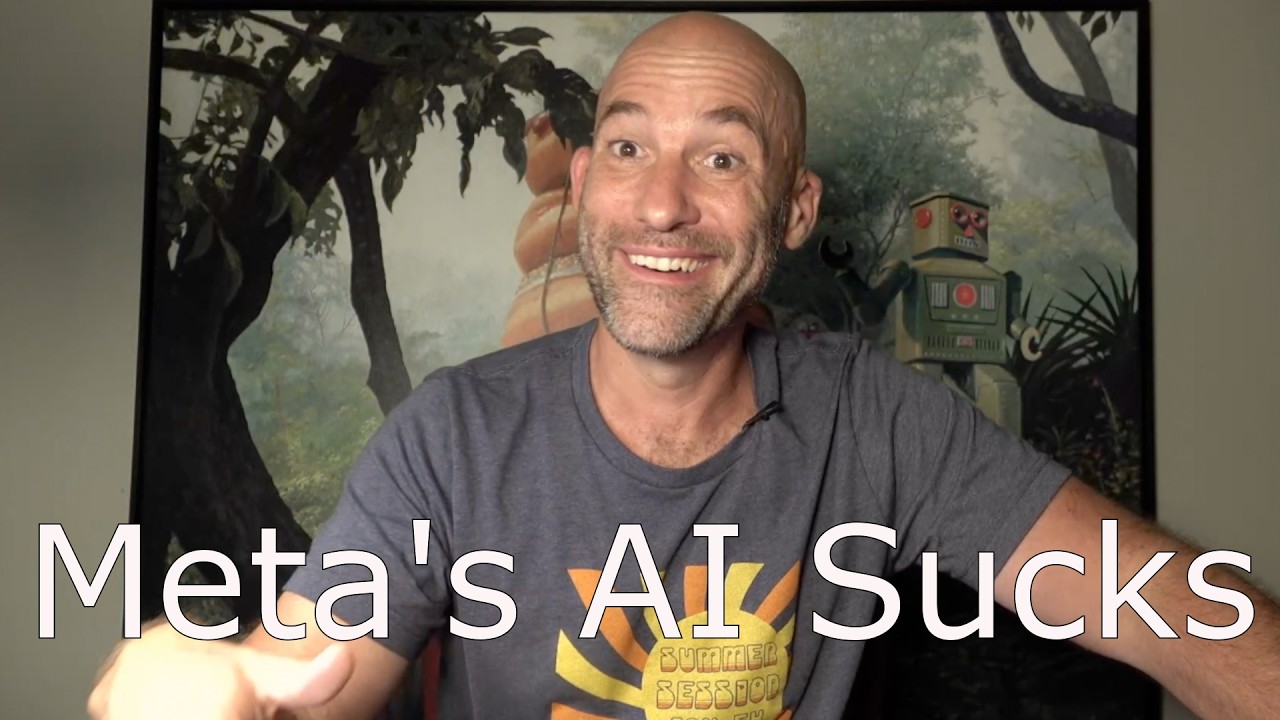
The video highlights Google’s decision to limit Meta’s access to its Gemini AI models due to overwhelming demand, exposing Meta’s heavy reliance on a competitor’s AI infrastructure despite its massive investments. It also discusses the current uneasy truce among tech giants in the AI space, predicting that intensified competition and resource control—exemplified by Google’s move—will soon challenge Meta’s AI ambitions and reshape industry dynamics.
The video discusses a recent report from CNBC revealing that Google has limited Meta’s access to its Gemini AI models due to Meta’s exceptionally high demand exceeding Google’s capacity. This limitation has disrupted and delayed some of Meta’s internal AI projects, which is particularly notable given Meta’s significant investments—tens of billions of dollars—into AI development. The speaker finds it ironic and somewhat embarrassing that a company aspiring to be a leading AI player still relies heavily on a competitor’s AI infrastructure, highlighting potential vulnerabilities in Meta’s AI strategy.
The speaker reflects on the history of the tech industry, emphasizing the often ruthless and aggressive competition among big tech companies. He recalls past tactics like “vaporware,” where companies would falsely claim to be developing products to stifle competitors. However, he contrasts this with the current AI landscape, which he describes as a “fraud” because the true value of AI has not yet been proven. Unlike past tech battles over tangible products like web browsers, AI’s benefits remain unclear, leading to an unusual period where major tech CEOs avoid publicly attacking each other’s AI efforts.
The video also touches on the broader AI hype and skepticism, citing Accenture’s findings that many corporate executives see AI projects as costly without clear returns. The speaker notes that the current “kumbaya” moment among tech giants—where they refrain from criticizing each other—is likely temporary. As funding tightens and pressures mount, he predicts that competition and conflict will intensify, potentially exposing weaknesses in companies like Meta that depend on rivals like Google for critical AI resources.
Furthermore, the speaker discusses the generational context, pointing out that many professionals who have spent their entire careers in this relatively peaceful tech environment may soon face a return to more cutthroat industry dynamics. He uses an analogy of running from lions to illustrate how competition will favor those who can outmaneuver others, not necessarily the fastest or strongest alone. This metaphor underscores the idea that strategic moves—like Google’s control over AI resources—could decisively impact Meta’s future in AI.
In conclusion, the video raises questions about the sustainability of Meta’s AI ambitions given its reliance on Google’s technology and the potential fallout as the tech industry reverts to more aggressive competition. The speaker invites viewers to consider the implications of this dynamic, especially for the professionals caught in the middle, and encourages discussion on what might happen when the “lead pipes”—symbolizing hidden challenges or conflicts—start to surface in the AI race.