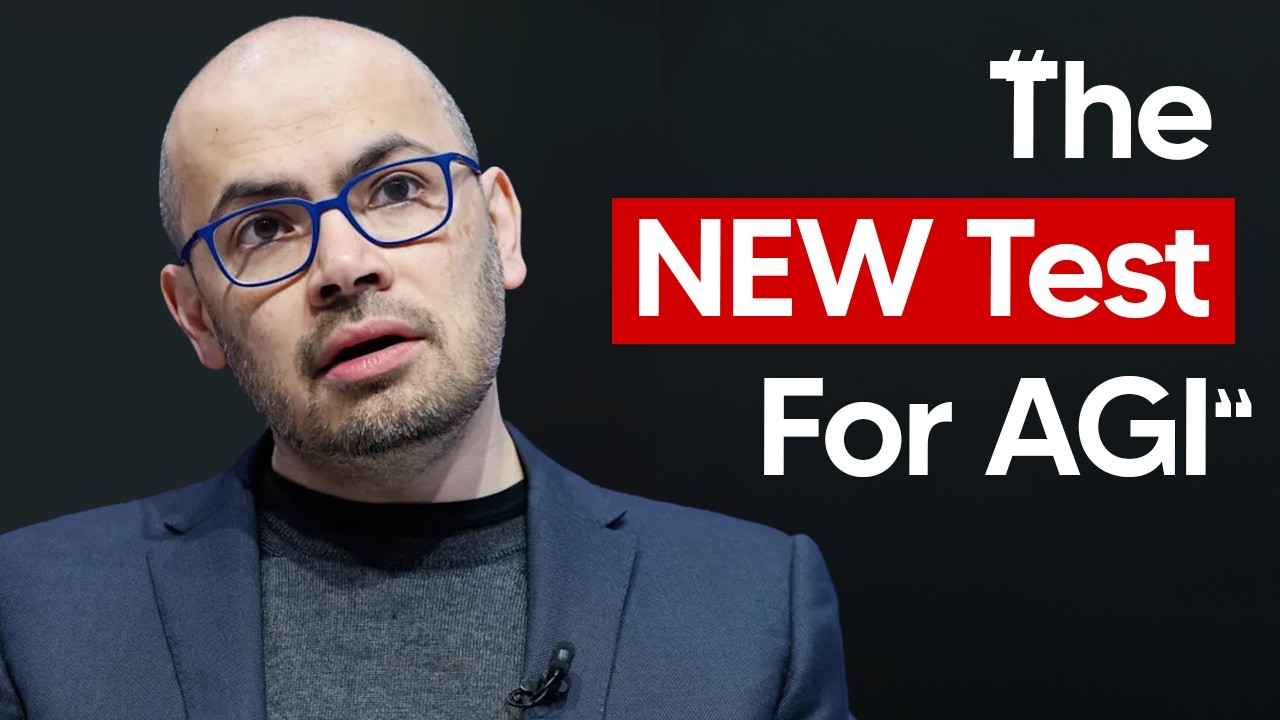
Demis Hassabis, CEO of Google DeepMind, recently clarified his vision for testing artificial general intelligence (AGI). In a recent interview, he proposed a novel benchmark: training an AI system with a knowledge cutoff—such as 1911—and then seeing if it could independently derive a breakthrough like Einstein’s general relativity, which was formulated in 1915. This test aims to distinguish true scientific reasoning and creativity from mere pattern matching or retrieval of existing knowledge, highlighting the difference between current AI capabilities and genuine general intelligence.
Hassabis maintains that his definition of AGI has always been a system that can exhibit all the cognitive capabilities of humans, emphasizing the brain as the only known example of general intelligence. He points out that while today’s AI systems are impressive, they still lack key human-like abilities such as true creativity, continual learning, long-term planning, and consistent performance across diverse tasks. He believes that a true AGI should not display the “jagged” intelligence seen in current models, which can excel at some tasks but fail at others that are much simpler.
The video also discusses the ongoing debate about benchmarks and the moving goalposts for AGI. Ray Dalio and others express concern that as AI systems surpass one test, critics simply raise the bar, making it difficult to agree on when AGI has truly been achieved. Hassabis suggests that at least two or three more major breakthroughs are needed for AGI, such as continual learning, better memory, and more efficient context windows—capabilities that mimic the human brain’s ability to store and prioritize important information.
There is also discussion about the limitations of current benchmarks like the ARC AGI test, which can be gamed or solved through shortcuts rather than genuine understanding. Research has shown that AI models sometimes arrive at correct answers for the wrong reasons, similar to the “Clever Hans” effect, where apparent intelligence is actually a result of exploiting unintended cues. This underscores the need for more robust and meaningful evaluations of AI progress, focusing not just on accuracy but on the reasoning behind answers.
Finally, the video emphasizes that AGI will likely be multimodal, requiring integration of vision, audio, touch, and other senses—far beyond the capabilities of current large language models (LLMs). Experts like Yoshua Bengio argue that AGI is not a single moment but a spectrum of capabilities, with progress occurring unevenly across different domains. The future impact of AGI could be transformative, potentially leading to a world as different from today as today is from the hunter-gatherer era, depending on how quickly and broadly AI automates intellectual activities.