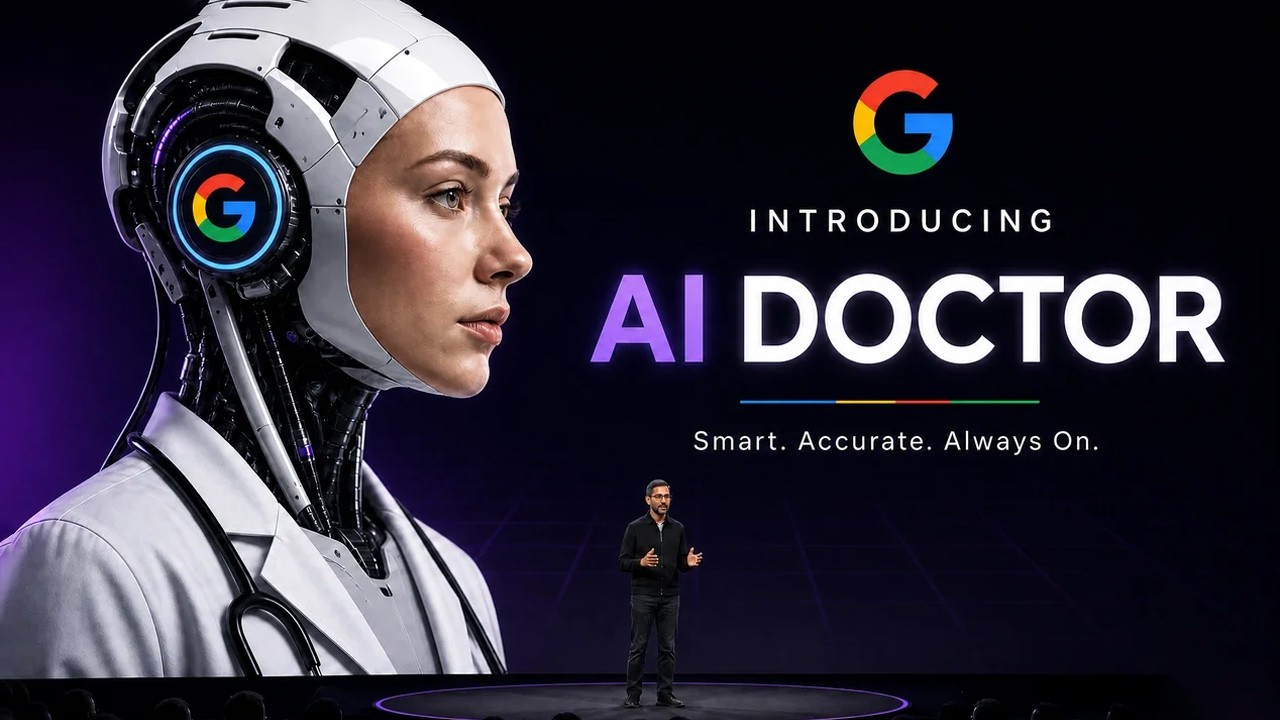
Google DeepMind has developed an AI co-clinician that is poised to transform healthcare by augmenting the doctor-patient relationship rather than replacing physicians. This AI system can see, hear, and interact with patients in real time, guiding them through physical examinations while analyzing subtle cues such as pain responses and movement. Demonstrations include diagnosing acute pancreatitis, myasthenia gravis, and shoulder injuries, where the AI not only asks relevant questions but also adapts its examination based on patient feedback and observed symptoms, showcasing a sophisticated level of clinical reasoning.
In the acute pancreatitis case, the AI effectively guided the patient through a physical exam, asking about pain location and testing for rebound tenderness, which are standard clinical practices. It demonstrated the ability to adjust its approach based on patient responses and visual cues, ultimately recommending urgent emergency care. Similarly, in the myasthenia gravis scenario, the AI identified subtle signs like eyelid drooping and double vision, asked pertinent neurological questions, and suggested appropriate next steps including specialist referral, mirroring the diagnostic process of experienced physicians.
The shoulder injury example highlighted the AI’s capability to conduct a dynamic physical exam via telehealth, instructing the patient through specific movements and noting pain and hesitation. It made a reasonable preliminary diagnosis of rotator cuff tendinitis and recommended conservative treatment while acknowledging the need for further tests if symptoms persisted. This case illustrated the AI’s ability to reason through clinical findings and tailor its examination strategy, although it also revealed areas where more comprehensive testing would be beneficial.
DeepMind rigorously evaluated the AI co-clinician against existing clinical tools and large language models like GPT-4, with physicians preferring the AI’s performance in the majority of cases. The system demonstrated exceptional accuracy, making zero critical errors in 97 out of 98 primary care queries, a milestone in medical AI safety. It also excelled in complex medication-related questions, outperforming other AI models by handling open-ended, real-world drug queries that typically challenge language models trained on general web data.
Finally, the AI was tested in 20 synthetic clinical scenarios with real physicians roleplaying patients, assessed across 140 consultation skills including empathy, red flag detection, and physical exam guidance. The AI matched or exceeded primary care physicians in 68 of these areas, signaling rapid progress in multimodal medical AI capabilities. While human doctors still lead overall, especially in critical exam guidance, DeepMind emphasizes the AI as a supportive tool designed to enhance clinical care, marking a significant step toward integrating advanced AI into healthcare workflows.