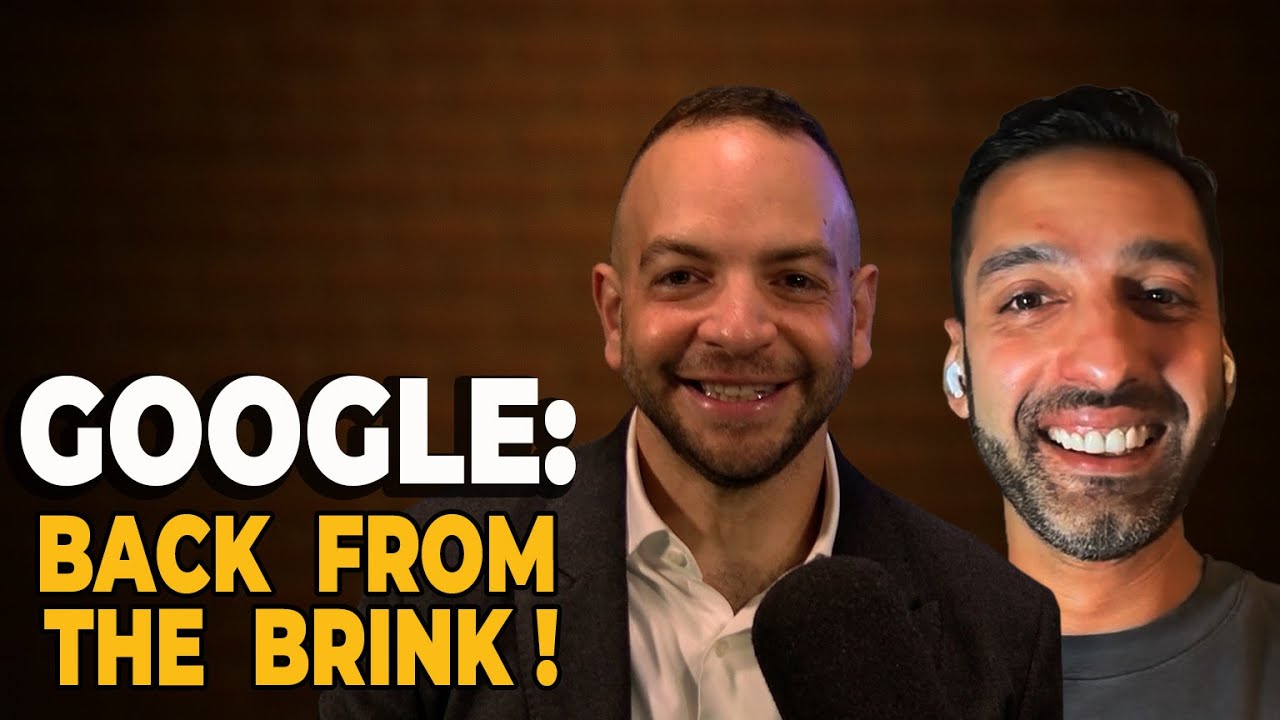
The Big Technology Podcast highlighted Google’s major strides, including powering Apple’s new Siri with its Gemini AI, fending off antitrust challenges, and launching the advanced Nano Banana image generation model integrated into Adobe products. The episode also discussed the rising costs of AI deployment despite cheaper tokens and featured a surprising moment where Putin and Xi Jinping privately discussed the pursuit of human immortality, sparking debate on the ethical and societal implications of life extension technologies.
The Big Technology Podcast’s Friday edition highlighted an exceptional week for Google, marked by significant advancements and strategic wins. Notably, Google is poised to power Apple’s revamped Siri through its Gemini AI models, following a formal agreement between the two tech giants. Apple is rebuilding Siri with three core components—a planner, a search system, and a summarizer—with Google’s Gemini expected to play a key role, especially in summarization and planning. This partnership is seen as a major coup for Google, which had previously lagged in the generative AI race but is now gaining ground by integrating its AI technology into Apple’s ecosystem.
In parallel, Google successfully fended off a major antitrust challenge from the U.S. Justice Department. Despite being found a monopolist, Google avoided drastic remedies such as spinning off Chrome or Android or losing its distribution deals with Apple. The judge acknowledged the rapid evolution of generative AI and opted for a measured approach, allowing market forces to determine the future of search dominance. This ruling underscores the shifting landscape of tech regulation, where emerging AI technologies are reshaping traditional power dynamics and complicating regulatory interventions.
Google also made waves with the release of Nano Banana, an advanced image generation model officially known as Gemini 2.5 Flash. This model is integrated into Adobe Photoshop and Photoshop Express, signaling industry recognition of its capabilities. Nano Banana excels in continuous editing, allowing users to iteratively refine images without recreating them from scratch—a significant technical breakthrough. However, the rapid advancement and accessibility of such powerful image manipulation tools raise concerns about misinformation and ethical use, as demonstrated by the ease of creating realistic but fabricated images.
The podcast further explored the economics of AI, discussing a Wall Street Journal article that challenges the notion that AI is becoming “too cheap to meter.” While the cost per AI token is decreasing, the complexity and token usage for advanced reasoning tasks are driving up overall expenses. Experts emphasized the distinction between unstructured, probabilistic AI interactions and structured workflows that can be optimized for cost efficiency. The conversation highlighted the ongoing balance between AI’s growing capabilities and the financial realities of deploying these technologies at scale.
Finally, the episode concluded with a surprising hot mic moment involving Vladimir Putin and Xi Jinping discussing the pursuit of human immortality through scientific advances like organ transplantation and biotechnology. This rare glimpse into the leaders’ private conversation sparked reflections on the ethical, societal, and political implications of life extension technologies. The hosts debated the feasibility and desirability of significantly prolonged lifespans, touching on issues from organ donation ethics to the potential societal impact of dramatically extended human life. The episode closed with anticipation for upcoming tech events and further discussions on AI’s evolving role in society.