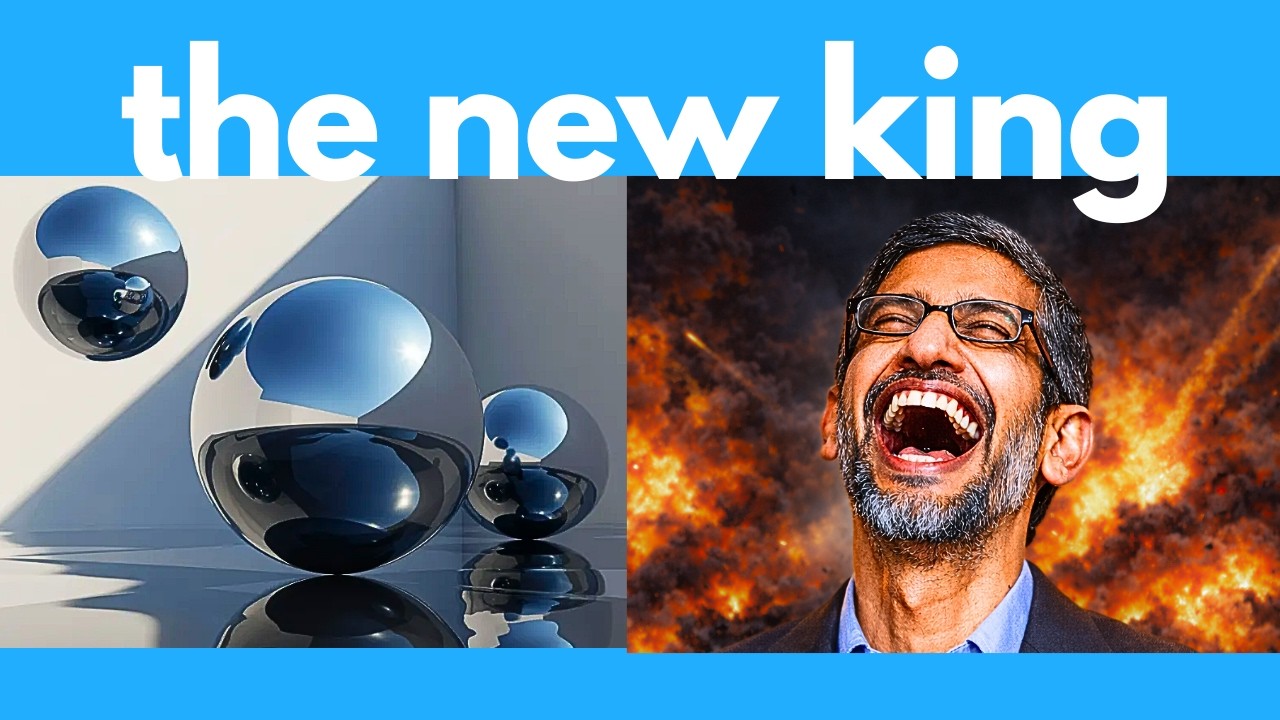
Google has released Gemini 3.1 Pro, its most advanced and capable AI model to date, now available in the Gemini app and other Google platforms. The video begins by showcasing Gemini 3.1 Pro’s creative abilities, such as designing a hypothetical mobile operating system called Fluid OS, complete with innovative apps and features. The model demonstrates impressive performance in generating detailed 3D animations, coding SVG animations, and composing complex, harmonious music using a piano roll interface. Compared to previous versions and other leading models, Gemini 3.1 Pro produces more detailed and accurate outputs, especially in tasks requiring spatial understanding and creativity.
The review continues with demonstrations of Gemini 3.1 Pro’s technical prowess, including simulating realistic lighting physics with interactive 3D spheres and parsing complex data from images, such as extracting information from receipts and exporting it to spreadsheets. The model’s multimodal capabilities are highlighted by its ability to analyze not just images but also video and audio. For example, it successfully creates an interactive earthquake simulation app for Japan based solely on the content of an uploaded explainer video, showcasing its ability to understand and act on information from various media types.
Gemini 3.1 Pro also excels in educational and coding tasks. It can generate personalized educational content, such as interactive chemistry lessons for children, complete with real images and visual exercises. The model is capable of coding fully functional games, like a 2D platformer similar to Super Mario, using publicly available assets and effects. In scientific and medical domains, Gemini 3.1 Pro provides concise, well-structured analyses, tables, and charts, demonstrating strong reasoning and synthesis skills without unnecessary filler.
The video reviews Gemini 3.1 Pro’s technical specifications, including its ability to process text, images, audio, and video, and its industry-leading context window of up to one million tokens—far surpassing most competitors. Benchmark comparisons show Gemini 3.1 Pro outperforming other top models like Opus 4.6 and GPT-5.2X in intelligence, world knowledge, and long-context performance. It scores highest on challenging benchmarks such as Humanity’s Last Exam and ARC AGI 2, indicating emergent abilities in pattern recognition and reasoning. Independent leaderboards generally confirm its superiority, though some mixed results appear in specific areas like coding and vision.
Finally, the review notes Gemini 3.1 Pro’s low hallucination rate, making it less likely to generate incorrect information compared to other leading models. While some open-source models like GLM5 may have even lower hallucination rates, Gemini 3.1 Pro stands out for its balance of intelligence, performance, and cost-efficiency. The video concludes by encouraging viewers to try Gemini 3.1 Pro, stay updated with AI developments through the creator’s newsletter, and highlights the rapid pace of innovation in the AI field.