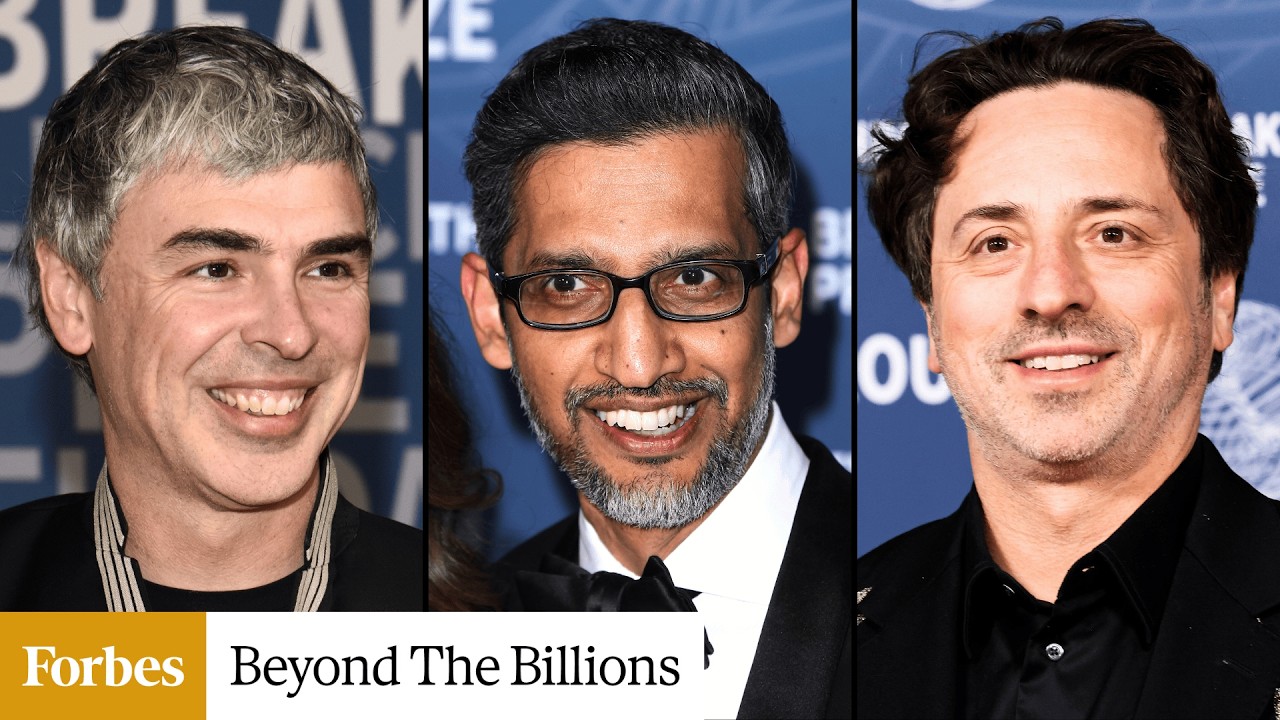
The video discusses significant recent developments in the tech and entertainment industries, focusing primarily on Google’s transformation into a generative AI powerhouse. It begins by highlighting major corporate moves, such as Netflix’s announcement to acquire Warner Bros. Film and TV studios and HBO for $83 billion, followed by a hostile takeover bid from Paramount SkyDance valuing the firm at $108 billion. Additionally, the video touches on Medline’s IPO pricing, which could value the medical supplies giant at $55 billion, and the successful public debut of Beijing-based Threads Technology, a Chinese GPU maker, which saw its shares soar by over 400%, creating new billionaires.
The conversation then shifts to Google’s journey in AI, with Forbes senior writer Rich Neva providing insights based on his years of covering the company. Google initially led in AI research, pioneering technologies like the transformer model and acquiring DeepMind, which developed advanced AI capable of beating humans at complex games like Go. Despite these early advances, Google lagged behind competitors like OpenAI in commercializing generative AI products, partly due to its size and the reputational risks associated with releasing imperfect AI tools.
Google’s response to this challenge involved significant internal restructuring, including merging Google Brain and DeepMind to foster better collaboration and speeding up product releases. The return of co-founders Larry Page and Sergey Brin to more hands-on roles, especially Sergey’s involvement in coding, marked a renewed focus on AI. This culminated in the release of Gemini (initially Bard), a high-quality generative AI model that has since competed closely with offerings from OpenAI and Anthropic, with Gemini 3 achieving notable benchmarks.
A key advantage for Google in the AI race is its development and use of proprietary Tensor Processing Units (TPUs), specialized chips designed for AI workloads. Unlike competitors who rely heavily on expensive Nvidia GPUs, Google’s in-house TPUs provide cost and operational benefits, allowing the company to scale AI infrastructure efficiently. Google is also expanding TPU usage beyond its own operations, recently partnering with Facebook to deploy TPUs in their data centers, signaling a growing business line in AI hardware.
Looking ahead, the discussion highlights Google’s substantial investments in AI infrastructure, with capital expenditures for AI expected to reach $90 billion this year. Despite trailing AWS and Azure in cloud market share, Google’s vast resources and strategic shifts have positioned it as a leader in the AI space. Future areas to watch include the continued evolution of Gemini, the commercialization of DeepMind’s Alphafold protein-folding technology for drug discovery, and how Google maintains its momentum in the rapidly evolving AI landscape.