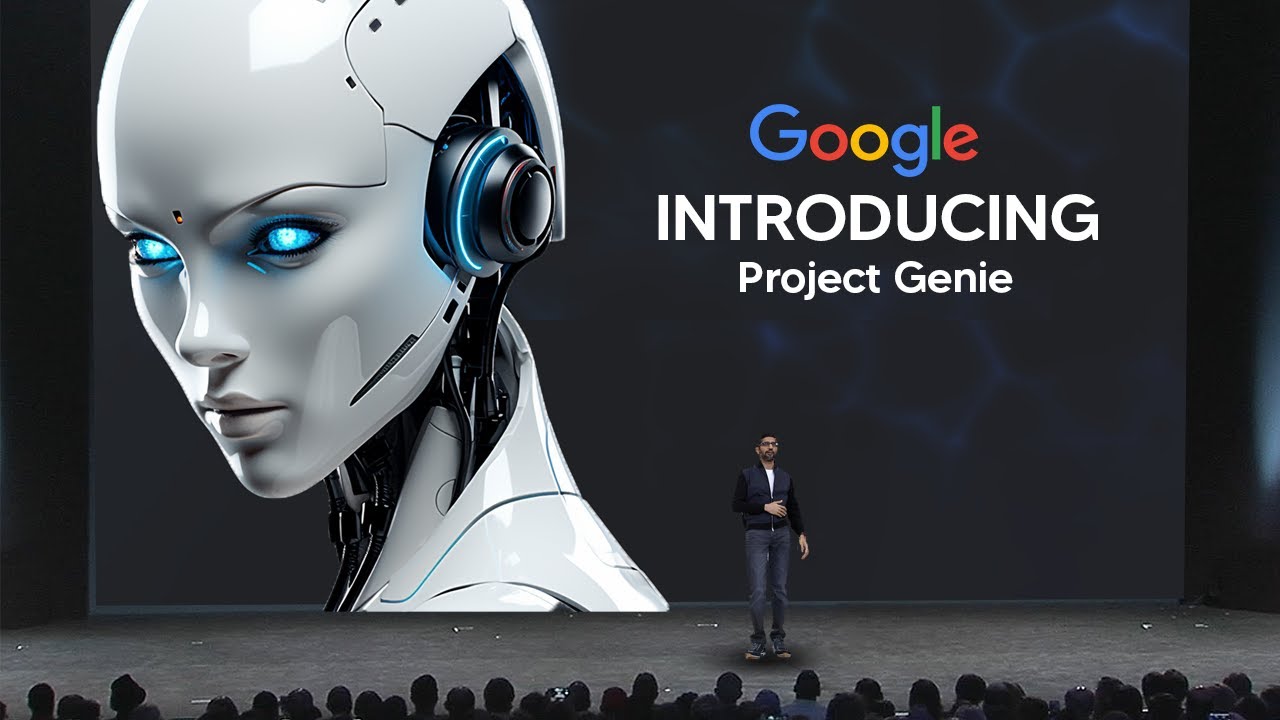
Google has released Genie 3, its latest AI-powered playable world model, which allows users to design environments and characters, sketch out worlds, and immediately play games based on their creations. This technology is currently available to users subscribed to the highest tier of Google’s AI plan (Ultra), and it doesn’t consume any AI credits. Genie 3 represents a significant leap from earlier versions, offering real-time interaction with custom-generated environments, though each session is limited to 60 seconds due to the high computational costs involved. Access is currently restricted to users in the United States who are at least 18 years old.
The technology has generated considerable excitement due to its versatility and the creative possibilities it unlocks. Users can upload any image and interact with the resulting environment, leading to a wide variety of unique and imaginative worlds. While Genie 3 is not flawless—issues such as terrain clipping, lack of dynamic physics, and occasional errors have been reported—it is still a remarkable achievement. The generative nature of the AI means that results can be unpredictable, and editing prompts can sometimes remove previously liked elements, making the experience less deterministic than traditional game engines.
Genie 3’s launch caused a stir not only in the tech community but also in the stock market. Viral videos showcasing impressive gameplay, some of which were mistakenly attributed to Genie 3 but were actually created using other tools or existing games, led to panic among investors. This resulted in a sudden drop in the stock prices of major gaming companies like Take-Two Interactive and Roblox, as fears spread that AI-generated games could disrupt the industry. However, the video points out that established franchises and communities are unlikely to be replaced overnight, and the panic-driven selloff was an overreaction.
Beyond gaming, the video highlights Genie 3’s potential impact on robotics. The ability to generate unlimited, diverse, and interactive environments from text prompts could revolutionize how robots are trained. Instead of relying on expensive and risky real-world data collection, researchers could use Genie 3 to simulate countless scenarios, helping robots learn to navigate complex environments and handle edge cases. This application could prove even more transformative than its use in gaming, especially for industries that require robust robotic solutions.
The video concludes by showcasing creative examples from social media, such as controlling a pack of cigarettes in a subway, skiing down a mountain, and simulating body cam footage—all generated and played within Genie 3. These demonstrations highlight the platform’s flexibility and the realism it can achieve, depending on the user’s creativity and prompts. Overall, Genie 3 is presented as a groundbreaking tool with far-reaching implications for both entertainment and practical applications, despite its current limitations and the initial market overreaction.