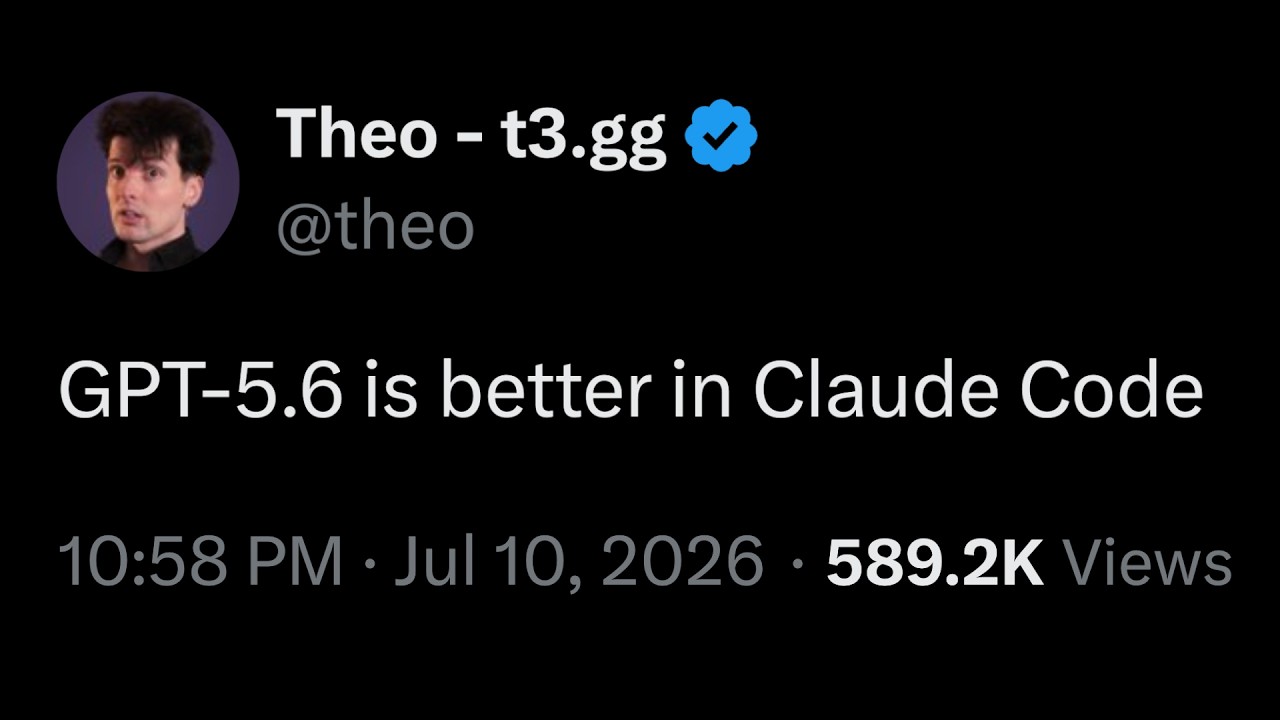
The video begins with the creator expressing surprise at how impressed they are with Claude Code, especially when using the GPT-5.6 (56 Sol) model within it, compared to the Codex environment. Despite initially dismissing Claude Code, the creator found its approach to sub-agent orchestration, system prompts, and integrations far superior to Codex’s. They highlight that Claude Code’s use of programmatic workflows in JavaScript allows for more efficient, controlled, and token-friendly task execution, unlike Codex’s more chaotic and unfinished sub-agent system. This efficiency and better UX make Claude Code a compelling choice for complex software engineering tasks.
The creator then critiques the Codex system prompt extensively, revealing it to be poorly designed and overly prescriptive, especially regarding front-end design. Codex’s prompt includes rigid UI rules, such as specific icon libraries, border radii, and forbidding visible instructional text, which stifle creativity and usability. These constraints lead to repetitive, uninspired designs and inefficient token usage. The creator shares that it took their public criticism to get OpenAI to remove some of the worst parts of this prompt, underscoring how neglected and problematic Codex’s system prompt has been for users.
In contrast, Claude Code’s system prompt is described as much cleaner, more flexible, and user-friendly. It encourages collaboration with the user, careful execution of tasks, and sensible defaults like deferring to user judgment before making large changes. The prompt also includes sensible guidelines on security, commenting, and interaction style, which contribute to better overall performance and user experience. The creator appreciates this thoughtful design and contrasts it with Codex’s chaotic and token-heavy instructions, which often cause models to behave unpredictably or inefficiently.
The video also touches on practical issues encountered when using 56 Sol in Claude Code, such as occasional formatting quirks and minor task-tracking lapses, but overall praises the stability and effectiveness of the platform. The creator emphasizes that workflows in Claude Code are the best implementation they have seen for orchestrating multiple agents and managing complex tasks with clear beginnings and ends. They note that other platforms like Pi or OpenCode lack this level of orchestration and workflow support, making Claude Code uniquely suited for professional, real-world software engineering workflows.
Finally, the creator encourages viewers to experiment with using Codex subscriptions through Claude Code, highlighting its flexibility in supporting various models and subscriptions, including third-party ones. They acknowledge that while not everyone should abandon Codex entirely, Claude Code offers a significantly better experience for those needing advanced agent orchestration and efficient workflows. The video ends with an invitation for viewers to share their experiences and thoughts on this approach, reflecting the creator’s enthusiasm for exploring and improving AI-assisted coding environments.