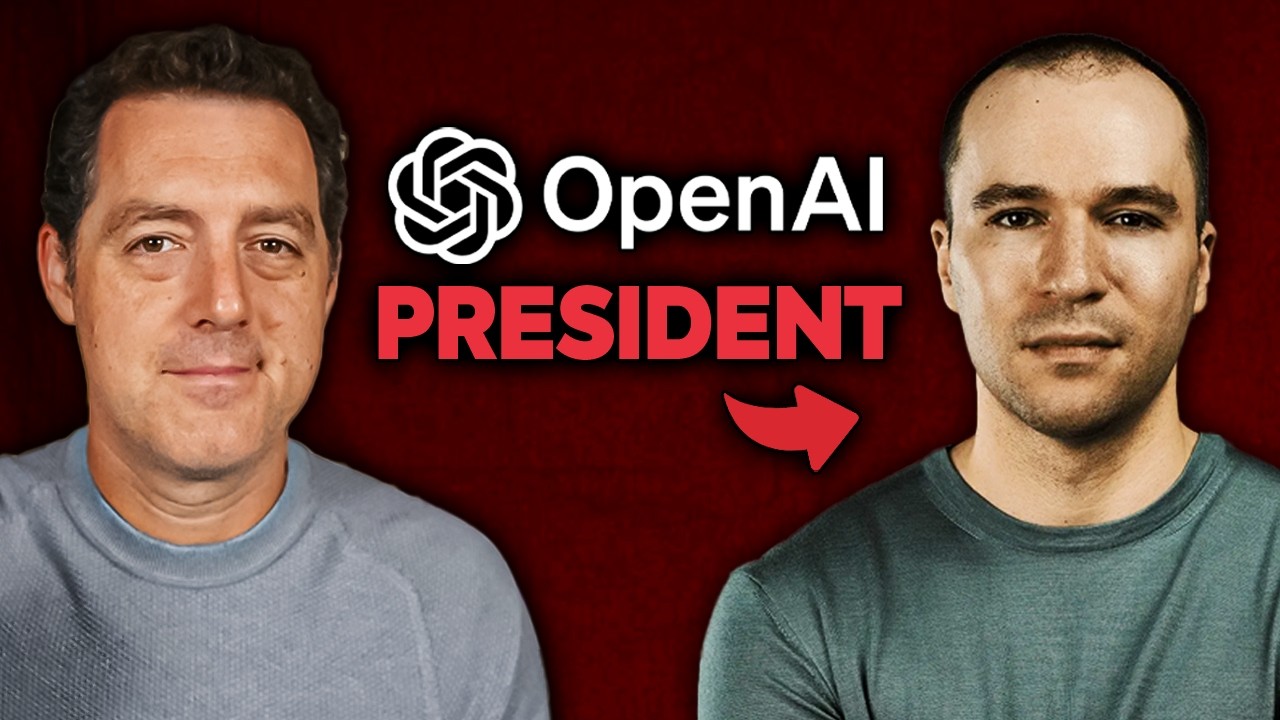
In this insightful conversation, Greg Brockman, CTO of OpenAI, delves into the current state and future trajectory of artificial intelligence, particularly focusing on scaling models like Sora 2 and the evolving role of compute and hardware. He emphasizes that despite the apparent differences between modalities such as text and video, the underlying transformer architecture and deep learning principles remain fundamentally consistent. Brockman acknowledges the potential for innovation beyond transformers but believes that the current scaling curves in compute, data, and algorithms will continue to drive significant progress toward AGI (Artificial General Intelligence). He also highlights the complexities of optimizing different models for various hardware platforms, including recent collaborations with AMD, and reflects on the challenges faced by newer chip architectures like Cerebrus.
Brockman discusses the growing bottleneck in compute and energy resources, noting that the demand for massive computational power is outpacing supply, which could become a critical constraint in the AI industry’s growth. OpenAI is proactively addressing this by investing in infrastructure such as data centers and exploring partnerships to expand compute capacity. Internally, the allocation of limited compute resources is a challenging and dynamic process involving prioritization across research, applied projects, and product development. This scarcity drives intense discussions and strategic decisions to maximize the impact of available resources, underscoring compute as a key driver of productivity and innovation.
The conversation also explores the transformative impact of AI on how humans interact with the internet and digital content. Brockman points out that traditional web browsing—sifting through static websites for information—is becoming obsolete as AI agents increasingly perform these tasks autonomously. This shift is leading to new paradigms where AI proactively anticipates user needs, fundamentally changing monetization models on the web and challenging the dominance of advertising-based revenue. He envisions a future where AI interfaces become the primary entry points for digital interaction, offering more personalized and efficient experiences that prioritize user value over passive content consumption.
On the topic of AI’s societal impact, Brockman candidly addresses concerns about job displacement, acknowledging that AI will significantly alter many professions but also create new opportunities and fundamentally reshape the social contract. He expresses optimism about a future of abundance enabled by AI, where quality of life improves even as economic roles evolve. Brockman highlights that human connection and skilled trades may remain resilient areas less susceptible to automation. He stresses the importance of AI uplifting humanity and enhancing human creativity rather than merely replacing human effort.
Finally, Brockman shares his vision for the future of AI development and deployment. He discusses the iterative process of refining base models into more reliable, user-friendly products through post-training and alignment, using ChatGPT and Sora 2 as examples. He anticipates that AI will become increasingly proactive, capable of long-term autonomous problem-solving, and that natural language will remain the primary interface for AGI. Looking ahead, Brockman predicts significant breakthroughs in solving complex problems across domains like medicine and finance within the next few years and expects AGI to emerge within the next decade. Throughout, he emphasizes the mission of OpenAI to responsibly develop AI technologies that benefit all of humanity.