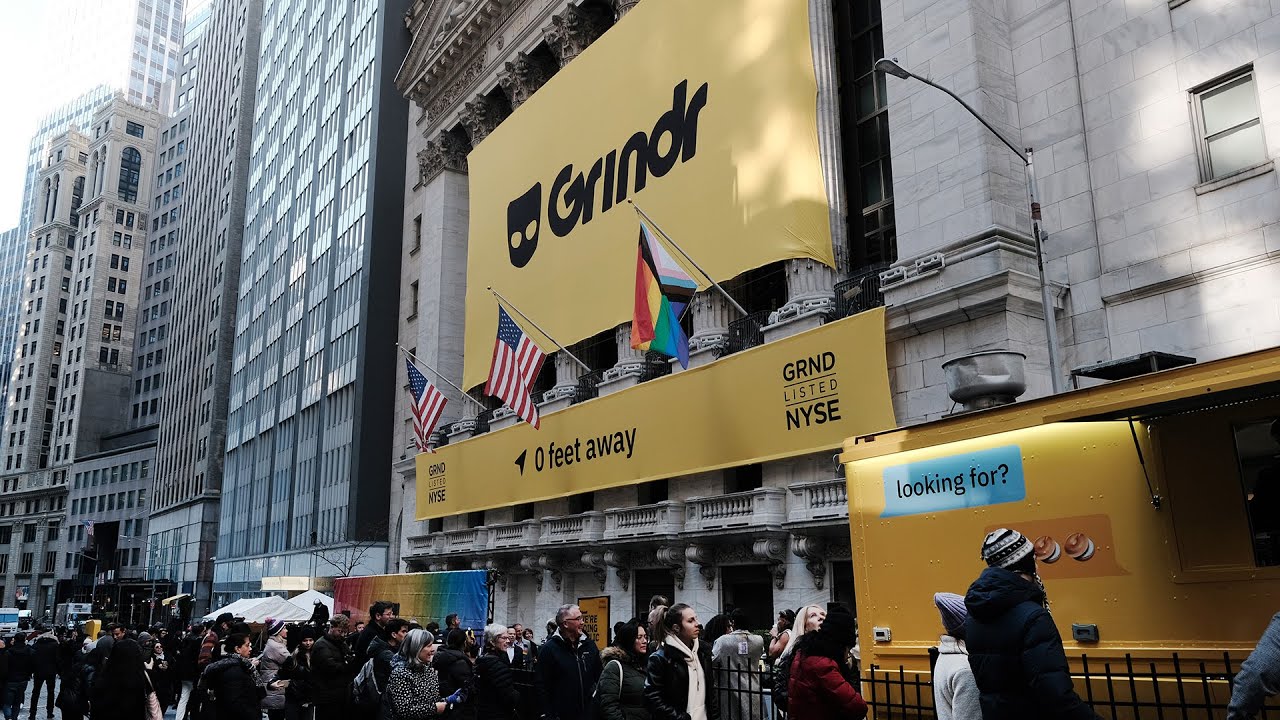
Grindr, the world’s largest LGBTQ network, is evolving beyond its origins as a dating app into a broader platform described by CEO George Harrison as a “global gay neighborhood.” This expansion includes integrating artificial intelligence, dubbed “gay AI,” to enhance user experience and transparency in connections. Grindr is also diversifying its offerings with live events, such as a recent pop-up concert featuring Madonna in Times Square. Despite a 38% increase in revenue over the past year, the company’s share price has halved, a situation Harrison attributes to short-term market fluctuations and shareholder issues, but he remains confident in Grindr’s long-term growth and strong business fundamentals.
The app’s role in fostering meaningful relationships has significantly evolved. While once seen primarily as a hookup platform, Grindr now facilitates long-term relationships, with nearly half of gay relationships reportedly starting on the app. Harrison highlights changing cultural dynamics within the gay community, noting a growing desire among younger gay men for stable, long-term partnerships and family-building, reflecting broader societal shifts influenced by marriage equality and changing norms.
Grindr is heavily investing in AI technology to improve its services. The company has developed AI-powered features that provide users with tailored information about potential matches, enhancing transparency and connection quality. Internally, AI is transforming Grindr’s engineering processes, with 80% of the app’s code now generated by AI, shifting engineers’ roles towards managing and architecting AI-generated code. Harrison emphasizes that this investment in AI significantly boosts productivity and output, outweighing concerns about associated costs.
On the political front, Grindr is actively engaging with lawmakers and regulators to advocate for LGBTQ rights globally. Harrison stresses the importance of bipartisan cooperation in Washington to achieve lasting progress on issues such as decriminalizing homosexuality in certain countries, marriage equality, access to fertility treatments for gay couples, and healthcare services. Grindr’s public service arm, Grindr for Equality, plays a key role in these efforts, and the company leverages its unique position as a business to maintain dialogue across the political spectrum.
Harrison’s background growing up in the former USSR informs his understanding of the challenges faced by LGBTQ individuals in hostile environments. This perspective aids Grindr’s advocacy, especially in countries where homosexuality is criminalized and users face significant risks. The company carefully navigates complex geopolitical issues, such as U.S. sanctions affecting operations in Iran, while striving to support local activists. Grindr’s engagement with U.S. officials, including discussions on inclusive fertility treatments, reflects its commitment to advancing LGBTQ rights and ensuring equitable access to services for its diverse user base.