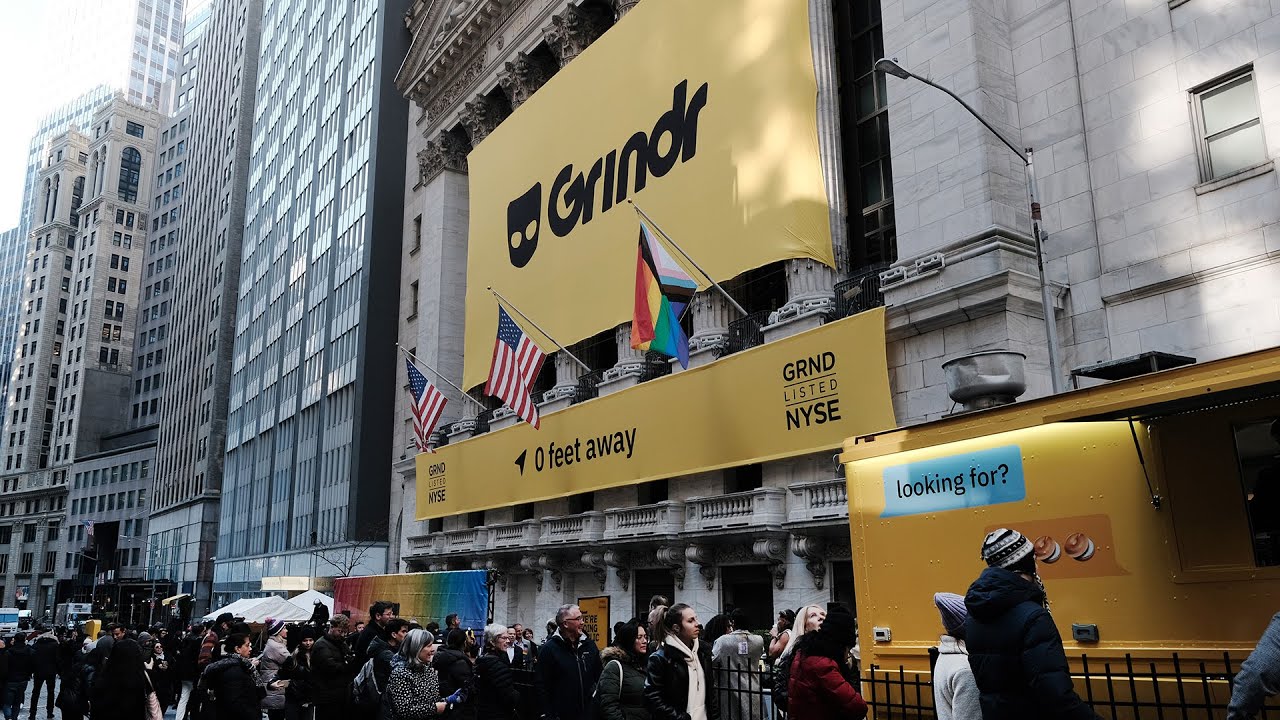
In June, during Pride Month, Grindr, the world’s largest LGBTQ network, is evolving beyond a dating app into a “global gay neighborhood,” incorporating AI technology dubbed “gay AI.” The company is expanding its offerings to include live events, such as a recent pop-up concert with Madonna in Times Square. Despite a 38% increase in revenue over the past year, Grindr’s share price has halved, a situation CEO George Harrison attributes to short-term market fluctuations and shareholder issues. Harrison remains confident in the company’s strong growth trajectory, robust business model, and effective execution, emphasizing a focus on long-term success rather than short-term stock price movements.
Grindr has witnessed a significant shift in user behavior, with nearly half of gay relationships now starting on the app, challenging its earlier reputation as primarily a hookup platform. Harrison highlights the fluidity of gay culture, where casual encounters often lead to long-term relationships, and notes a growing desire among younger gay men for stable partnerships and families. This societal change, partly driven by the recognition of gay marriage, aligns with Grindr’s role as a critical platform for connection within the LGBTQ community.
The company is heavily investing in AI to enhance user experience and operational efficiency. Grindr has developed AI-powered features that provide users with tailored information about potential matches, increasing transparency and connection quality. Internally, AI is transforming the engineering process, with 80% of Grindr’s code now generated by AI, shifting engineers’ roles toward managing and architecting AI outputs. Harrison views this investment as highly valuable, boosting productivity and innovation despite concerns some companies have about AI-related costs.
Politically, Grindr is actively engaging with lawmakers and regulators to advocate for LGBTQ rights globally. Harrison stresses the importance of bipartisan efforts in Washington to address issues such as the criminalization of homosexuality abroad, marriage equality, fertility treatment access for gay couples, and healthcare services. The company leverages its unique position as a business to foster dialogue across political divides, aiming to create lasting policy changes that benefit its users.
Harrison’s background, growing up in the former USSR, informs his understanding of the challenges faced by LGBTQ individuals in hostile environments. This perspective aids Grindr’s advocacy efforts, including difficult decisions like whether to operate in countries with oppressive regimes. The company also works closely with U.S. officials to ensure inclusive policies, such as equitable access to IVF for gay families. Overall, Grindr is positioning itself not only as a social platform but also as a significant political and technological force advancing LGBTQ rights and community building worldwide.