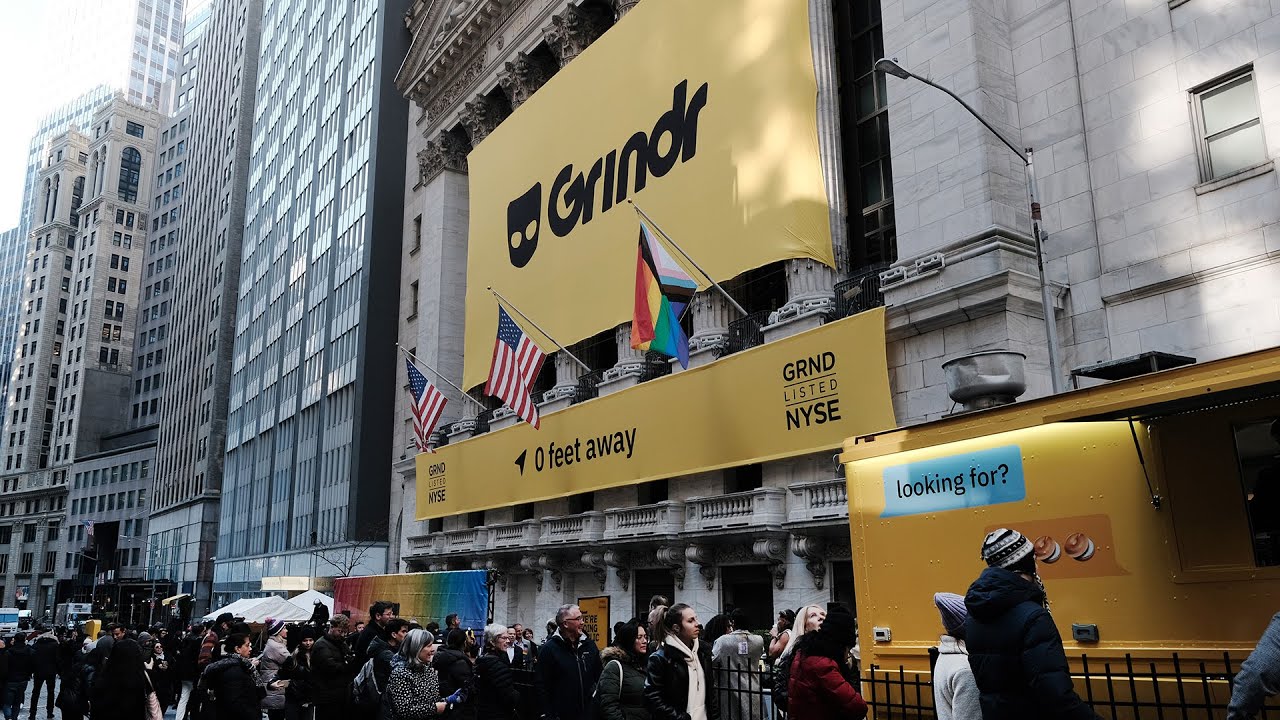
In June, during Pride Month, Grindr, the world’s largest LGBTQ network, is evolving beyond a dating app into a “global gay neighborhood,” integrating AI technology dubbed “gay AI.” The company is expanding its offerings to include live events, such as a recent pop-up concert with Madonna in Times Square. Despite a 38% increase in revenue over the past year, Grindr’s share price has dropped by half, a situation CEO George Harrison attributes to market fluctuations and shareholder issues. Harrison emphasizes the company’s strong growth trajectory, with consistent annual growth over 25% and improving profitability, and stresses the importance of focusing on execution rather than short-term stock price movements.
Grindr has witnessed a significant shift in user behavior, with nearly 50% of gay relationships now starting on the app, reflecting its evolution from a hookup platform to a place where long-term relationships and marriages are formed. Harrison notes that cultural changes within the gay community, including a growing desire for stable relationships and families, are influencing this trend. He highlights that many younger gay men now seek long-term partnerships and children, a marked change from previous generations, and credits Grindr’s critical mass of users for facilitating these connections.
The company is heavily investing in AI to enhance user experience and operational efficiency. Grindr has developed AI-powered features that provide users with tailored information about potential matches, increasing transparency and connection quality. Internally, AI is transforming the engineering process, with 80% of the app’s code now generated by AI, shifting engineers’ roles toward managing and architecting AI-produced code. Harrison views the investment in AI as highly valuable, significantly boosting productivity and output despite concerns about token usage costs.
Politically, Grindr is actively engaging with lawmakers and regulators to advocate for LGBTQ rights globally. Harrison stresses the importance of bipartisan efforts in Washington to achieve lasting progress on issues such as decriminalizing homosexuality, marriage equality, access to fertility treatments, and healthcare services for LGBTQ individuals. He recounts challenges like the persecution of gay men in countries like Egypt and Iran, where Grindr plays a crucial role in providing safe connections despite significant risks. The company aims to leverage its unique position as a business to foster dialogue across political divides.
Harrison’s background growing up in the former USSR informs his approach to advocacy, enabling him to communicate effectively with more conservative audiences about human rights and societal benefits. He shares examples of successful engagements with U.S. government officials, including discussions on making fertility treatments accessible to gay couples. While acknowledging strong support from many Democratic leaders, he underscores the necessity of working with all political sides to advance LGBTQ rights. Overall, Grindr is positioning itself not only as a social platform but also as a significant player in political advocacy and technological innovation within the LGBTQ community.