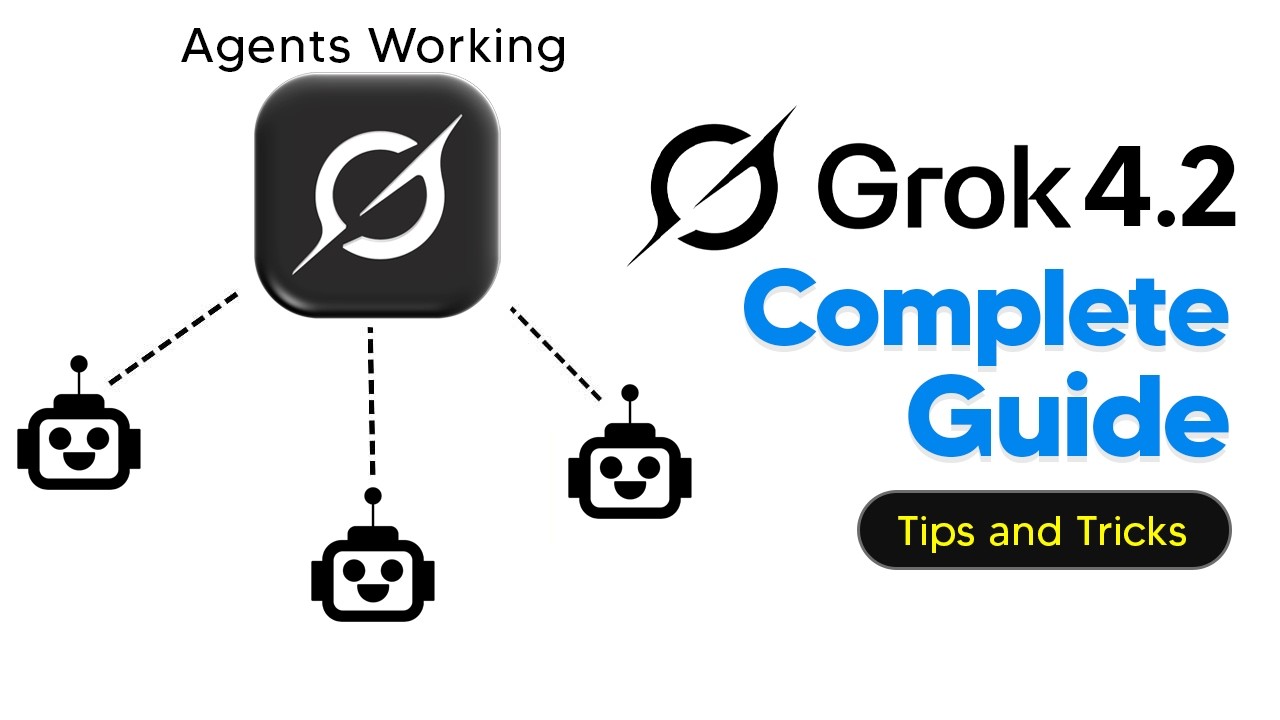
The video introduces Grok 4.2 (also referred to as Grok 4.20) Beta, highlighting that it is only accessible to users with a premium subscription, costing $30 per month. The creator emphasizes that Grok 4.2 is a highly resource-intensive model, meaning users can quickly hit their usage limits if they are not careful. The model is best used for tasks that require advanced reasoning, and users are cautioned to use it judiciously to avoid running out of their allotted usage.
Grok 4.2 is unique because it operates as a set of four specialized AI agents rather than a single model. These agents are: Captain Grok (the coordinator), Harper (research and fact expert), Lucas (creativity and balance), and Benjamin (math, code, and logic). Each agent has a distinct role, and the effectiveness of Grok 4.2 comes from their collaboration. The video explains that understanding how to structure prompts to leverage these agents is key to getting the best results.
The creator demonstrates an effective prompt structure for Grok 4.2, especially for open-ended or controversial questions where multiple perspectives are valuable. For example, when asking about the best time to buy Bitcoin, the prompt is divided among the agents: Harper researches supporting information, Lucas considers opposing views, Benjamin fact-checks, and Captain Grok summarizes the findings. This approach ensures a balanced, nuanced, and fact-checked response, reducing the likelihood of AI hallucinations and overly agreeable answers.
A second example is provided using the topic of universal basic income and its impact on GDP. The prompt instructs Benjamin to find supporting data, Harper to find refuting evidence, Lucas to synthesize a middle-ground theory, and Captain Grok to judge which argument is more logically sound. This method showcases how Grok 4.2 can handle complex, nuanced debates by presenting multiple viewpoints, fact-checking, and delivering a reasoned conclusion. The importance of providing context in prompts is also stressed, as Grok currently lacks memory and relies on the information given in each prompt.
The video concludes by comparing this multi-agent approach to a simple, single-question prompt, demonstrating that the structured, agent-based method yields more robust and logical answers. The creator also mentions the ability to trace the reasoning process of each agent, adding transparency to the model’s outputs. Overall, Grok 4.2 is presented as a powerful tool for reasoning and nuanced analysis, best used for complex questions rather than straightforward coding or factual queries. The creator encourages viewers to experiment with prompt structures and to join the community for further tips and resources.